Voice dictation can dramatically improve productivity, but only if it works reliably. When dictating in a foreign language, for instance, I often found myself spending more time editing than writing. Willow changed that for me. This AI keyboard app offers an impressively accurate dictation feature, and here’s why it makes a real difference for me.
Good to know: find out how to make your keyboard bigger on iPhone or iPad.
How Willow Improves the Voice Dictation Game
While voice dictation has been around for years, it’s still far from being 100% reliable. Willow attempts to challenge the status quo by making use of AI with its superior capabilities of understanding the human voice.
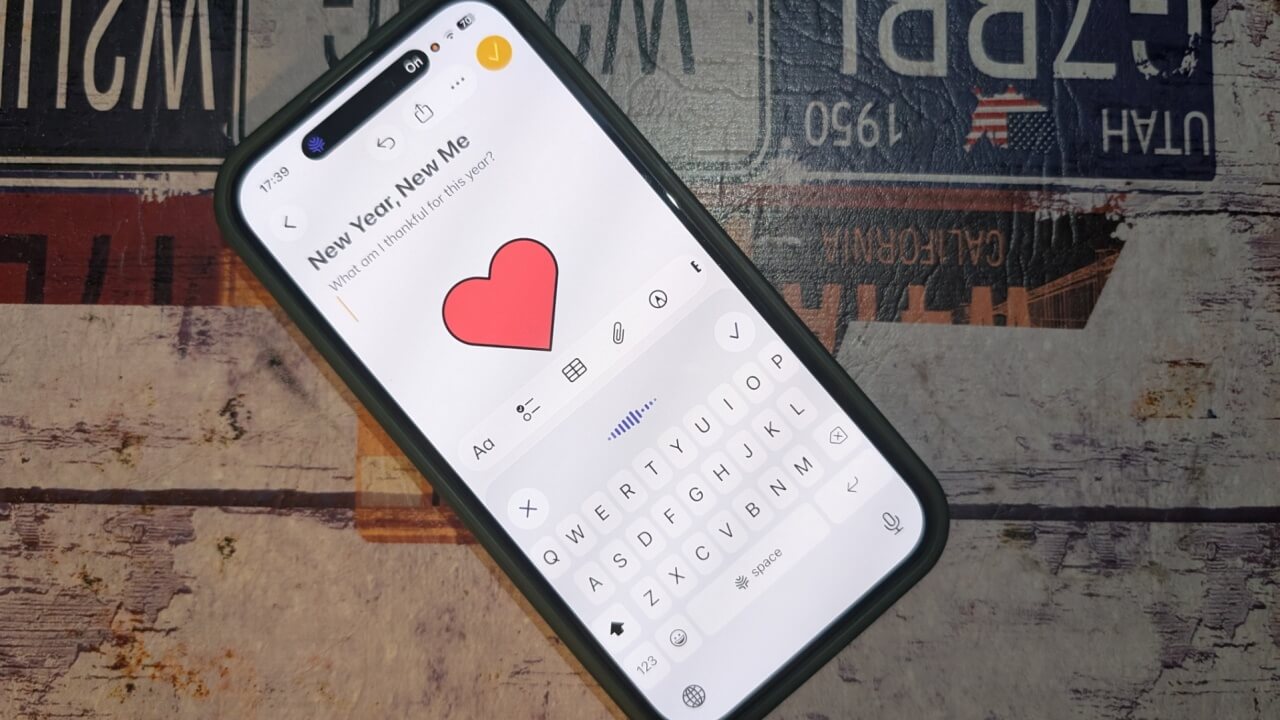
Available for iPhone (and Mac), this keyboard app lets you speak naturally while it handles transcription and formatting with impressive accuracy. What’s more, Willow also fixes any grammar errors and adds the needed punctuation as you speak. Since Willow is a full keyboard app, you also have the option to make minor edits or add something last-minute – something that has proved all too useful for me.
Because Willow is context-aware, it formats your message accordingly and maintains your voice naturally. It also keeps an eye out for typos, helping you avoid sending messages with misspelled names or other errors.
When you’re not in the mood to compose messages from scratch, and in truth, for some of us, it almost always feels like a chore, you can use Willow’s AI rewrite tools. Simply speak a basic draft, and the app will turn it into clear, well-structured text.
Finally, unlike many similar apps, Willow takes a privacy-first approach to AI-assisted message writing. All transcripts are stored locally on your device, and you can even opt out of model training entirely.
Tip: learn how to create custom AI storybooks with Gemini. Both kids and adults will enjoy this!
Using Willow for Voice Dictation on iPhone
After downloading and installing Willow, you’ll need to create an account to start using the app. The app has a free default version that lets you dictate up to 2,000 words per week, while the unlimited plan is available for $12 per month.
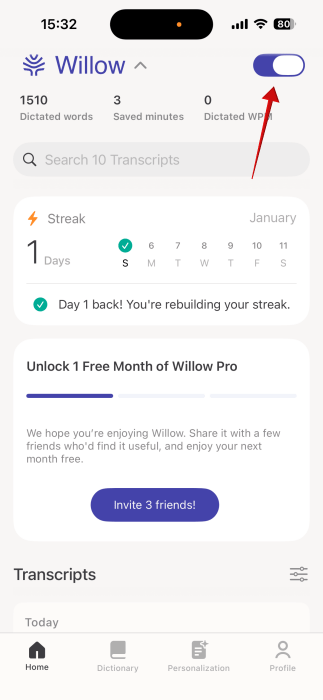
Once the app is on your phone, you’ll need to activate it. Open Willow and turn on the toggle at the top. This will allow the app to use your device’s microphone for dictation.
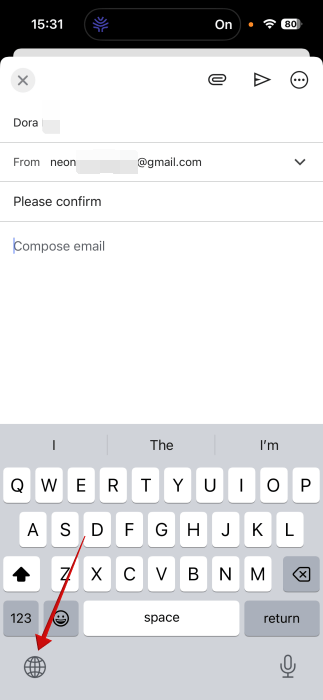
Open an app such as Gmail and press Compose. Your default virtual keyboard will appear on the screen. Tap on the globe icon in the lower left corner of the display.
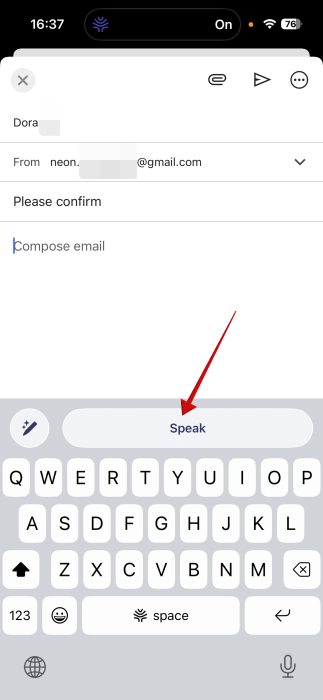
The keyboard will now change to the Willow one (you might need to tap multiple times, depending on how many virtual keyboards you have installed). Tap on Speak at the top to start composing your message with your voice. Willow is capable of detecting the language it hears (it supports 100). I tried speaking in English, Spanish and Romanian, and it had no issues picking up the idiom.
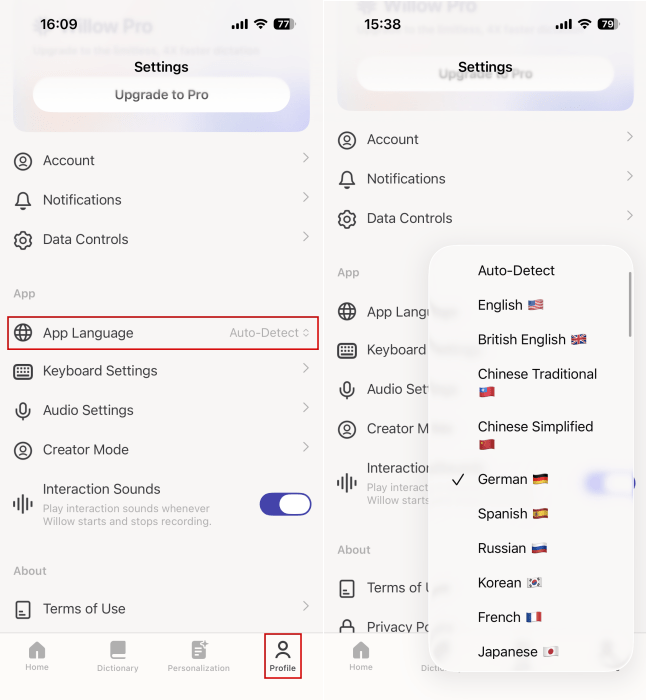
You can also set the language manually from the app, by going to Profile -> App Language.
I speak English with a slight accent and have issues with multiple voice-to-text apps in the past. However, Willow transcribed my messages almost perfectly.
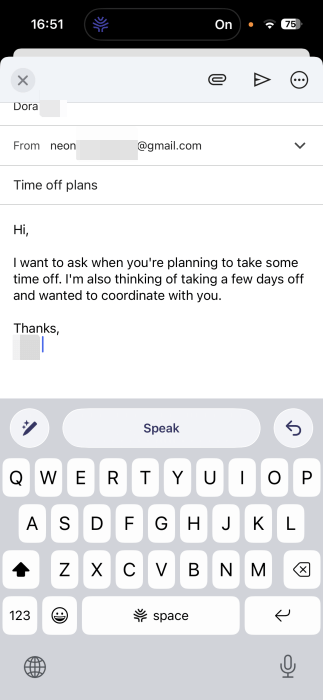
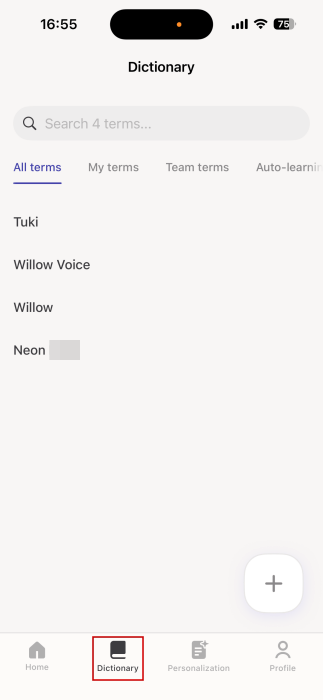
If I happened to stutter some words, the app filled in the blanks very well. I even tried singing, and Willow managed to pick up most of the words. It was not totally error-free, but thanks to the full keyboard access, I can rectify the errors quite quickly. In addition, there is also a Dictionary section where you can add specific terms or names to help Willow better understand certain words.
One thing I’ve noticed is that while Willow supports voice commands such as “new line” or “dash”, I found them difficult to use in practice. They seemed to only work when I spoke very slowly, so keep that in mind while you’re dictating.
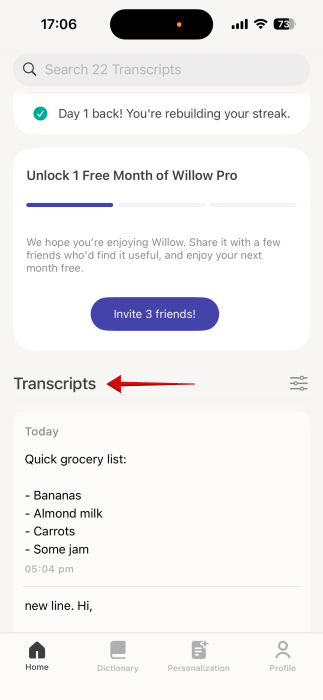
As you continue using the app, note that you can view all your transcripts in the app and re-use some of them, if you need to.
Enhancing transcripts with AI
Once your transcript appears in Willow, you can turn to AI to fine-tune your message. Remember that you can just use a few words when dictating and then let AI handle the rest.
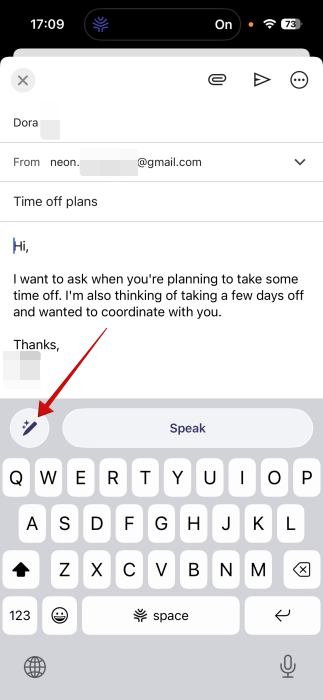
When the text appears, tap the magic pen icon on the keyboard.
Opt for one of the options at the bottom which include Fix grammar, Make formal, Make friendly or Use Gen-Z tone.
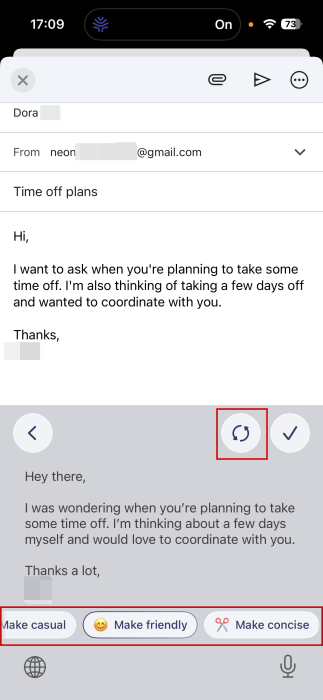
In case you don’t like the first option that AI generates for you, tap the Refresh button to access another version. Once you stumble upon something you like, tap on the text to insert it in the app.
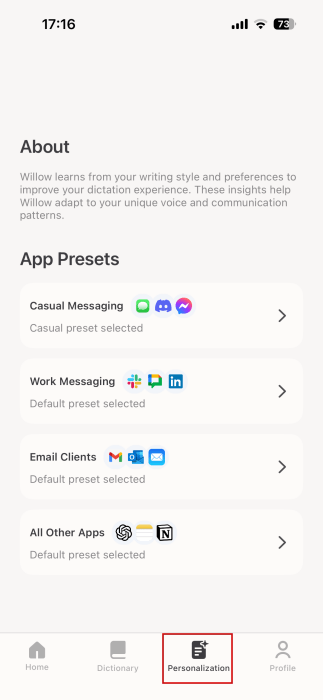
You can also set the communication style by pressing on Personalizaton and selecting a suitable App Preset such as Casual messaging or Work messaging.
A privacy consideration
Due to Apple’s iOS architecture, Willow needs constant background audio access to function properly. This can occur even when the keyboard isn’t active and can result in battery drain, and of course, raises privacy considerations.
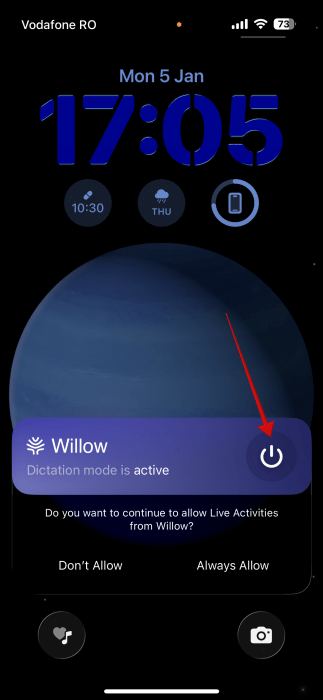
To avoid these issues, you’ll need to turn off Willow after each dictation. While this isn’t ideal, the app does offer some options to make the process easier.
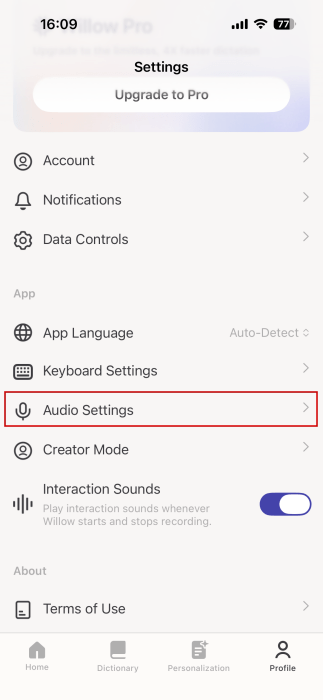
One solution is to set a session timeout. You can do this by going to Profile -> Audio Settings.
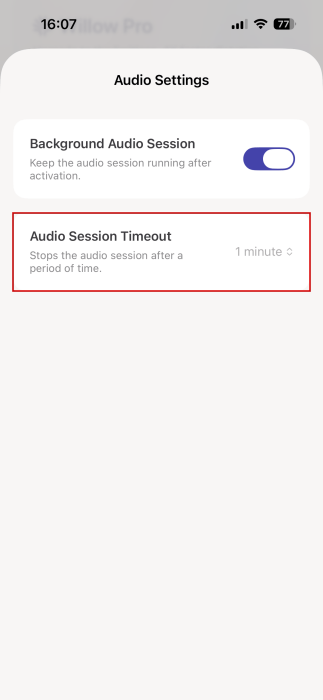
Set your Audio Session Timeout from here. In my case, I’ve set it to 1 minute. But you can go as far as 2 hours.
Or you can turn Willow off directly from its lock screen widget.
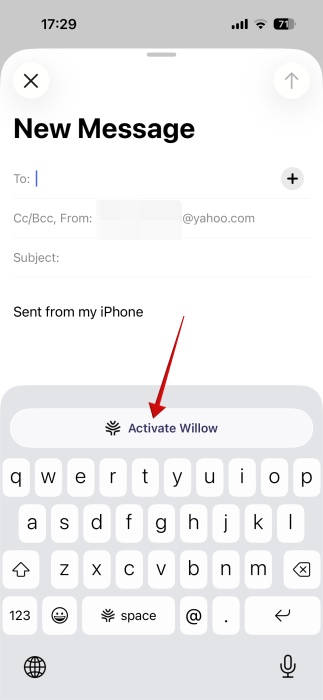
Alternatively, you can enable Willow from the keyboard itself, although you can’t disable it from the same location (opt for the widget instead.) These options bypass opening the app.
Apple makes it quite easy to switch between virtual keyboards on iPhone, so why not explore some more options? Check our third-party keyboard app suggestions for your iPhone.