
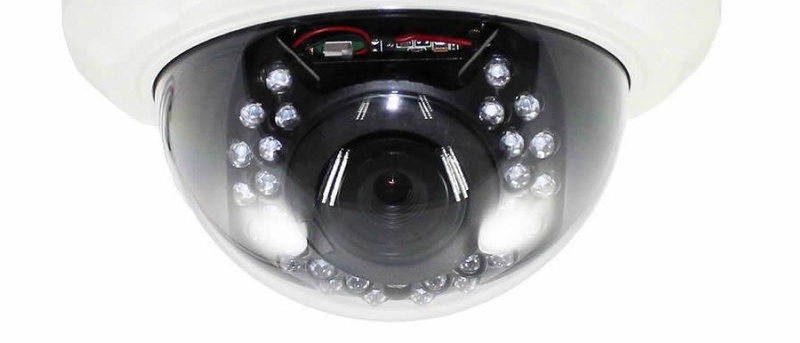

In a world where electronic devices are becoming more ubiquitous, we’ve become curious about things that connect us further. Since ADSL internet connections were left behind in favor of heavier Ethernet and fiber-based alternatives, we’ve seen a strong surge of video products that allow us to communicate with others and watch over things we hold valuable. When you were out on the market for a new webcam, you might have noticed some similar products known as IP cameras. If you’re wondering what those are, you’ve come to the right place!
What Is an IP Camera?
In short, an IP camera allows you to monitor things and record footage for extended periods. It’s a device that you should be using if you want to protect your home or business. It has many chief differences that set it apart from a webcam, hence the need for a new name. While you can perform many of the functions of an IP camera on a webcam, the hassle of doing so – and the lack of quality you get in the picture – makes the webcam less than ideal.
IP Cameras vs. Webcams
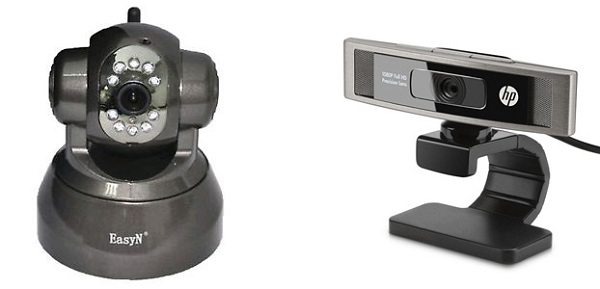
Keep in mind that this isn’t a comparison of performance. Webcams and IP cameras are made simply to serve different functions.
These are the primary differences between the two:
- Expect a better frame rate with IP cameras. They are made to capture every single movement while minimizing blurs that may cause a court of law to question any videos you may use as evidence.
- IP cameras are more focused on rigidity, meaning they’ll be more durable in outdoor conditions. Some have IP67 certification, which means they’re dust-proof and waterproof.
- Most IP cameras are wireless, while most webcams are wired. This allows them to be installed in locations that don’t have computers nearby. Cable length shouldn’t be an issue.
- IP cameras can stream video to multiple receivers. You can also control multiple cameras from one computer.
- IP cameras have advanced features like low-light optimization and night vision. This allows for night time surveillance. Webcams depend largely on room lighting for the picture.
Things To Look Out For If You’re Buying One
Now that you know the difference between an IP camera and a webcam, you can make an informed decision as to whether this is what you really need. If you’re in the market for an IP camera, there are a few things you should look for in these devices:
- Consider your lighting situation. If you don’t have a light on 24/7 wherever your camera will be facing, you’re going to need one with night vision. Most surveillance IP cameras have infrared-sensitive sensors and infrared-emitting LEDs on the optics. This will allow them to continue filming in total darkness, receiving the reflected infrared radiation from their LEDs.
- This is a no-brainer, but I’m still going to say it: Get the highest-resolution camera you can afford. 720p should suffice, but 1080p will always yield better. Don’t get a lower resolution unless you’re doing something like watching your child while you’re at work. You need the clearest picture if it will ever be used as evidence.
- Remote pan and zoom functions are always an enormous plus!
- Watch for cameras that can be managed through a mobile device.
- Get a camera capable of communicating through 802.11g or n. This will ensure a crisp image. The “g” and “n” refer to wireless protocols that directly affect the available transmission bandwidth. For best results, use 802.11n (you’ll also need a router that can communicate with the same protocol). This will spare you enough bandwidth for anything else you’re doing on Wi-Fi with your other devices.
- If your camera is outside your home or business, get something tamper-proof.
IP cameras used to be much more expensive and cumbersome to install. Now, they’re extremely versatile and convenient. Just don’t make the mistake of using a webcam as a surveillance device. They’re just not made for that purpose.
Conclusion
The advent of IP cameras has made it much simpler to keep a home or business safe. These cameras have significant differences that make them more advantageous to this particular purpose than using simple webcams. If you have any questions about IP cameras, ask them in the comments section!