
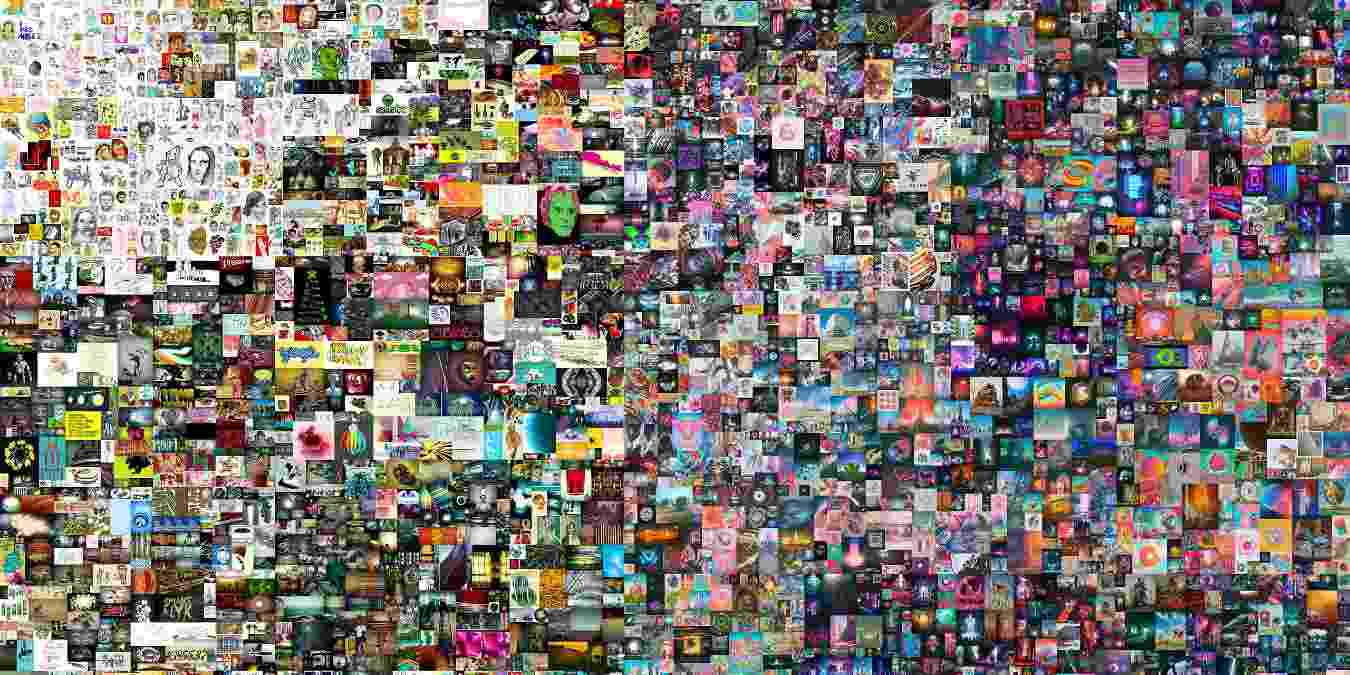

Remember Nyan Cat? The pixelated cat with a Pop-Tart for a body that grooved through space while shooting a rainbow out its backside? Of course you do. The artist who originally made the Nyan Cat GIF recently sold it for $600,000. Additionally, American artist Beeple just sold an NFT called “The First 5000 Days” via the prestigious British auction house Christie’s for an unbelievable $69.4 million.
The staggering sums that some Non-fungible tokens or NFTs have sold for has led to a frenzy amongst those on the bleeding edge of technology as well as traditional investors. But what is an NFT? At first glance, NFTs may seem similar to cryptocurrencies, especially since the word “blockchain” is associated with them. That being said, they are quite different. So if they’re not a new cyrptocurrency, what the heck are they?
Also read: Cryptocurrency vs. Blockchain – What’s the Difference?
What Is an NFT?
NFT stands for “non-fungible token.” In this case, “non-fungible” means that it cannot be exchanged for a like item. This is different than something that is “fungible.” For example, a Bitcoin is fungible because it can be exchanged for another Bitcoin. Since an NFT is a unique digital item, it cannot be exchanged for a “like item” because there is nothing else like it.
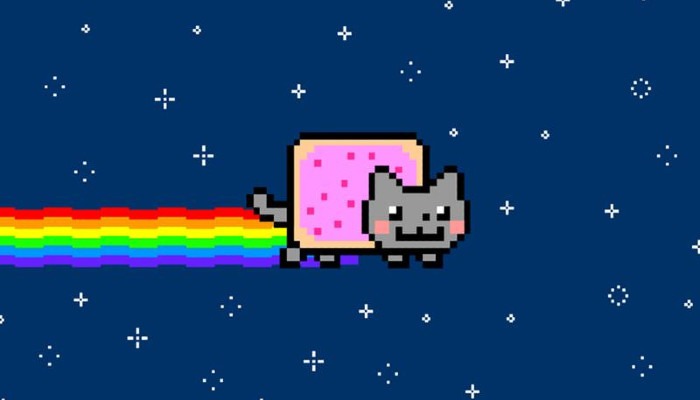
An NFT can be anything: a Tweet, a Kings of Leon album or a Pop-Tart Cat. The key is that an NFT is verified on the blockchain – a decentralized ledger that acts as a record of both authenticity and ownership.
How do NFTs Work?
We know what you’re thinking. If an NFT is just a digital thing, then why would anyone actually pay for it? Provided you’re willing to break copyright law, anyone can make a copy of anything digital free of charge. We can easily reproduce the Nyan Cat GIF to our heart’s content – simply copy and paste, and you have an exact copy.
This is where people get confused. An NFT is often associated with digital art. When we think of works of art we think of physical, tangible objects. For instance, we all agree that possessing the physical canvas of Jackson Pollock’s Blue Poles means ownership. Someone could make a print of that piece of art and hang it on their wall, but only one person really owns it.
NFTs seek to provide indisputable ownership of a digital object, despite the fact that by nature, digital items are easily reproduced. In essence, if you are buying an NFT, you are buying the rights to that digital artifact. And since the sale is verified via blockchain technology, anyone anywhere at any time can view the transaction.
Do NFTs Really Have Value?
Many people see the rise of NFTs as evidence of an economy gone mad. Others see a burgeoning investment opportunity that represents the next evolution of art. Think of it this way: imagine a famous artwork like Starry Night by Van Gogh. The original is hanging in the Museum of Modern Art in New York City. Although placing a value on such a famous work of art is nearly impossible, other works by Van Gogh have sold in the past for about $80 million. Given how famous Starry Night is, estimates put it’s worth over $100 million.
If you’re a fan of Starry Night, you can easily find a print to buy. However, that print isn’t really worth anything. After all, it’s just a piece of paper with an image printed on it. However, as we established with Blue Poles above, owning the original has value. This same principal can be applied to NFTs. Sure, the digital item may be copied and reproduced a million times over. Ultimately, those copies are worthless. But the NFT proves that you own the original, and that could be worth a lot of money – provided someone is willing to pay for it.
Where Can I Buy NFTs?

Since NFTs have gone mainstream, there are sites cropping up all over the Internet to capitalize on this new market. Unfortunately, buying NFTs can be complicated. Some of these marketplaces only allow you to purchase NFTs with certain cryptocurrencies. Others operate on special “tokens” or require you to link your digital wallet to the site before you can buy. As with anything, always do your research before transferring any money. That being said, some of the most popular NFT marketplaces are Opensea and SuperRare. Happy collecting!
Now that you know what a Non-fungible token is, are you interested in buying it? If you are, you may also need a crytocurrency wallet to store it. Do you think it’s the future or just a silly fad? Let us know in the comments!