


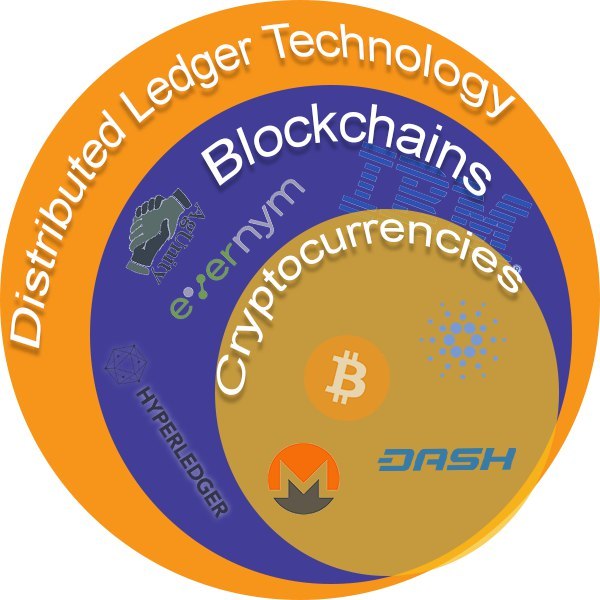
Blockchains and cryptocurrencies are both parts of the constantly-expanding universe of cryptographically administrated and secured systems, but despite commonly being used as interchangeable terms, they’re not the same thing.
Cryptocurrency is, as the name implies, a digital asset meant to be exchanged or used as a store of value. These fall under the larger category of “blockchain,” which is an umbrella term referring to any set of technologies that uses a system of keeping records by cryptographically linking “blocks” of transaction data together into a ledger. They are closely related in terms of the underlying tech (distributed ledger technology) but have some key differences in how they are used.
Blockchain
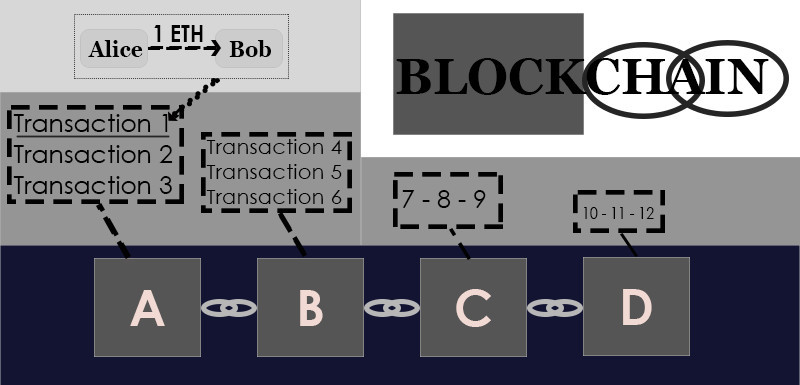
The name is actually more descriptive than it sounds. Think of a blockchain as a long record book with every transaction from every account written down in sequence. Each page is a block of transactions, and because they’re numbered, they can’t be put out of order. Page 100 is “chained” to page 99 before it and page 101 after it.
Additionally, there are multiple copies of this ledger owned by different people, so if someone tries to revise new or old blocks, the change won’t make it into the master copy because most of the ledgers don’t agree. It’s widely spoken of as a “trustless” system, since it’s quite difficult (requiring at least 51% of the computing power on the network) to cheat.
Bitcoin and most other cryptocurrencies use these transactions to record financial exchanges, but many blockchains don’t issue any currency, simply using the tokens as ways to communicate within their networks.
One of the areas that is closest to developing a large-scale use for this type of blockchain is the supply chain industry, which uses digital tokens to represent items and shipments as they move from place to place. Unlike most cryptocurrencies, many of these enterprise projects are run by large, established firms like IBM, Maersk, Wal-Mart, Dreyfus, the Royal Bank of Canada, and other entities that prefer to develop more private, controllable technology rather than participate in the broader open-source movement.
Another buzzword you may hear in association with blockchains is “smart contract,” which is essentially a piece of code that can connect to the blockchain and interact with it. These can be used to automate things that happen on blockchains, from accounting processes to fully-functional programs.
Using these in combination with Turing-complete (capable of executing logical functions) blockchains like Ethereum or NEO means that blockchains can, in effect, run a decentralized “world computer.”
Blockchain cheat sheet
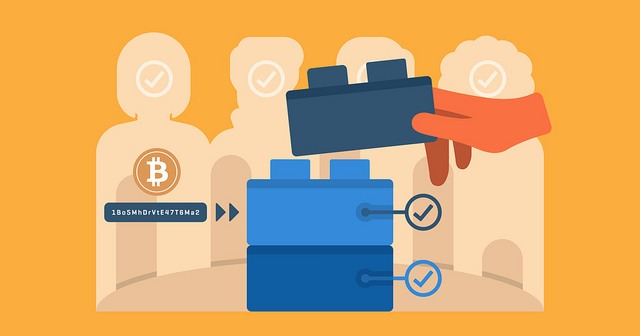
- It’s really just a good way to keep secure records. If you can imagine writing it down in a ledger, you can put it on a blockchain.
- Most cryptocurrencies are run using blockchains, but blockchains don’t need to have an associated currency.
- Blockchains can be open to the public (decentralized/permissionless), run by a single entity (private), or run by a consortium of trusted entities (permissioned).
- Blockchains are popular because they provide an easy way to be sure that information is trustworthy and agreed upon by multiple sources.
Cryptocurrency

Because this was the first large-scale implementation of a blockchain, many people automatically think “Bitcoin” when they hear the term. However, Bitcoin is only one of many (some might say too many) cryptocurrencies that have emerged since 2009.
In order to qualify as a cryptocurrency, the blockchain needs to include some form of issuable digital cash that can be distributed and exchanged, generally run by a decentralized computer network. It’s not necessarily anonymous, though some, like Monero (a leading crypto on darknet markets), are specifically designed to be so.
Cryptocurrency is one application of blockchain technology, but it also comes in plenty of its own flavors. Some are exchangeable assets, like Bitcoin or Dash, which are intended primarily as ways to pay people and store value.
Some cryptocurrencies, though, use coins and tokens to assign value to other things, like Storj, which uses its currency to facilitate payments for file storage, or Namecoin, which is both a cryptocurrency and a decentralized DNS. Some aren’t even based on blockchains, like Nano or IOTA, which use “directed acrylic graphs” (DAG) instead.
Cryptocurrency cheat sheet

- Cryptocurrency is (usually) an application of blockchain technology focused on exchanging value.
- Bitcoin is the original, but since this is the most popular way to apply blockchain, it has much competition.
- There are many different types of cryptocurrency, from anonymous “privacy coins” to coins that you can earn by blogging or looking at ads.
Outlook
The cryptocurrency space is widely regarded as volatile, as many of them are still very much works in progress. Blockchains in general, however, are rapidly getting more stable, with lots of R&D being thrown at them by both big established companies and small, innovative startups. The biggest hurdle that both technologies face is ease of use, though: until a blockchain or a cryptocurrency is as easy to use as the Internet or a credit card, they’re unlikely to get very far with the average person.
Image credit: Descryptive.com via Flickr