
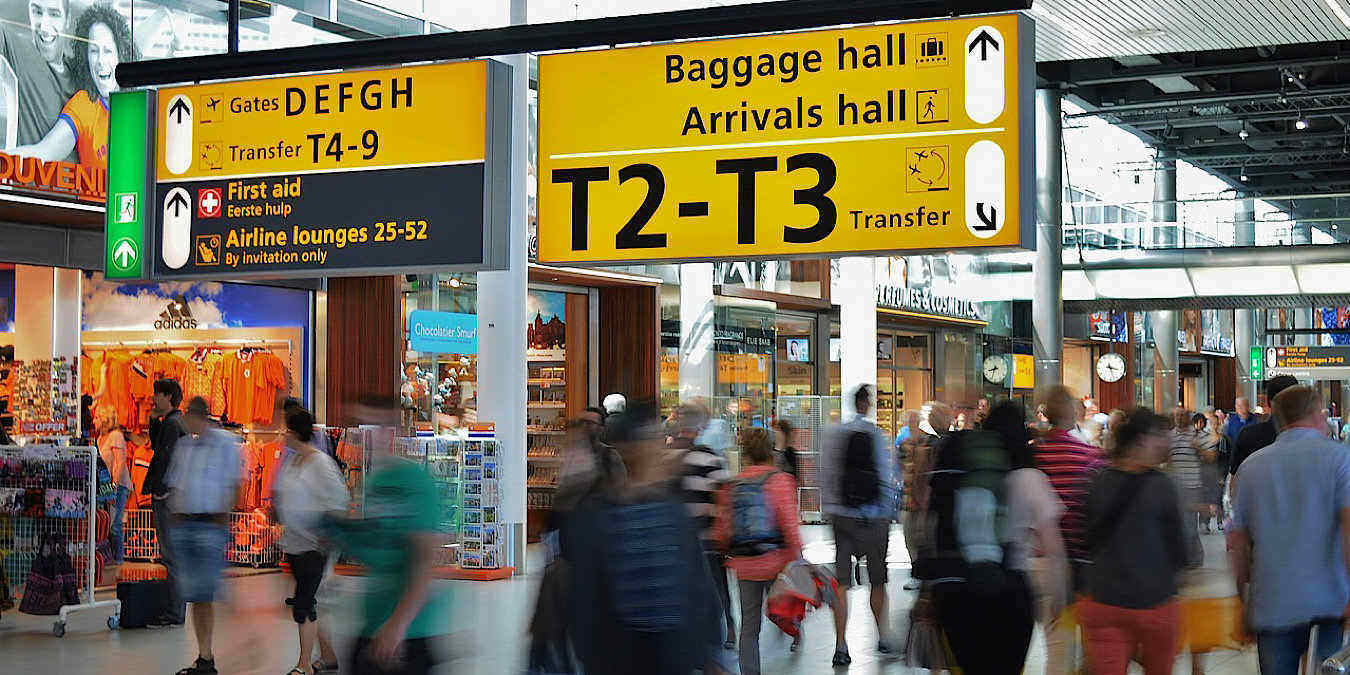

We all know the hassle of going through the TSA line at the airport. Yet, it’s a begrudgingly accepted, if not welcome intrusion. Sure, the lines can be long and the TSA employees bordering on verbally abusive, but it keeps us safe.
To continue to keep us safe, the United States government wants to institute yet another check at the airport. They want to begin using facial recognition in the security process at airports.
Push for Facial Recognition at Airports
To be fair, this is something that non-U.S. citizens have already been enduring for more than a decade when traveling in the country. They’ve had to submit themselves to a facial read that matches up to a database and also give up their fingerprints.
But the Department of Homeland Security (DHS) has proposed expanding that facial recognition process to also include U.S. citizens “to help prevent persons attempting to fraudulently use U.S. travel documents and identify criminals and known or suspected terrorists.”
This idea is not going over well with everyone. The American Civil Liberties Union has already complained, “Travelers, including U.S. citizens, should not have to submit to invasive biometric scans simply as a condition of exercising their constitutional right to travel,” said senior policy analyst with the ACLU Jay Stanley in a statement.
“The government’s insistence on hurtling forward with a large-scale deployment of this powerful surveillance technology raises profound privacy concerns,” he added.
Stanley notes that the U.S. government has repeatedly told lawmakers that citizens “would not be required to submit to this intrusive surveillance technology as a condition of traveling,” yet this latest idea from the DHS leads to the thought that they are “reneging on what was already an insufficient promise.”
Also at question is how the government will handle the data it will be collecting on travelers. Earlier this year a U.S. Customs and Border Protection subcontractor suffered a cyberattack. Hackers stole photos of travelers and images of their vehicle license plates. If the U.S. couldn’t handle that data, why would anyone want to trust them with more of their data?
Another civil liberties group, the Electronic Frontier Foundation, said at the time of the CBP cyberattack, “The inherent risk of such theft is among the reasons why the government should not be amassing this sensitive information in the first place.”
As for the DHS’s plans for facial recognition, the plan may already be too far along in the process to pull back. Michael Hardin oversees exit/entry policy and planning at the department and said the plan is in the “final stages of clearance.” He promised, though, that the program wouldn’t launch until a public consultation process was completed, although it is not clear what that would entail.
When Security Becomes Obtrusive
Again, added security can be a welcome obtrusion if it keeps us safe and does not require anyone to go through unnecessary steps. But because the DHS also handles immigration with a recent push for singling out undocumented immigrants, it seems this may be an unnecessary push on citizens in an effort to find people who are here in the country illegally.
In other words, it’s subjecting citizens to a loss of privacy by having their face documented by the government in an effort to find non-citizens.
Whether or not you reside in the U.S., how do you feel about airports using facial recognition to ensure your safety in airports? Tell us your thoughts and concerns in the comments below.