


If you’ve ever done a speed test on your Internet, you’ve probably noticed that compared to your download speeds, your upload speeds are, well, a little pathetic. You’re not alone, though: this is pretty much the norm worldwide.
Speedtest’s world average for July 2018 was 46.41 Mbps down, 22.48 up. Why the asymmetry? In general, ISPs are considering two things: there is a lot more demand for downstream bandwidth than for upstream, and there is a technical limit to how much traffic their lines can carry.
Asymmetry is actually important

DSL, cable, and fiber connections need to be divided into different streams for download and upload, and since they all have limits on how much information you can pack into them, privileging download over upload is usually better.
If everyone in an apartment building has fifty Mbps up and fifty Mbps down, all of their data is probably going to one coax cable connected to the building. During peak times they might max out the coaxial cable’s download bandwidth while leaving the upload channel fairly open. It makes sense then to have at least a two-to-one download-upload ratio.
DSL
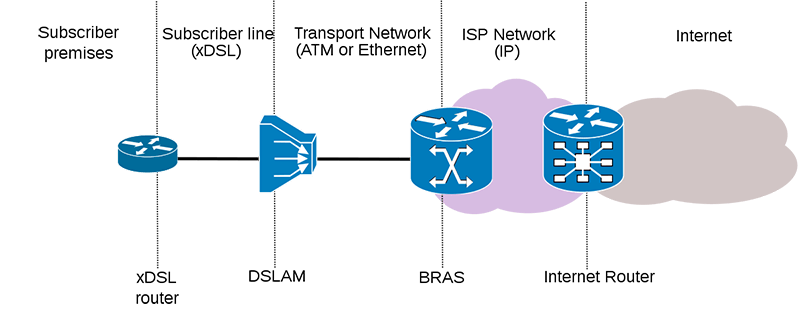
Digital Subscriber Line (or DSL) is fairly slow, but it does a decent job of relaying Internet over the last mile or two. It uses the same copper lines that your telephone does, so it’s not exactly built for speed. The download and upload streams operate on two different frequencies above the voice frequency, which being fairly high, decay pretty quickly over any distance. Most DSL is ADSL, where the “A” stands for “Asymmetric,” so the disparity is pretty much baked into the standard. There’s not much room for more bandwidth in copper wires, so keeping the lines biased toward download is probably for the best.
Cable
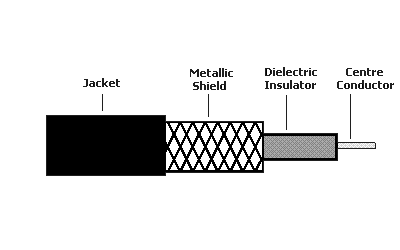
Due to higher downstream demand, there are more download than upload channels on the coax cable (carried on the same wire as TV). Add to this that upload channels are usually narrower than download channels (roughly six Mhz for down and three Mhz for up), and you’re looking at even lower relative speeds, which is why a four-to-one channel ratio doesn’t usually get you a four-to-one speed ratio. A twenty Mbps download speed will likely have less than 5 Mbps for upload.
However, a new standard for transmitting data over cables, DOCSIS 3.1, could make cable a lot faster. Essentially, 3.1 improves on 3.0 by taking the current channel widths of six or three Mhz, making them smaller, and combining them all into a much bigger spectrum.
Some ISPs are already starting to upgrade their equipment to the new standard, and paired with modems that support it, the same cables that currently top out at a few hundred Mbps could be carrying ten Gbps down and one Gbps up.
Fiber

While DSL and coaxial cable connections are typically constrained by a low upper bandwidth limit, fiber optic cables can carry so much data so fast that allocating some space to downstream at the expense of upstream is practically unnecessary. Thus, fiber for both individuals and businesses tends to be symmetric.
EPB Fiber in Chattanooga, Tennessee, for example, offers a frankly insane ten Gbps down / ten Gbps up. For cost and logistical reasons, some connections remain asymmetric, though these speeds are still typically more than enough, so fiber is still the most solid option for those in need of upload speed.
Also read: How to Improve Internet Speed for Streaming
How do I get faster upload speeds?

If you have laggy video or keep getting killed in multiplayer games, you’re probably looking for a way to improve your upload speeds. Unfortunately, if you’ve only been allocated two Mbps, and that’s about what you’re getting, your only way up is to pay for a higher tier.
However, if your upload speeds are significantly lower than what you paid for, and they seem to be that way consistently, here are a few things you can try before making that dreaded tech support call:
- Update your modem and router firmware. If you don’t have the latest, you may not be keeping up with the ISP’s upgrades.
- Go wired. It seems like the stone age, sure, but it can help squeeze out a few extra megabits when you need them.
- Make sure you don’t have background programs hogging too much bandwidth. Syncing photos, backing things up to the cloud, file sharing, and other applications can make your upstream connection pretty crowded.
- Check your speeds with different devices. If one is significantly faster, you might have a hardware or software issue with your device rather than an Internet problem.
Faster upload speeds are the future
The last option for getting better upload speeds is just to wait. As upstream connections become more important to average users who depend on things like cloud storage and streaming, they’ll be more highly prioritized. The lion’s share of most connections will still be dedicated to downloads, but with the increasing prevalence of fiber and the introduction of the DOCSIS 3.1 standard, things are getting steadily better.