
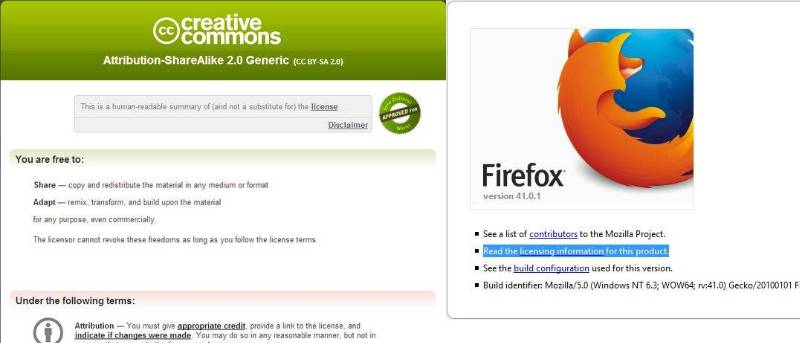

It can feel like everything you download has some legalese attached to it. You can’t do this, you can’t do that, and you can’t distribute such-and-such. Few people ever pay attention to these licensing agreements and could be breaching them without ever knowing. This article seeks to cast some light on the different open-source licenses available.
Licenses?
Technically speaking, almost everything you download is licensed to you. You don’t “own” it in the conventional sense. Even software you’ve paid for typically tends to be licensed, hence the term “license key.”
Different things are licensed to you in different ways, and there are so many licenses we couldn’t possibly cover them all. Instead, we’ll cover the ones you’re likely to run into.
SIL Open
This license exists solely for fonts and anything relating to them. This license grants you the right to freely use, modify and distribute the fonts as you see fit. In other words, if you find a quirk with a font you don’t like and you wish to change it, you can then share your version with the world.
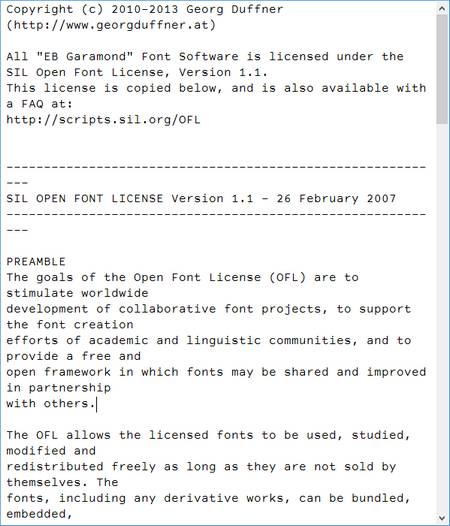
However, your modified version of the font must also be released under the SIL Open license. This means that you cannot attempt to charge money for a modification of an existing font. This practice of inheriting the original work’s licensing restrictions is known as “copyleft.”
Depending on the particular font, some are licensed in such a way as to prevent you from releasing it under the same name. If someone created a font called “Serif,” you cannot call yours “Serif” as well.
Creative Commons
Creative Commons is a non-profit organisation responsible for a family of digital licensing agreements. Often abbreviated down to “CC,” these licenses can be used on just about everything though the organisation does not recommend their use on software releases.

An unrestricted CC license means you can do whatever you wish with the content as it waives most legal rights, while a CC-BY license means you must credit the original creator of the content when using it. CC-SA means you must follow copyleft policies; the license cannot be modified along with the content.
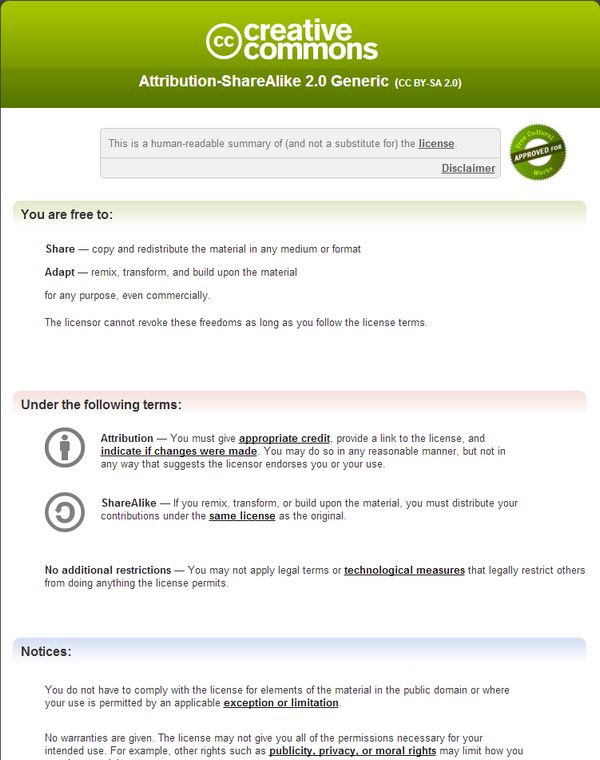
BY-NC (Non-Commercial) means that the content cannot be used commercially, such as in a marketing campaign. BY-ND (No Derivatives) means you cannot derive something else from the content.
BY-NC-SA means that you can modify the original, but you must release your version under the same BY-NC-SA license, you must credit the original author and it cannot be used for commercial purposes. BY-ND-SA is the strictest of the CC licenses available, stopping any derivatives being made and requiring that any content is accredited to its original author.
Mozilla Public License
The MPL, as it is known, is Mozilla’s answer to software licensing. Like many other open-source licenses it relies on “copyleft,” though this particular license is written to try and allow developers to expand upon projects released under other licenses as easily as possible.

While it is a Mozilla license, it is handled by the Mozilla Project as opposed to the Firefox development team. Mozilla is a bigger group than many give them credit for – unsurprising when they’re able to create an open-source license, after all.
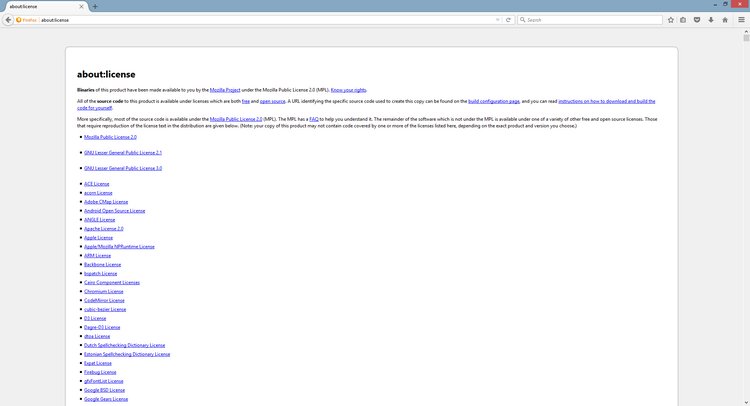
The MPL affords individuals and companies the right to use software without cost; any modifications released must refer back to the original code your work is derived from.
Apache Software License
The ASL, or Apache Software License, is another option for software releases. Individuals and companies alike can use ASL-licensed software freely; it can be modified and redistributed under the terms of the license as well.
The Apache license has been around since early in 2004 and has had a large number of adopters. All Apache releases are under their own license, and other projects have adopted it as well.
Interestingly, a modified version of ASL software does not demand copyleft. It is entirely possible to modify a program and release it under another license, such as the Mozilla Public License, if you desire to. Probably the biggest release under the Apache Software License is Android, Google’s mobile OS.
Finding Your License
Depending on what you have downloaded, the license may be part of the End User License Agreement (or EULA for short), or it may be found in the same archive as the file you wanted. In any case, it should now be possible to read them and get a general idea of their meaning.
Conclusion
As you can see, substantially more goes into the production and release of content online than you may have expected. Everything, right down to the rights of the user, must be considered closely.
If you are looking for a license for a project of your own, and those we have covered are not fully satisfactory to you, you may wish to check out this extensive list of open-source licenses.
Image Credit: Paul Downey