

Spotify has finally introduced lossless audio for Premium subscribers. On paper, this is a major upgrade, delivering CD-quality sound at no extra cost. Yet the truth is more complicated. Spotify lossless audio may impress audiophiles, but for casual listeners, it feels like an afterthought. That gap is the real problem Spotify needs to solve.
Four Years Late to Its Own Promise
Back in 2021, Spotify hyped up a HiFi tier that promised CD-quality audio, but it didn’t happen. Instead, years passed with little more than rumors and leaks of a “Music Pro” add-on.
Meanwhile, rivals like Apple Music and Amazon Music launched their own lossless streaming at no extra cost.
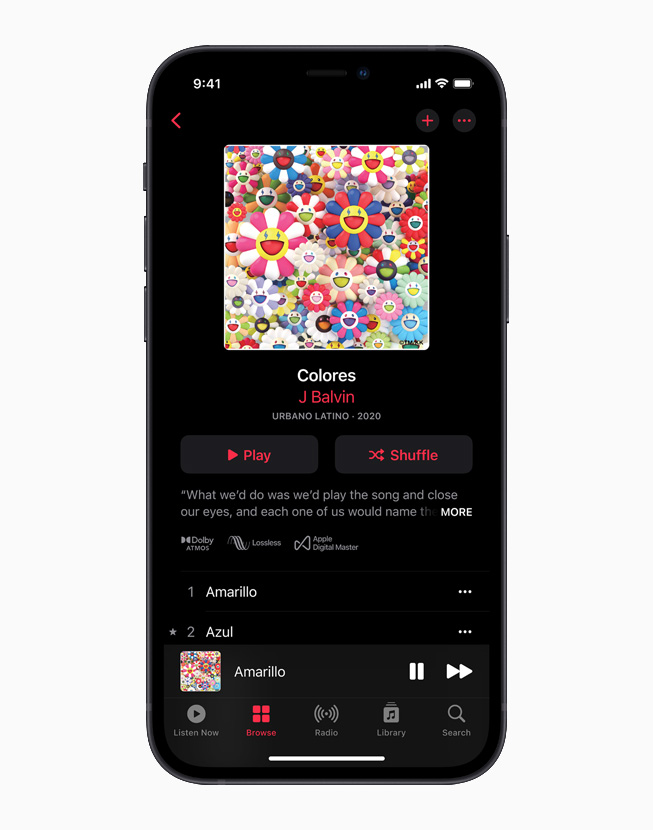
By the time Spotify finally delivered in 2025, the wow factor had already worn off. Spotify turned what could have been a groundbreaking feature to help them dominate into a defensive move.
As our breakdown of Spotify vs Apple Music shows, the company’s habit of reacting instead of leading innovations undermines its image as the market leader.
What Lossless Audio Promises
Spotify lossless audio streams at 24-bit/44.1 kHz FLAC, which delivers richer sound with more details than compressed formats. We’re talking about crisper highs, fuller lows, and that spatial depth audiophiles chase.
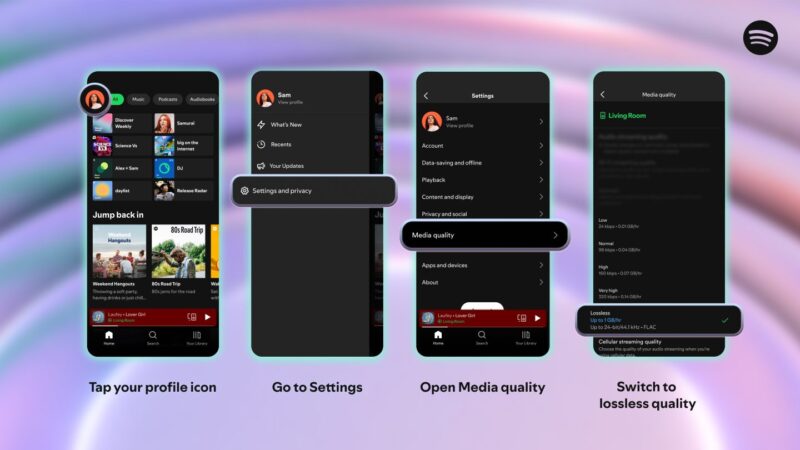
Head to Settings -> Privacy & Quality -> Media Quality to enable it. A small lossless badge shows up in the Now Playing view when it’s active.
On paper, this matches competitors. In practice, however, your experience depends heavily on getting the right gear. Wired headphones, DACs, or even converting your old collection with tools like ripping CDs to FLAC are where the benefits shine.
Why Casual Users Won’t Care
While I get the appeal of this feature on paper, most of us aren’t wired for this. Casual listeners like me stream music through Bluetooth earbuds, car stereos, or smart speakers.
These devices just don’t have the bandwidth; hence, they compress audio. So, Spotify’s lossless audio gets squeezed and sounds identical to the existing “Very High” setting. Unless you’re deliberately seeking out better sound, you likely won’t notice.
Even with better gear, casual listeners rarely sit down to analyze audio quality. They want mood, convenience, and availability. While audiophiles might prefer dedicated Android lossless audio players, the average Spotify user just wants to hit play on their earbuds.
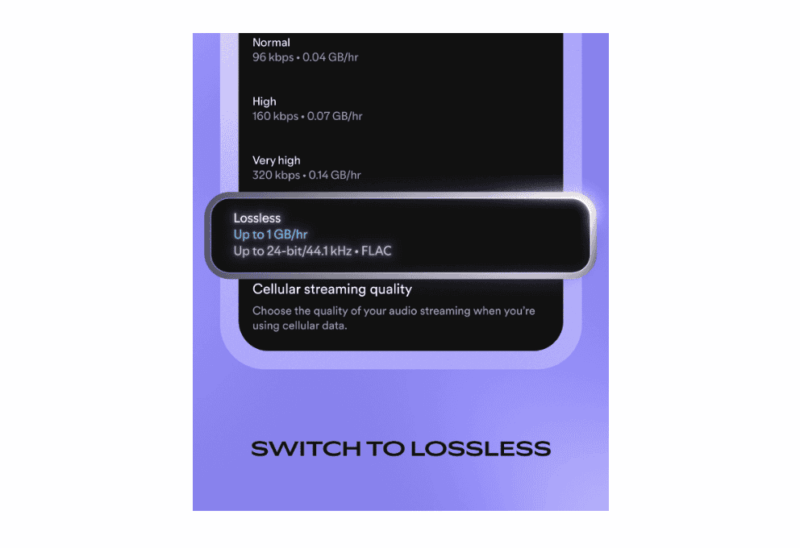
Beyond this, bigger files also chew more data and storage than necessary, a drag on mobile plans. There’s also a usability issue. Lossless must be enabled manually for each device. This feels like a chore for an app that’s all about effortless plug-and-play flow.
Spotify’s Late Game and Competitive Pressure
This launch is less about delivering something new and more about playing catch-up. Apple Music’s lossless catalog set the bar years ago with hi-res up to 24-bit/192 kHz for free, and Amazon Music quickly followed (HD 16-bit/44.1 kHz and Ultra HD 24-bit/192 kHz).
Spotify caps at CD quality also, which is respectable but not bleeding edge, especially with Tidal leading the audiophile pack.
Spotify’s delay likely stemmed from licensing issues and hesitation to risk higher costs. Hence, bundling lossless within the existing Premium plan is smart because it looks generous, dodging the backlash of an upsell despite coming late.
But the move reflects competitive pressure rather than bold innovation. It feels like a Hail Mary attempt to stop premium subscribers from crossing over to competitors.
The Future of Streaming for Casual Users
While audiophiles appreciate the feature now, casuals like me may care later as affordable DACs and smarter Bluetooth codecs drop prices.
Turning a phone into a hi-res audio player is also becoming easier, and gear that supports lossless is getting cheaper.
From my view, the real shift comes if Spotify is willing to educate listeners about why fidelity matters – maybe in app demos or gear tips. If not, lossless will remain a checkbox feature rather than a mainstream benefit.
Spotify lossless audio is a long-awaited upgrade, but it arrives too late to wow most users. Audiophiles gain, casual listeners shrug, and Spotify merely catches up with rivals.
The real challenge is not technical but cultural. To win us over, Spotify must make high-fidelity feel essential, not optional, in the same way playlists and recommendations do. Otherwise, it will remain a feature few truly notice while everyone else ignores.