


Many cell phone manufacturers are removing the 3.5mm jack from their devices. So, if you have a phone without that feature, you will have to rely on Bluetooth technology to listen to the audio.
However, Bluetooth has a slow transfer rate, and that affects the quality of the sound. It just doesn’t sound as good as a wired set of headphones.
Until recently, you couldn’t change anything to improve that transfer rate. But now the new Oreo operating system for Android allows you to choose which Bluetooth audio codec to use, whereas the previous versions selected for you.
Also read: What is Bluetooth Used For? 7 Uses for the Wireless Technology
What is a codec?
A codec is a device or program that compresses data to transmit data more quickly. It then decompresses that data on the other end so we can hear it.
However, compressing audio files introduces fuzz and hiss noises that affect the quality of the sound.
The bandwidth determines how fast data travels between devices. With higher bandwidth, the files don’t need as much compression to move from the sending to the receiving device. It’s like driving on a highway. If it’s wide, more traffic (data) can travel on it and more quickly. With less compression your music sounds better.

What are the available options for codecs in Android Oreo?
SBC
SBC is the standard codec used on most devices. It is mandatory for all A2DP (Advanced Audio Distribution Profile) devices. It provides a reasonable sound quality, despite a significant data loss as compared to the newer options. SBC has transfer rates of 193-320 kbps. The low end of this range ranks the speed of SBC much slower than the other options. Also, SBC has a latency of 100-150 milliseconds. This lag, although not noticeable while listening to audio, can cause the audio portion of a video to be out of sync.
aptX
The aptX codec from Qualcomm is not new, but it has taken years for it to make its way into Android phones. Now the new Android operating system offers this upgrade for smartphones running Oreo.
It is different from SBC because it uses ADPCM (Adapted differential pulse code modulation) which predicts the next signal based on the previous one. The differences between the two signals are the only parts sent to the receiver.
In aptX these signals move from the source to the receiver at a bandwidth of 352 kbps, wider than the industry-standard SBC.
It has significantly less latency, only lagging by less than 40 ms, and it sends 16-bit files at 44 kHz. AptX’s lower latency keeps the mouths going in sync with the sound on videos.
aptX also divides the file into separate frequency bands. These bands create a better sound to noise ratio, and the music sounds clearer than when using SBC.
These qualities make aptX suitable for consumer-grade headphones, but audiophiles will notice the background noise. They may prefer aptX HD.
aptX HD
The aptX HD codec is the high definition version of aptX. It sends HD files with very little background noise, allowing the listener to hear all the subtle details of the music.
aptX HD improves the quality of the sound by using a 576 kbps bandwidth. The extra bandwidth sends higher quality data without as much compression. It broadcasts 24-bit data at 48kHz, giving a more detailed, fuller sound. aptX HD achieves higher quality without increasing the latency or pausing the stream, so everything runs smoothly and sounds amazing. It even approaches the quality you get from wired headphones.
LDAC
LDAC is Sony’s answer to wireless sound. It supports some incredible transfer rates that only newer phones running Android Oreo are capable of supporting. Older phones will not have access to LDAC.
This codec sets itself apart from aptX and aptX HD with its three different connection modes for transferring data. The “Connection” mode connects at 330 kbps, which, in truth, is slightly slower than the SBC codec. Its “Normal” mode ups the rate to 660 kbps, and the “Priority” mode is capable of sending data at a blazing 990 kbps, significantly higher than the aptX or aptX HD.
Sony has not only achieved a transfer speed of 990 kbps; it sends high-resolution audio with a minimal loss in quality. It has similar latency rates to the aptX programs, and, in priority mode, LDAC transfers full 24-bit files at 96 kHz.
To use the high-quality data transfer that LDAC offers, you must make sure your headphones use the same technology and set up your phone to use this codec.
Change the codec
You need to work in the developer options to change the codec on your phone, but don’t worry – becoming a developer on your phone is easy.
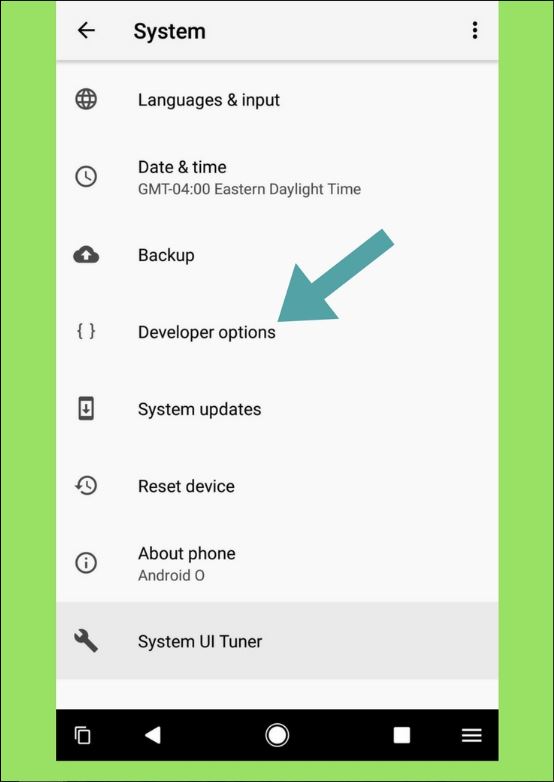
To change the codec, open the Developer options (Settings -> System -> Developer options).
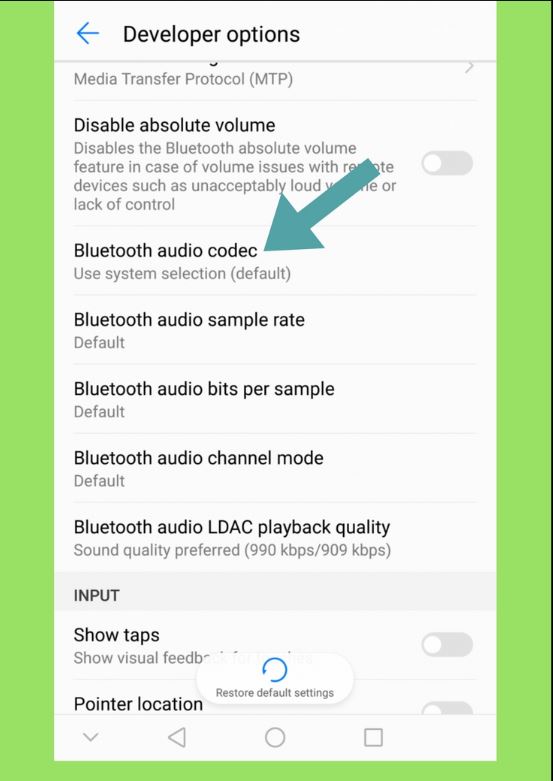
Next, scroll down up to Networking section, and find the “Bluetooth Audio codec” option. Tap on it.
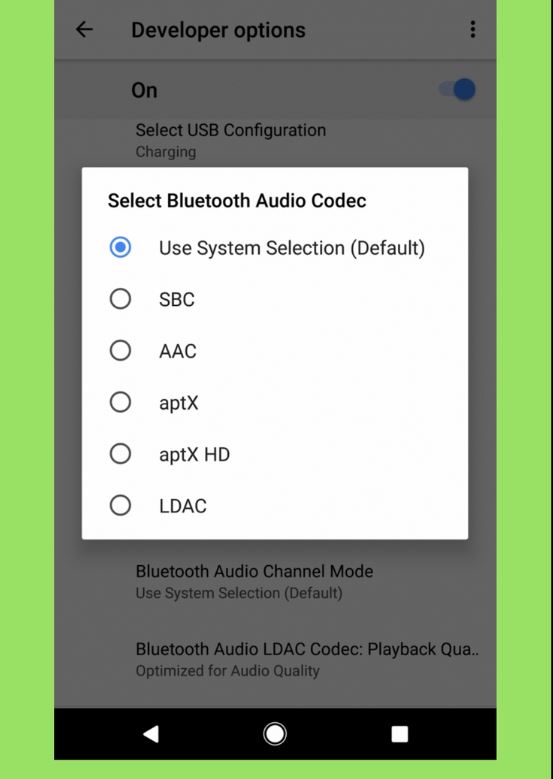
Finally, choose the codec you want to use.
Bluetooth audio, unfortunately, doesn’t always sound very good. If you want to improve the quality, you can change to a better codec and higher quality headphones.