
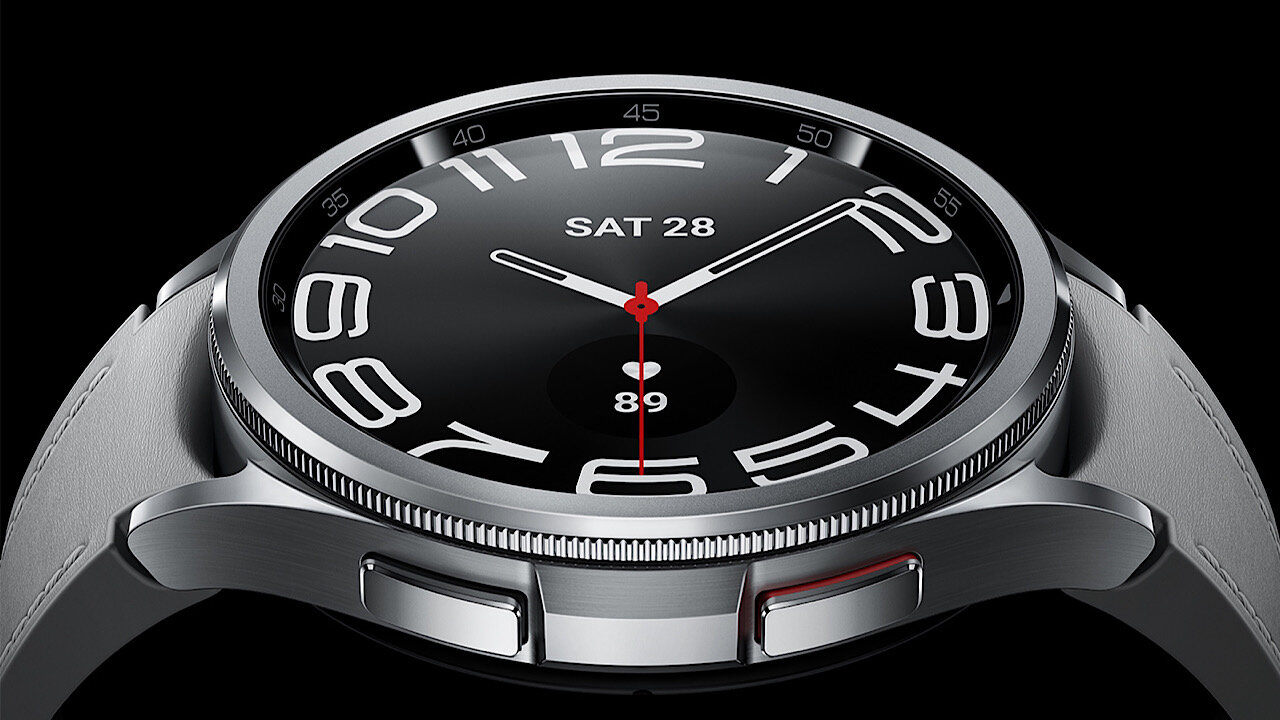
Samsung Says More AI Coming to Phones and Watches

Samsung Galaxy Watch Ai Featured Image

We talk often about AI (artificial intelligence) at Make Tech Easier, and for good reason: It’s exciting! It seems to open up all new possibilities that before were unheard of. Samsung is diving head first into that market. They jumped ahead with the Galaxy S24 series, and the Samsung mobile president just announced that there are even more AI features ahead – even for wearables.

Samsung Galaxy S24

While Dr. TM Roh didn’t mention any specific AI features for Samsung in the future, he still raised enough excitement with his blog post about the “era of mobile AI.” His excitement came through when he mentioned AI being “the most transformative technology,” despite the many innovations he’s witnessed as an engineer.

It seems there aren’t many areas of tech that AI hasn’t touched in some way or another, with possibly the largest excitement being drawn from the ChatGPT era. You can use it with Bing Chat, to write ethically, and there are even several alternatives.
Samsung Galaxy Watch Ai Future

Dr. Roh said Galaxy A1 helps people communicate, be productive, and more. The Galaxy S24 series added several AI features, such as Circle to Search with Google, Photo Assist, and a trio of language tools: Live Translate, Chat Assist, and Interpreter.

He also added that these AI features aren’t all that Samsung has planned for Galaxy AI. There are still more ideas and concepts that the company would like to introduce.

AI in Wearables

Not only does Samsung have more AI planned for future phones in its lineup, but it also has plans for other devices, including, specifically, wearables. There are plans to use AI to enhance digital health for new “intelligent health experiences.” Assumably, Dr. Roh is pointing specifically at Galaxy watches.
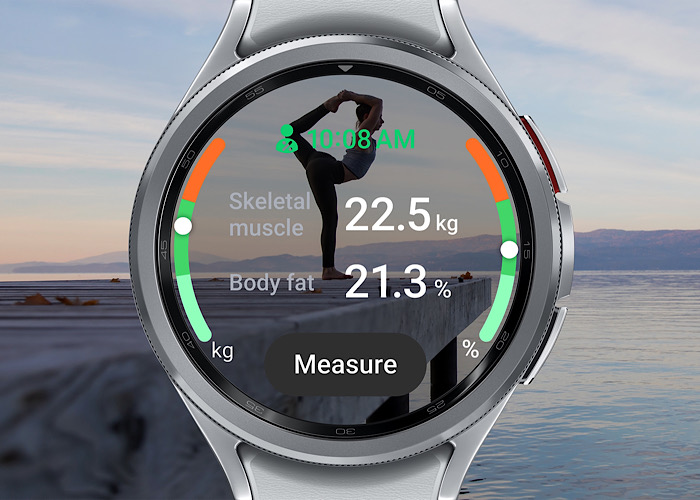
Samsung Galaxy Watch Ai Wearables

Along with that, Dr. Roh recognizes the challenges that lie ahead of AI as a whole. He sees the importance of “raising the standards of security and privacy” when instituting AI features. This was taken into consideration when Samsung created its hybrid approach that utilizes on-device AI and cloud-based AI, which gives users greater control of their data.

He’s interested to see what users do with these tools, stressing that this is what the next chapter of Samsung’s AI will be about.

While Dr. Roh is still excited about the benefits of mobile AI, the honeymoon period for ChatGPT may be over. Be sure to check out the reasons you shouldn’t use ChatGPT to write for you.

Image credit: Samsung

Subscribe to our newsletter!

Our latest tutorials delivered straight to your inbox

Laura Tucker Avatar

Read next

When the SS Great Eastern laid the first working transatlantic telegraph cable in 1866, a message that had taken ten days by steamship suddenly crossed the ocean in minutes, and the financial markets of London and New York were forced, within a single trading week, to invent the modern concept of synchronised global price.
The Big Ear telescope was scanning at 1420.4056 megahertz on the night of 15 August 1977, the exact frequency at which hydrogen atoms vibrate across the universe, because Giuseppe Cocconi and Philip Morrison had argued years earlier that any species trying to be found would broadcast on that channel — and then, for 72 seconds, something did.
In 2016, archaeologists dated two rings of snapped stalagmites in France’s Bruniquel Cave to 176,500 years ago, evidence that Neanderthals had walked 336 metres into darkness with fire and built architecture deep underground long before modern humans reached Europe
Otto von Bismarck was 74 when Germany adopted the world’s first national old-age social insurance program in 1889, setting the pension age at 70 after years of fighting socialists with bans, laws, and a promise few workers would live long enough to use
When cosmonaut Valeri Polyakov stepped out of his Soyuz capsule in March 1995 after 437 consecutive days aboard Mir, doctors recorded him at several centimetres above his pre-flight height, and his spine had become so unaccustomed to gravity that the recovery team carried him to a chair rather than risk the compression of letting him walk.
When Bell Labs engineer Karl Jansky pointed a rotating antenna at the sky in 1932 looking for sources of transatlantic radio static, he kept picking up a faint hiss that peaked every 23 hours and 56 minutes, and he eventually realized he had become the first human to hear the center of the Milky Way.
When Harvard astronomer Cecilia Payne submitted her 1925 doctoral thesis arguing that the Sun was made almost entirely of hydrogen, the field’s senior figure Henry Norris Russell talked her into adding a line calling the result ‘almost certainly not real,’ and then published the same conclusion himself four years later to widespread acclaim.
When seismic waves from the Chicxulub impact reached what is now North Dakota roughly ten minutes after the asteroid struck, they appear to have triggered a ten-metre standing wave in an inland river that flung fish onto the bank and buried them under glass beads still falling from the sky.