What we like
- Charges up to 8 batteries and auto-drops them when ready
- Supports both lithium-ion cells and NiMH/Ni-Cd rechargeables
- Short charging time
- Clear visual battery status via LED indicators
What we don’t like
- Power supply not included
- No native AAA support (included adapters required)
Few things are more annoying than having a wireless mouse, keyboard, gaming controller, etc., die in the middle of something important. You start digging through drawers looking for spare batteries, only to discover there aren’t any left. The Linogy Battery Recharger and rechargeable batteries are designed to prevent this. It’s also the more environmentally friendly option. This review will help you discover whether it’s for you.
This is a sponsored article and was made possible by Linogy. The actual contents and opinions are the sole views of the author, who maintains editorial independence, even when a post is sponsored.
First Look at the Linogy Battery Recharger
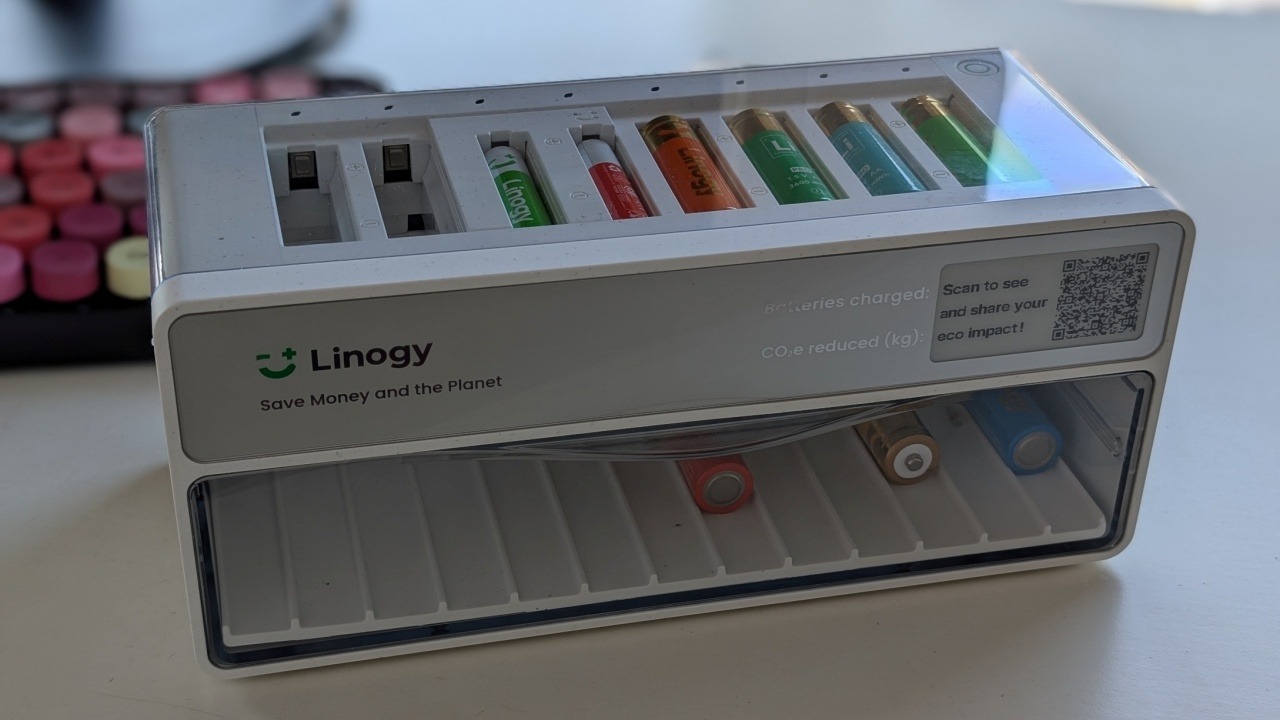
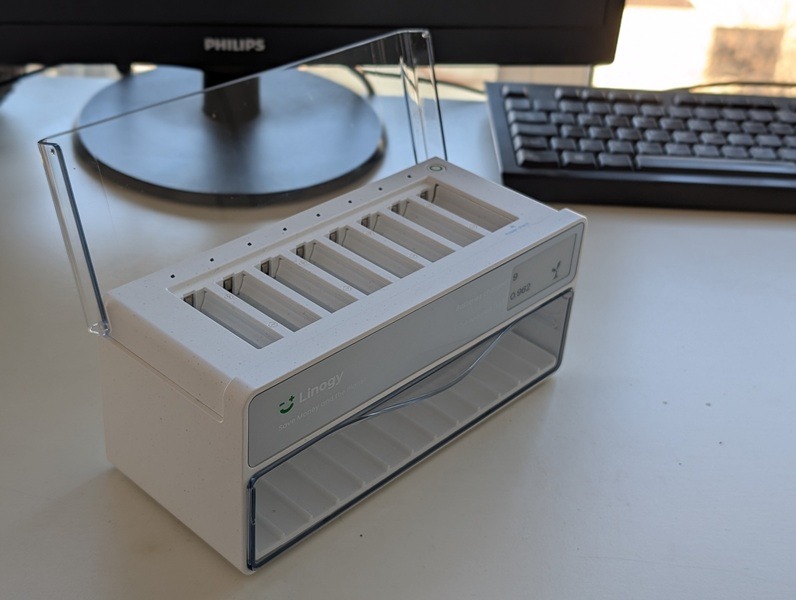
Linogy’s Battery Recharger is capable of charging up to eight batteries at once. It’s fairly compact and doesn’t take up too much space, though it isn’t the smallest battery charger on the market. Still, it’s easy to fit on most desks.
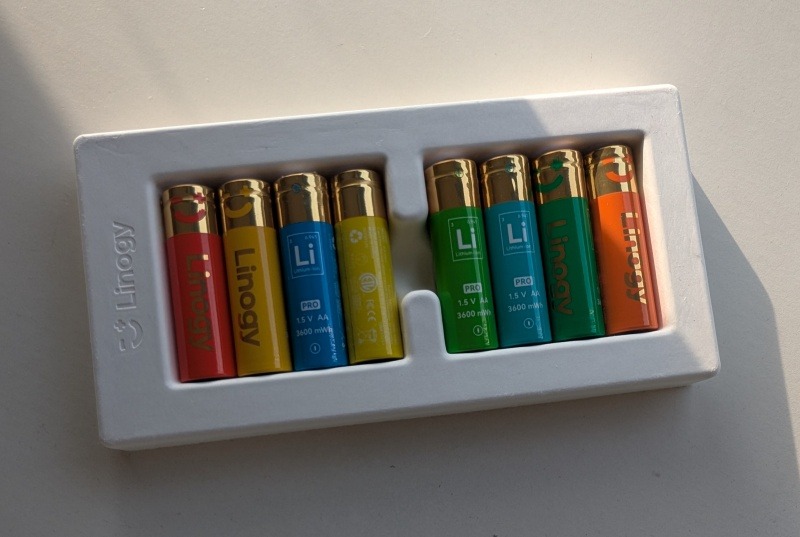
The kit also comes with eight AA batteries and four AAA batteries. They feature a colorful, fun design that helps brighten the otherwise routine task of charging batteries. It’s a small detail that I couldn’t help but appreciate.
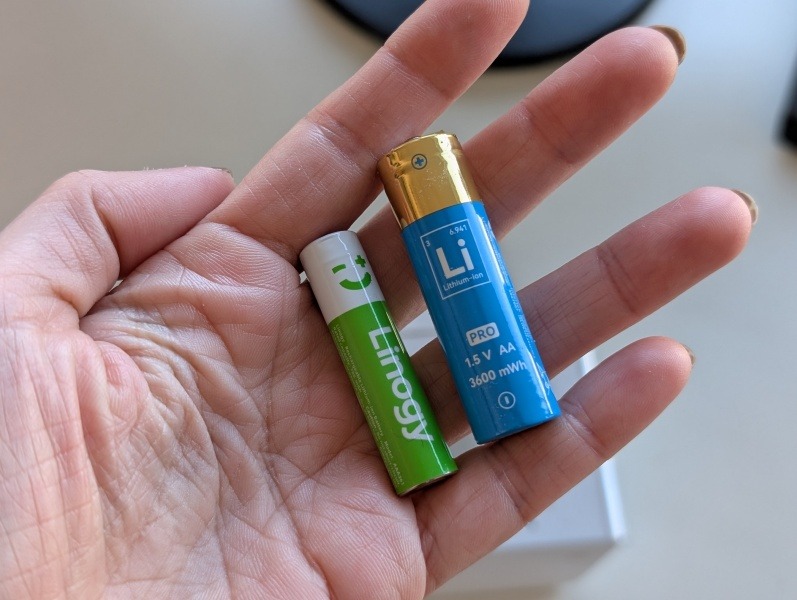
Linogy includes a USB-C cable in the box, but no power supply. The company specifies that you need a certified 5V/3A power supply, and I wish one had been included. As it turns out, I didn’t have a compatible USB-C charger at home, so I had to order one before performing my first charge.
Linogy places a strong emphasis on sustainability, packaging the product in cardboard. The company also promises that using their kit can help reduce CO2 emissions.
Charging Batteries with Linogy
Linogy isn’t the first company to offer a rechargeable battery system, but its solution stands out in a few ways.
To begin charging, connect the Linogy Battery Recharger to power, then place the batteries into their individual slots. They slide in easily and can be removed just as quickly with the tip of your finger. For the AAA batteries, you’ll need to use the included adapters, which are easy to attach.
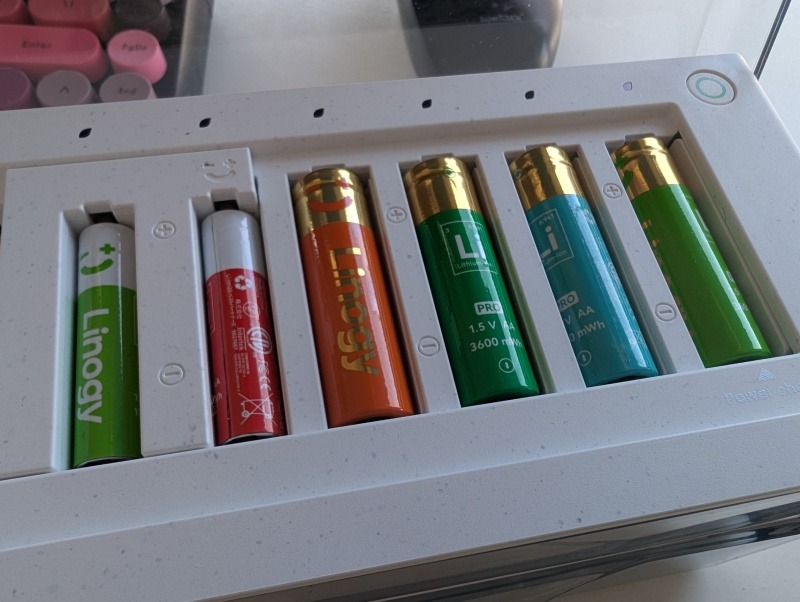
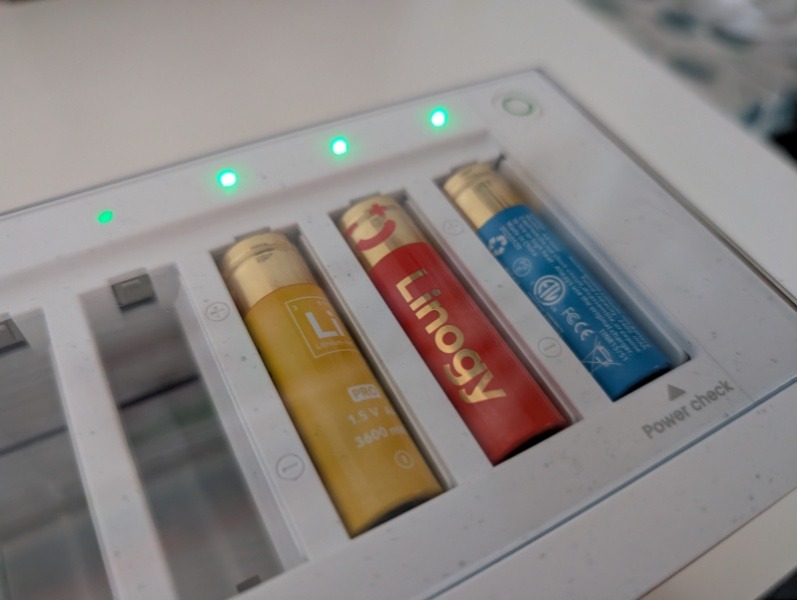
As you insert the batteries, small LEDs indicate their status. Blinking green means they’re charging, yellow means they’re still checking, and red means there’s an issue with the battery or something abnormal happening. For more information, check the charging station’s E-ink display.
Start your eco journey
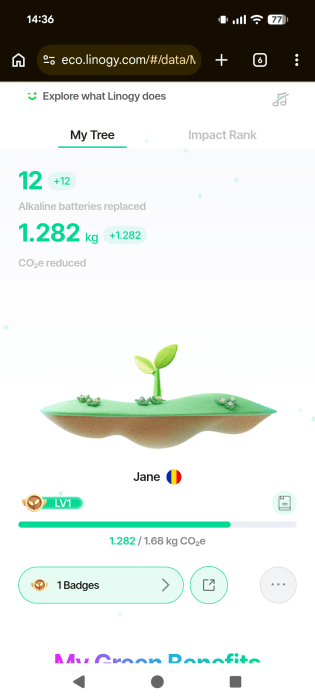
The mini screen also tracks how many single-use batteries you’ve avoided throwing away and the resulting CO2 savings, even showing you a virtual growing tree.
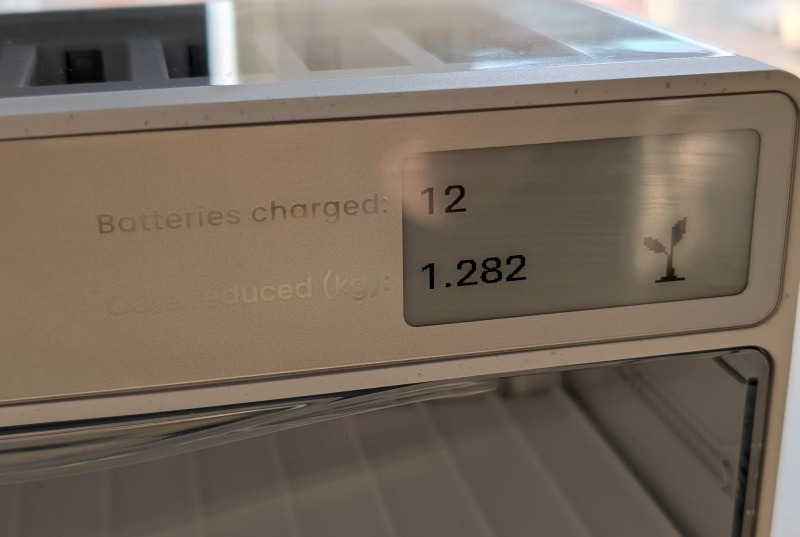
For extra amusement, scan the code that appears on the E-ink display to name your tree and view more details about it.
When the batteries are finished recharging, they fall into the pull-out storage compartment below, thanks to an auto-eject system that detects when they are fully charged, eliminating concerns of overcharging them. The drawer can hold up to 40 cells. I have to admit this is convenient, as I can just store my batteries there instead of moving them to another location.
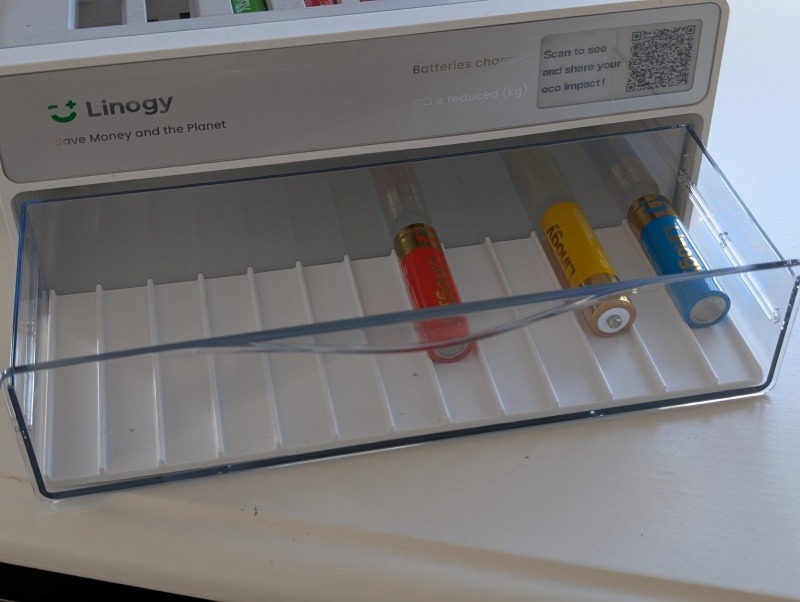
You can also release batteries manually by pressing the release button for three seconds. You can quickly remove a couple, even if the whole set hasn’t finished charging yet.
The Linogy charger completes a full charging cycle in about three hours, which is much faster than many battery rechargers, some of which can take twice as long.
What About the Linogy Batteries?
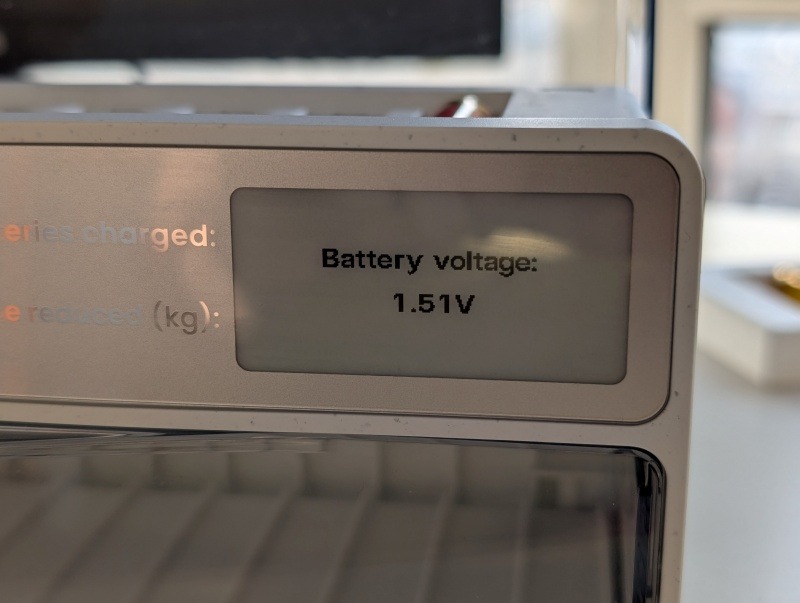
Compared to Ni-MH batteries, Linogy’s have a higher voltage of 1.5V. As these are lithium, they maintain a constant voltage of 1.5V until they are empty. With other Ni-MH batteries, the voltage continues to decrease as the capacity decreases.
The capacity of the AA batteries is 3,600 mWh (2,400 mAh), while the AAA batteries are 1,300 mWh (866mA).
You can check a battery’s voltage by placing a battery in the right corner of the charging station and pressing the button on the top. The information will appear on the E-Ink display.
I tested the batteries inside my wireless mouse, flashlight, and remote control, and they performed well. Since I enjoy hanging decorative lights around my home, I used a couple of Linogy’s AA batteries to power a 10-light LED string set on my balcony. I kept the lights on for about 6 days straight without any issues, although their brightness did fade quite a bit near the end. Linogy claims that the batteries will last for 1200 full charging cycles.
Works with the Batteries You Already Use
If you already use rechargeable lithium-ion or NiMH/Ni-Cd batteries, the Linogy Battery Recharger can charge them as well.
Each charging slot operates independently, so you can freely mix battery types and brands. You’re not limited to using just one brand per charge and aren’t tied to Linogy’s ecosystem.
Built-in Safety Features
While lithium-ion batteries are generally safe, some high-profile incidents have shown that they can occasionally overheat or explode. To reduce such risks, Linogy equips the battery recharger with a six-layer protection system that guards against overcharging, overheating, short circuits, and more. I didn’t notice the batteries or the charging station get warm in the slightest during charging.
Linogy also states that it tested its batteries by dropping a 9kg steel block from one meter directly onto it. The company reported that the batteries remained intact, emitting no smoke, leakage, or explosion.
Final Thoughts
Overall, I think most people would benefit from using the Linogy Battery Recharger, considering how many battery-powered devices are used around the house on a regular basis.
You will be able to keep fresh batteries ready, without having to rush to the store at the last minute. It also supports a more sustainable approach to powering your devices. Charging is super straightforward, and the auto-eject system is a clever addition.
You’ll need to make sure you have a compatible 5V/3A charger on hand. The charging station is also not particularly travel-friendly, so you may not want to bring it along on a photography trip, for instance, where you need to charge multiple accessories and photo gear but need to travel light.
The Linogy Battery Recharger (includes 1x 8-bay charger, 16x AA battery 3600mWh, 8x AAA battery 1300mWh, 4x AAA adapter sleeves, and 1x charging cable) is available for $139.00.
Subscribe to our newsletter!
Our latest tutorials delivered straight to your inbox