

Google Forms is used in creating surveys, quizzes, meeting RSVPs, job applications, order request forms and many other kinds of applications. If you’re using this app frequently, chances are you may have reused a few of your previous questions.
FormRecycler is an amazing GSuite app that helps you populate form fields intuitively by reusing the questions from previous forms as much as you want. We’ll show in this article how it can be used to combine multiple Google Forms.
Also read: 6 Ways to Make Good Use of Google Forms
Installing FormRecycler
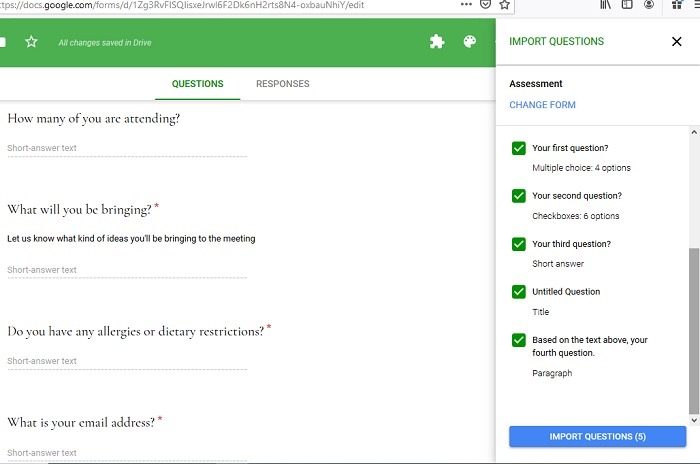
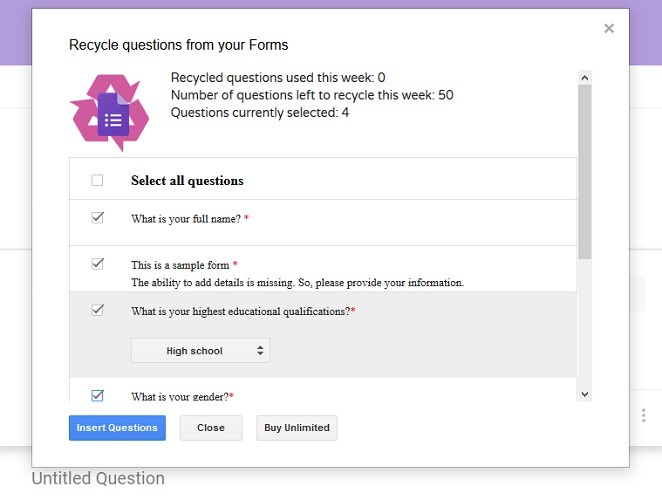
When you import questions directly using Google Forms, you’re unable to view the inner details of a question such as the text description of checkboxes. This is where FormRecycler can help, as it gives a bird’s eye view of all the questions you need to create/edit the forms faster.
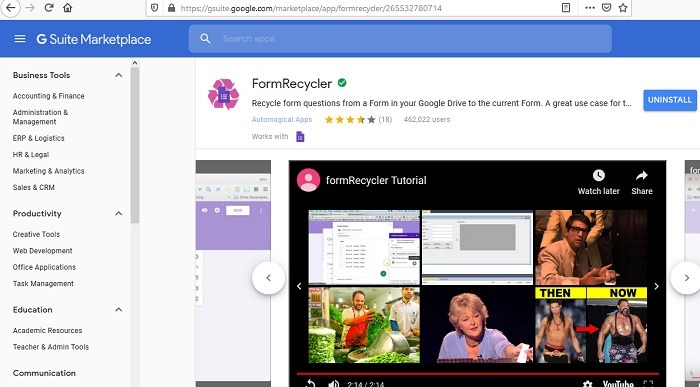
To install FormRecycler, sign in with your GSuite account and visit this link. Once installed, it will readily work from your Google Drive and is available as an add-on with Google Forms.
Combining Questions from Other Google Forms with FormRecycler
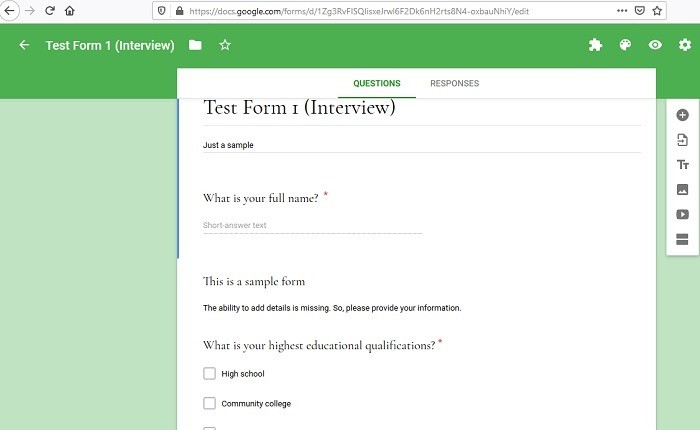
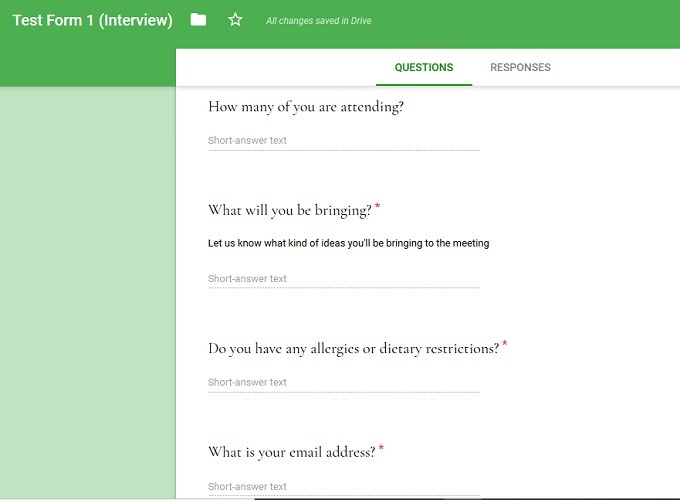
The following test form shows a sample form which will be recycled using the app. It’s a typical interview questionnaire with fields such as an applicant’s name, educational qualifications, gender, hobbies and description.
Let us combine the above datasets in a new form. For this, go to Google Forms and select a “new blank form.” To populate it with questions from another template, click the “add-on” icon on the top right and select “FormRecycler.”
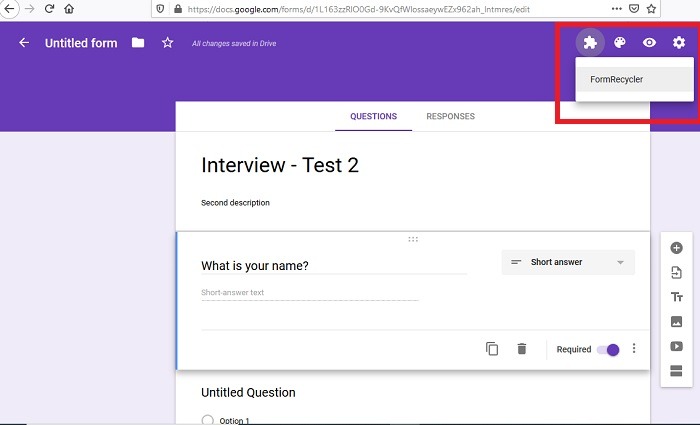
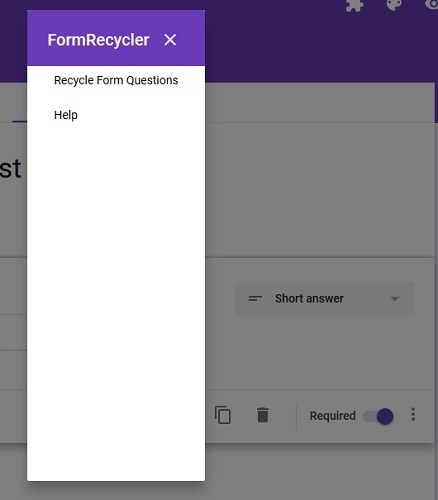
In the next step, click “Recycle Form Questions.” After that, you can import the older questions into the current form.
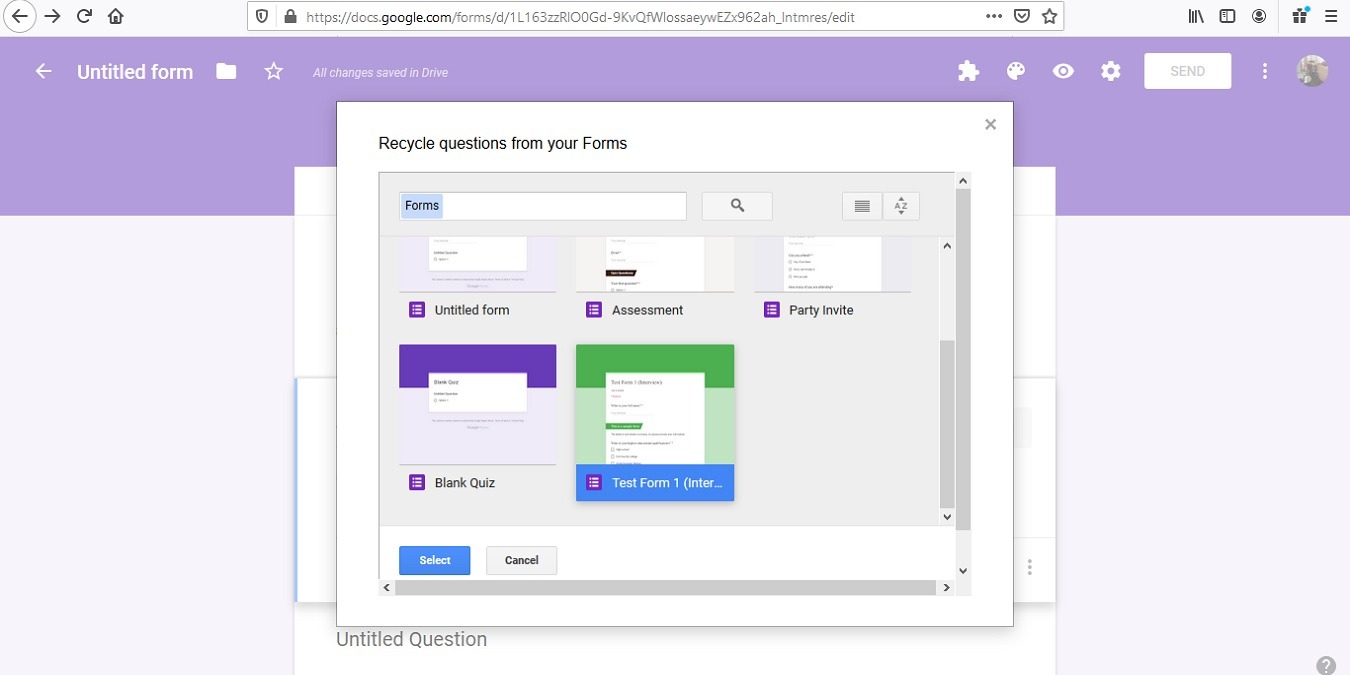
It will take just a few seconds for the FormCycler app to display all your existing forms. I selected the sample “Test Form 1,” which was created earlier.
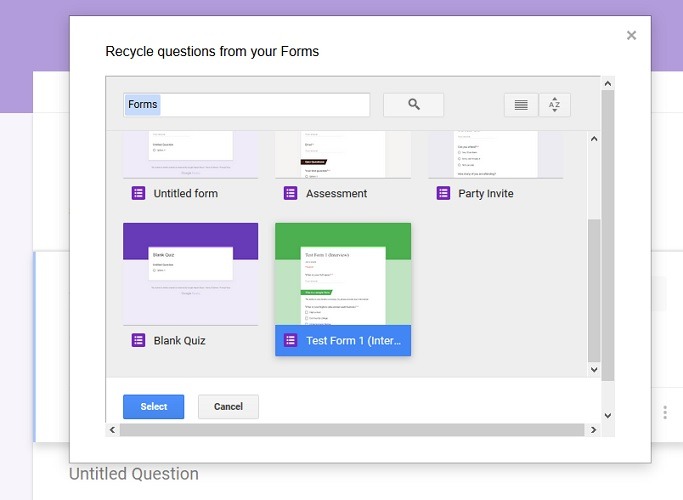
Now click “select,” and the FormCycler app will start recycling questions from the selected form into your existing form.
Once it has fielded the population, you can select your favorite questions and eliminate the ones you don’t need anymore. Unlike the direct import feature of Google Forms, here you can see all the questions and responses in vivid detail. Click “Insert Questions” to proceed further.
Again, it takes just a few seconds for the questions to populate your existing form.
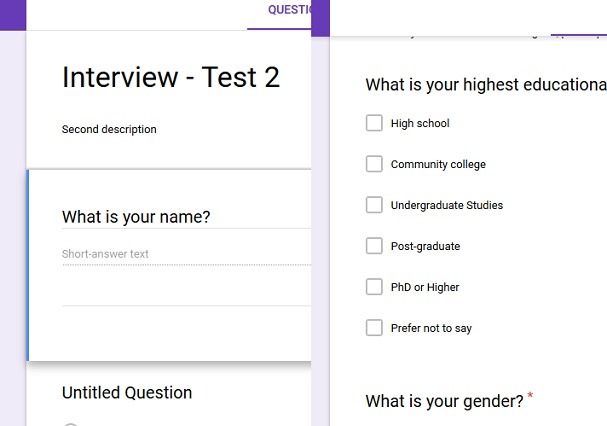
Now you can see that the questions from the older Google Form has been combined into the current form. You can further edit the template based on any new criteria.
If you are in the habit of circulating similar kinds of forms on a weekly or monthly basis, it’s recommended to save the current Google Form as an iteration so you can keep track of the latest entries.
With FormRecycler, there is no limit to the number of Google Forms you can import into an existing one.
Also read: How to Create and Set Up Quizzes in Google Forms
FormRecyler Premium Version
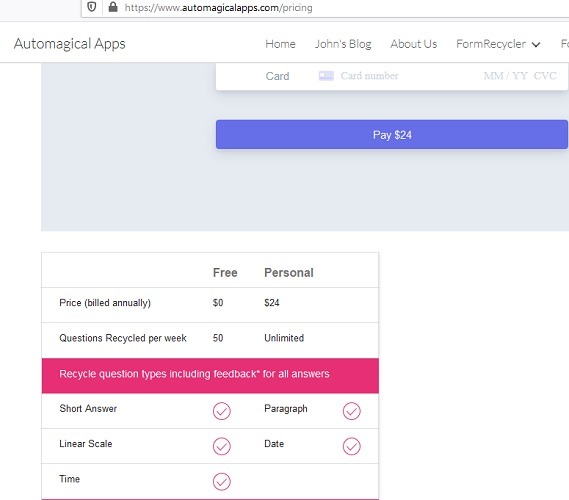
Currently, FormRecycler sets a weekly limit of maximum 50 questions that are allowed to be recycled for free. It does work for a lot of people, but if you want to recycle more than the stated limit, you’ll have to go for a paid plan costing $24 annually.
Conclusion
While there is an option to import questions directly from Google Forms, it can be difficult to navigate because you can’t really visualize the entire form. So, when you import the questions, you have to manually delete the duplicate entries.
Therefore, FormRecycler is a truly wonderful app that helps you work intelligently with multiple forms to create a recent one that has all the previous learning experiences.
Have you used FormRecycler before? Share with us in the comments if you found it useful.