

When some people see the word “refurbished” placed in the title of a PC, their immediate reaction is to avoid the item like the plague, not knowing all the differences between a refurbished and new PC. People sometimes confuse “refurbished” or “repackaged” PCs with used ones. There’s a huge difference between the two.
If you shuffle past something that’s refurbished, you’re missing out on a great deal. Buying refurbished material isn’t the same thing as getting something second-hand. Let’s examine the differences between a refurbished and new PC and open our minds to new, concise information about the refurbishing process.
What Is A Refurbished PC?
Anything that’s “refurbished” means that it’s been returned within a certain period of time by the customer to the distributor. The distributor repackages the product and sends it on its way to a special shelf where refurbished materials go. This is not to be confused with a “used” product!!
Anything that’s described as “used” has been in the possession of the customer for a long time. Refurbished products often aren’t even opened and are returned because of an error in the transaction.
Let’s say some guy clicks the order button twice when buying a 400 GB hard drive. He gets two of them at his house and returns one of them because he didn’t need it. That’s usually how the refurbishing process begins. The store has no choice but to sell it as a refurbished product since it was already ordered, therefore reducing the price of the product. The reduction could be a sum just shy of what it cost before or something more significant, depending on how many days this product has stayed in the hands of the customer.
It Gets More Complicated: Manufacturer Refurbish vs. Store Refurbish
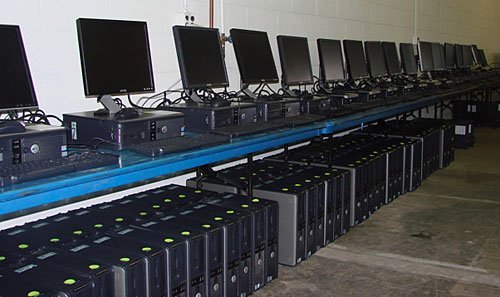
A store-refurbished PC is simply a unit that wasn’t sent back to the manufacturer for repackaging. It means that the store has reason to assume that the product isn’t damaged in any way. The store sells the product at a lower price with a short warranty usually lasting 30 to 90 days.
A manufacturer-refurbished PC is one that was sent back to the manufacturer for quality control inspection before repackaging. In this case, the PC will be sold with a long warranty, if not a full one. Warranties could even exceed a year if the manufacturer refurbishes the product. This is the safest bet and gives you a significantly better deal than a new PC.
So, Why Not Just Buy New?
Well, you can buy a new PC. That’s the safest way to make sure that you’re getting your money’s worth on a product that hasn’t been shipped and handled a load of times. Also, you get the fullest warranty and support package you can get. But if you’re strapped for cash and want to save a bit of money, you can buy refurbished models. Just make sure that you get a manufacturer-refurbished product. Store refurbishing is more of a gamble.
Also, new PCs still come in the pretty box they originally shipped out of the manufacturer in. Refurbished models rarely give you this privilege.
The Final Run-Down
So, if you want to buy a refurbished PC, remember that while store-refurbished PCs might cost less sometimes, they’re more of a gamble. Manufacturer-refurbished PCs give you the guarantee that the product has been inspected by an expert in its manufacturing process. New PCs still offer you more advantages by giving you a device that hasn’t been shipped back and forth (hard drives are delicate). Another plus is that you will always get the best warranty. The decision between a refurbished and new PC is ultimately yours. Refurbished PCs are often just as good as new ones. The risk is minimal.
Comment below if you’d like to speak your mind about this subject!