
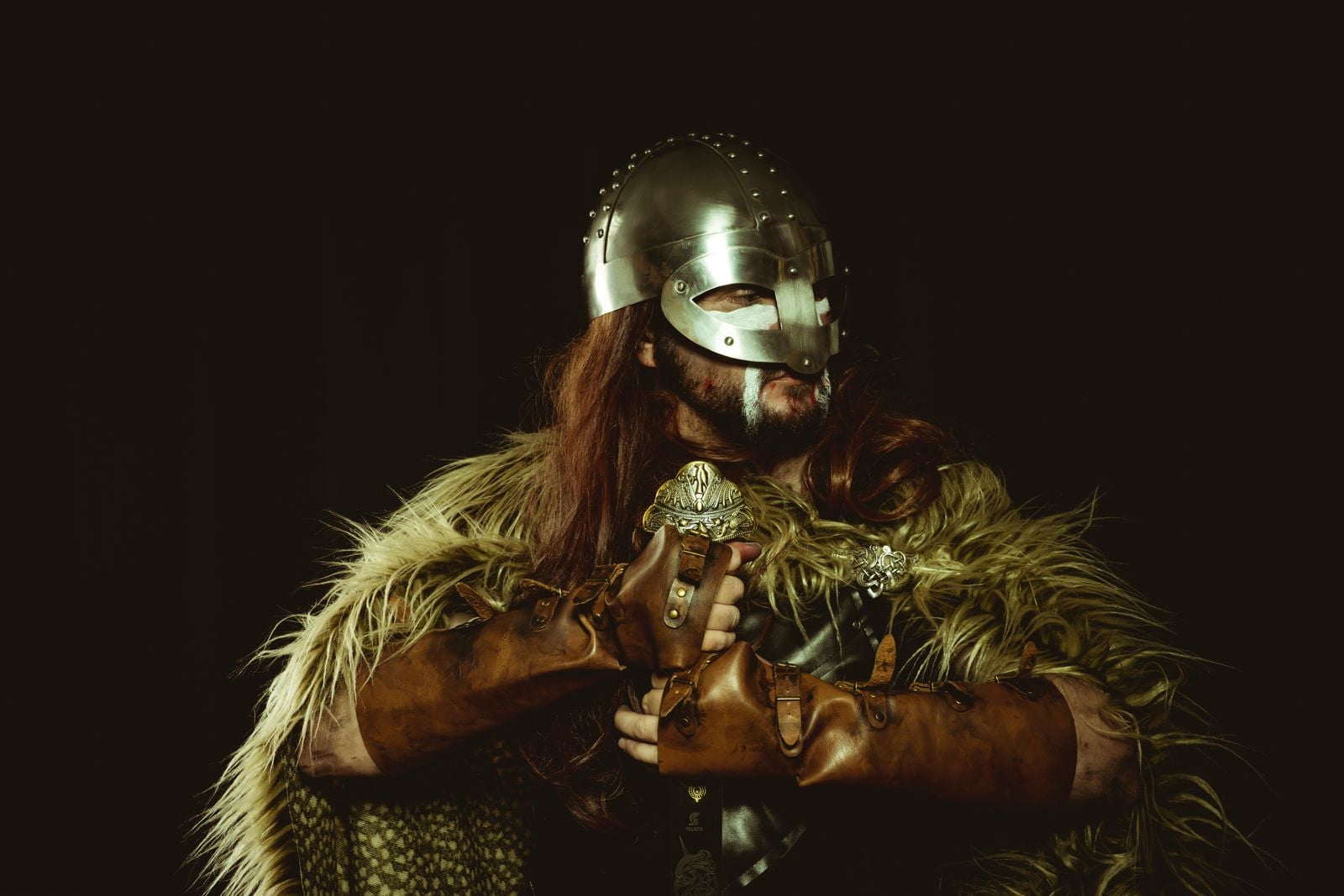

Every time you pair a set of earbuds, you are staring at a thousand-year-old monogram. The little blue rune on the connection screen is not an abstract shape or a stylised lightning bolt. It is the bind rune of Harald Gormsson, a Danish king who ruled from around 958 to 986 AD and is better remembered by his nickname: Harald Blåtand, or Harald Bluetooth. That name — chosen in a Toronto bar in 1997 as a temporary code name for an internal project — was never meant to leave the engineering team. It did, and now it is stamped on billions of devices a year.
The story starts with Jim Kardach, an Intel engineer working on short-range radio in the mid-1990s. At the time, three parallel efforts were underway: Ericsson had a project called MC-Link for wireless headsets, Intel was working on something called Biz-RF, and IBM and Nokia were exploring their own radio protocols. In 1996, the companies agreed to merge their work into a single royalty-free standard, but the consortium needed a name. Kardach was reading Frans G. Bengtsson’s historical novel The Long Ships, about Viking raids in the reign of Harald Bluetooth, and — as he later recounted in EE Times — the parallel struck him. Harald had united the warring tribes of Denmark and Norway into a single kingdom. The consortium was trying to unite fractious PC, phone and accessory makers into a single wireless standard. Bluetooth, Kardach argued, was the obvious placeholder until marketing came up with something better.
Marketing never did. The two proposed real names were “RadioWire” and “PAN” (Personal Area Networking). RadioWire’s trademark search dragged on too long, and PAN turned up tens of thousands of hits on early web searches, most of them unrelated. With the launch deadline closing in, the Bluetooth Special Interest Group launched under the placeholder name in 1998, expecting to change it later. By the time the first Bluetooth-enabled products shipped in 1999, the name had traction, and nobody wanted to spend the money to rebrand.
The logo has the same origin. It is a bind rune — two Younger Futhark characters merged into a single glyph. The first is ᚼ (Hagall), which represents the sound H. The second is ᛒ (Bjarkan), which represents B. Together they spell HB: Harald Blåtand. The Younger Futhark is the runic alphabet that was in use across Scandinavia during Harald’s reign, replacing the older Elder Futhark around the 8th century, and it is the same script that appears on the Jelling stones — two runestones Harald himself commissioned in Denmark to commemorate his parents and his own conversion of the Danes to Christianity. The larger of the two stones is often called “Denmark’s birth certificate” because its inscription names Denmark and records the country’s conversion to Christianity.
As for the “Bluetooth” nickname itself, historians are still arguing. The most common explanation is that Harald had a prominent dead or discoloured tooth — possibly dark blue or grey — that earned him the epithet. Another reading is that “blå” in Old Norse could mean dark or black as well as blue, and the nickname may have referred to dark hair or a dark complexion. A third theory suggests blátǫnn was a mistranscription of an entirely different word. The historical record, mostly written centuries after his death, is not helpful on the dental question.
What matters for the technology story is that the placeholder became the brand, and the brand became one of the most recognisable icons in consumer electronics. The Bluetooth SIG now counts more than 40,000 member companies, and the standard ships in an estimated five billion devices per year. The naming committee’s failure to come up with something better than a Viking king’s initials is arguably one of the most successful accidental brands in the industry — up there with Google being a misspelling of “googol” and Twitter being picked from a dictionary because it meant “a short burst of inconsequential information.”
There is also a small technical footnote worth mentioning, because it comes up in trivia and it is usually wrong. Bluetooth and Wi-Fi both operate in the 2.4 GHz ISM band, but they are unrelated protocols with different origins. Wi-Fi grew out of the IEEE 802.11 working group, which itself traces back to a 1985 FCC ruling that opened up the ISM bands for unlicensed use. Bluetooth was designed for much shorter range and lower power, using frequency-hopping spread spectrum to avoid interference — hopping across 79 channels 1,600 times per second in the classic version. That hopping scheme is why your Bluetooth mouse still works reliably even when your neighbour’s microwave and your Wi-Fi router are hammering the same band. It is also why pairing failures are almost always about the two devices failing to agree on a hopping sequence, not about radio interference.
The naming quirk also had a side effect nobody planned for: because “Bluetooth” is a proper noun tied to a specific historical figure, it is genuinely trademarkable in a way that “wireless personal area network” would not be. The SIG is aggressive about enforcement — you cannot legally call your product “Bluetooth-compatible” without paying membership fees and passing qualification testing, which is why cheap knock-off devices often say things like “BT wireless” or “supports BT 5.0” instead. That trademark protection, born from a joke about a Viking king, is now worth billions in licensing revenue.
I find this stuff satisfying for the same reason I like knowing that the entire internet’s naming system rests on 13 root server clusters, or that the Apollo 11 guidance computer ran on four kilobytes of memory. The infrastructure we treat as invisible and inevitable is almost always the result of specific people making specific decisions — sometimes deeply considered, sometimes made in a bar over beer and a paperback novel. Kardach later said he was mildly embarrassed that his placeholder became the permanent name, and even more embarrassed that he had to explain the reference at every subsequent industry event for the rest of his career.
Next time your phone pops up the pairing screen, take a second look at the icon. Those are the initials of a man who died in 986 AD, probably killed in a rebellion led by his own son Sweyn Forkbeard, rendered in a runic alphabet that predates the printing press by five hundred years, silkscreened onto a chip that will probably end up in a landfill within a decade. It is the strangest, most persistent Easter egg in consumer technology — a Viking king, quietly presiding over the wireless connections in every pocket on Earth.
— Justin