
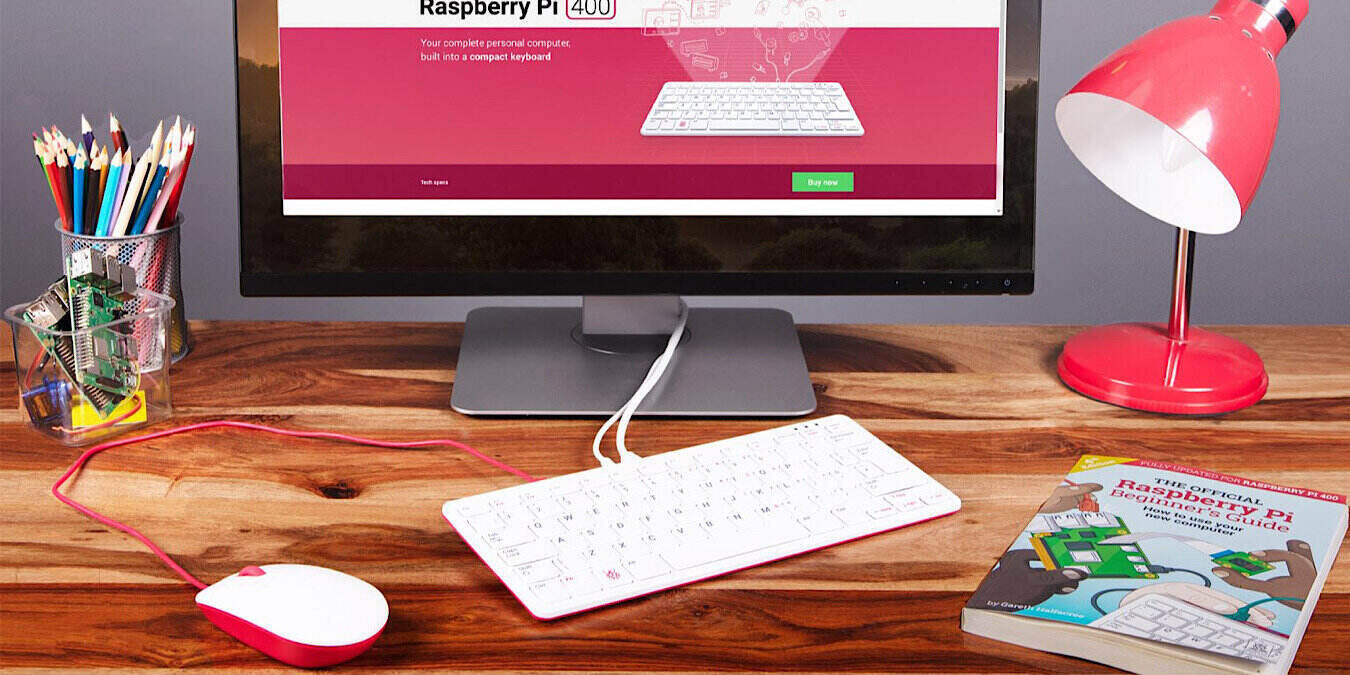

The Raspberry Pi line has become very popular among those who like to do a moderate amount of tinkering. Now they are introducing something new to the line that will allow no tinkering: the Raspberry Pi 400, a complete desktop PC built into a keyboard.
What Is the Raspberry Pi 400?
Last year the Raspberry Pi, around 40 times as powerful as the original Pi, joined the line. The goal is for it to lead to use that emulates a legacy PC.
With the global health crisis and people finding themselves stuck at home for school and/or work, there has been an uptick in use for the Raspberry 4 this year.
Now that computers are being pushed back into the home, there may not be as much room for them, leading to a need for something that takes up less real estate. Tablets may do all this for you, but certain education curriculum and work situations need more than a tablet.
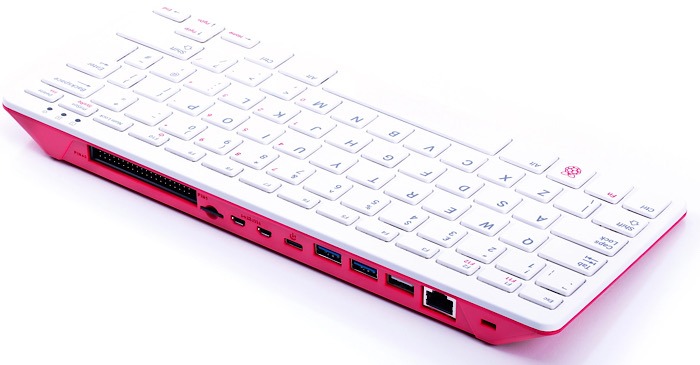
Classic home computers had this figured out. It was all integrated into the keyboard. There were no separate hard drives and no keyboard cables – only a computer, power supply, monitor cable, and a mouse, depending on how early the computer was. Apple was big on introducing computers that were all one piece, save for the keyboard and mouse.
The Raspberry Pi 400 is explained as “a faster, cooler 4GB Raspberry Pi 4, integrated into a compact keyboard.” You can either bring your own accessories and hook the keyboard up to own mouse and more, or you can buy the whole kit all in one.
It reminds me of my parents’ first computer – a WebTV. It was a complete computer in a keyboard that just hooked up to their TV. It allowed them to check their email and browse the Internet, basically all they wanted to do.
Raspberry Pi 400 Specs
- Broadcom BCM2711 quad-core Cortex-A72 (ARM v8) 64-bit SoC @ 1.8GHz
- 4GB LPDDR4-3200
- Dual-band (2.4GHz and 5.0GHz) IEEE 802.11b/g/n/ac wireless LAN
- Bluetooth 5.0, BLE
- Gigabit Ethernet
- 2 x USB 3.0 and 1 x USB 2.0 ports
- Horizontal 40-pin GPIO header
- 2 x micro HDMI ports (supports up to 4Kp60)
- H.265 (4Kp60 decode); H.264 (1080p60 decode, 1080p30 encode); OpenGL ES 3.0 graphics)
- MicroSD card slot for operating system and data storage
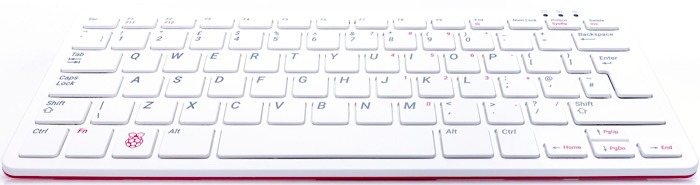
- 78- or 79-key compact keyboard (depending on regional variant)
- 5V DC via USB connector
- Operating temperature 0ºC +50ºC ambient
- Maximum dimensions 286mm x 122mm x 23mm
Availability
If you don’t want to bring your own, you can get the complete Raspberry Pi 400 Personal Computer Kit. All you need to supply is a TV or monitor. The kit includes:
- Raspberry Pi 400 computer
- USB mouse
- USB-C power supply
- SD card with Raspberry Pi OS preinstalled
- Micro HDMI to HDMI cable
- Official Raspberry Pi Beginner’s Guide
English (UK and US) and French keyboard layouts are available at launch. Italian, German, and Spanish layouts are expected to be available next week.
Does it seem to like we’re going backward with a goal of emulating classic PCs? Read on to learn whether the Raspberry Pi 4 is really viable as a desktop computer.
Image Credit: Raspberry Pi Blog