

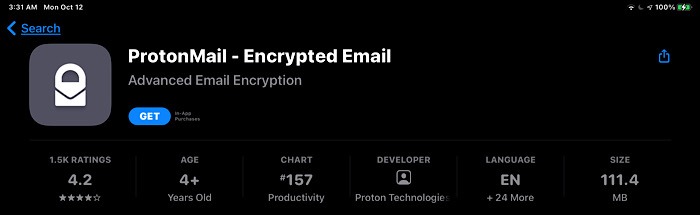
Apple has been under the gun for the past few months with developers complaining about the 30-percent cut it demands in in-app purchasing fees in the app store. Through congressional testimony on the possible monopolies of the company, along with Amazon, Facebook, and Google, more was learned about that process. The ProtonMail developer revealed that Apple forced it to add in-app purchases even though the app had always been free.
ProtonMail’s Case with Apple
The ProtonMail developers, along with developers of other apps, has been afraid to speak up, unsure of how Apple would punish them. ProtonMail CEO Andy Yen came completely clean in an interview with The Verge about what it’s been forced by Apple to do.
Apple changed the rules last month to exempt “free apps acting as a standalone companion to a paid web-based tool” from being required to offer in-app purchases. Further, email apps have explicitly been called out as exempt. But ProtonMail is still afraid to remove its in-app purchases, afraid Apple will retaliate. Yen said other app developers feel the same way.
However, ProtonMail isn’t afraid to speak up. It became a founding partner in the Coalition for App Fairness. The group also includes Epic Games, Spotify, Tile, Match, and others fighting Apple’s rules.
“For the first two years we were in the App Store, that was fine, no issues there,” said Yen of the app’s start on iOS in 2016. “But a common practice we see … as you start getting significant uptake in uploads and downloads, they start looking at your situation more carefully, and then as any good Mafia extortion goes, they come to shake you down for some money.”
“We didn’t offer a paid version in the App Store, it was free to download. … It wasn’t like Epic where you had an alternative payment option, you couldn’t pay at all,” he adds of Epic’s fight with Apple over the Fortnite game.
In 2018, though, Apple demanded that ProtonMail add an in-app purchase to remain in the App Store. Apple had seen that there were paid subscription plans you could opt for, so the they demanded the developers offer that as an in-app purchase.
“We simply complied in order to save our business,” said Yen, adding that they had to then also raise the cost of the subscription plans being offered in the app since Apple needed its 30 percent. “And we weren’t even able to communicate to our customers that they could get it cheaper from our website.”
He sees it as going against Apple’s claim of being pro-privacy. “Google exists by selling your data to third-party advertisers to subsidize the services you get for free, but that’s very bad for user privacy because companies are incentivized to abuse your privacy as much as possible. The alternative to that is the subscription model.”

“We have a certain percentage of customers who pay, and that’s what sustains us. That makes us hit the 30-percent fee, but the ad-based models don’t have to pay, and that discourages business models that are pro-privacy.”
Upcoming Changes
But Apple changed the rules in September to allow free companion apps, such as email clients, to be exempt. Yen was still afraid to pull the in-app purchases, unsure of possible retaliation.
But Apple confirmed that “free apps acting as a standalone companion to a paid web-based tool” don’t need to add in-app purchases as long as the apps themselves aren’t asking for any payments.
Yen feels a little better about it now and said ProtonMail will try to remove the in-app payments. But first, he’ll try it with a new app from the developers, ProtonDrive, as he doesn’t want to risk it with ProtonMail just yet.
What do you think of in-app purchases? Are you a fan? Join our conversation about it and let us know what you think.