

I used to consider planning my next trip a dreadful task, with countless options and information overload. By following this guide, you can use AI to save time and effort, find personalized travel experiences, and have fun on your next trip.
[mte_toc]How to Use AI to Discover New Destinations
When you start planning your trip, you may already have a destination in mind, making things somewhat easier. However, if you don’t know where you want to go next, it can stall the process quite a bit.
AI can be your travel planner. It makes discovering new travel destinations easier and much less time-consuming. Whether you’re looking for budget-friendly flights or off-the-beaten-path experiences, AI tools can create custom itineraries and streamline the planning process and uncover hidden gems.
Let’s say you’re planning a trip with friends from different cities to Lake Como, Italy, in August. With generative AI like GPT-4, you can quickly find multiple flight options that fit your budget, saving you time and hassle.
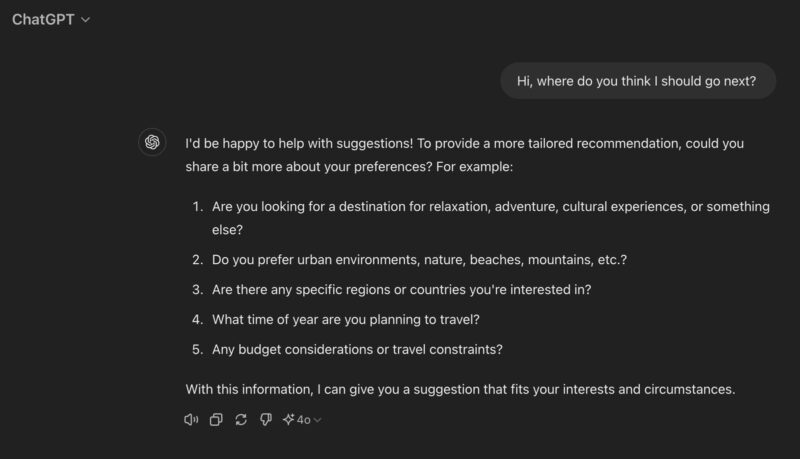
Google’s Gemini is an alternative to ChatGPT that offers useful integrations with Google apps, like Google Flights and Google Hotels. This allows Gemini to provide accurate flight and hotel information directly from the chat interface, making travel planning even more seamless.
Once you’ve chosen your destination, AI can take your travel experience to the next level by providing personalized recommendations. Whether you’re interested in exploring local cuisine, cultural landmarks, or outdoor adventures, AI algorithms scour the Web to find activities that match your interests.
For example, AI can suggest less crowded attractions or underrated neighborhoods based on your preferences, making sure you have a unique and memorable travel experience.
How to Use AI to Plan Your Next Trip
I tried using AI tools to plan several trips for this year. The following are some things I discovered and recommendations of the best ways to get these tools to do all the planning.
Write the Right Prompt for Your Dream Vacation
Creating the right AI prompt is probably the most important step. Start by asking questions in your native language with accurate grammar, punctuation, and spelling.
Details are key. I recommend including information about your travel party, such as whether you’re traveling with kids, elderly family members, or pets. Mention any dietary restrictions, and outline your interests and priorities. For instance, specify whether you prefer cultural experiences, outdoor adventures, or want to experience the destination through local food.

If AI misunderstands your request or gives incorrect information, correct it right away. This helps the AI refine its responses and deliver more relevant suggestions.
Occasionally, AI will get things wrong. If it’s something very important about your trip, like making sure you have the right documentation and visa to travel to a certain country, it’s best to double-check the AI’s answers against other sources.
For the best results, avoid generic prompts like, “Plan a 2-week vacation from Milan to Miami.” Instead, include specific details, like how many people are traveling with you, what sort of places you want to avoid, and whether this trip is a budget or luxury getaway. I’d also state such nuances as whether you’d like it to be a relaxing vacation or every day to be filled with landmarks and attractions.

Find the Cheapest Flights & Hotel Using AI
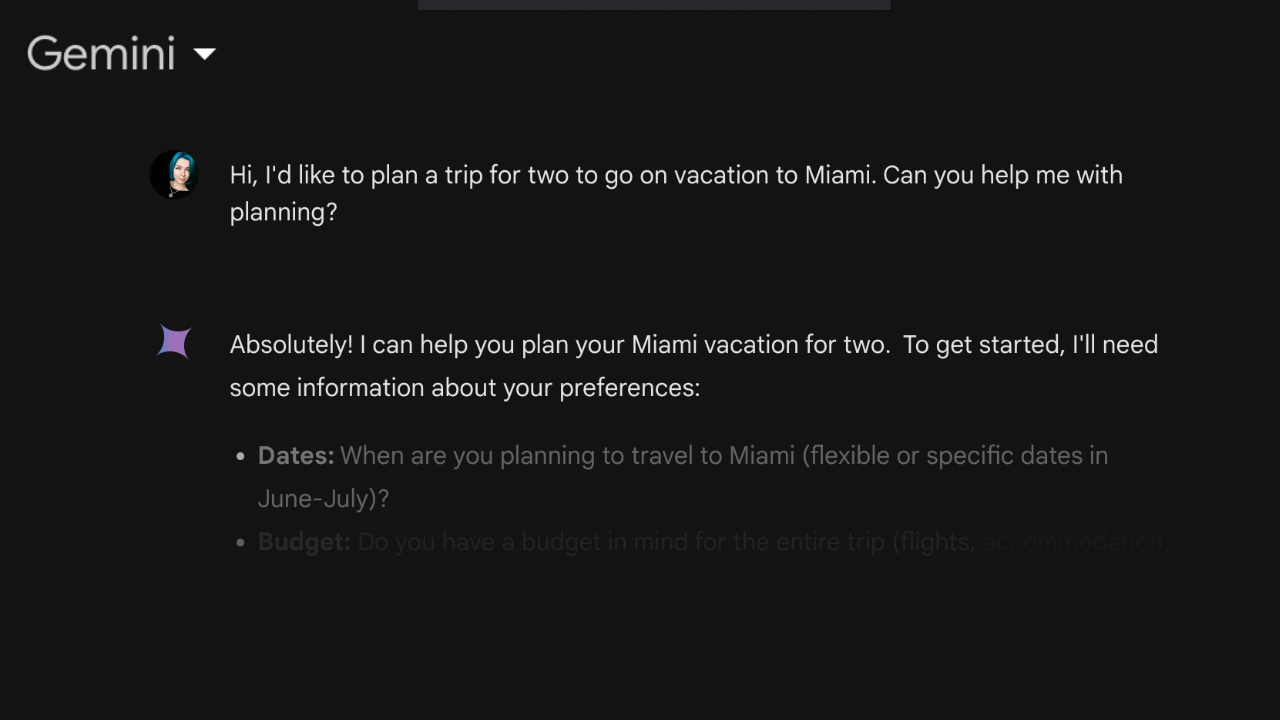
I recently used Gemini to plan a trip for two from Milan, Italy, to Miami, Florida, and I was happy with the results. Gemini quickly generated a detailed itinerary, complete with photos of destinations, which added a visual appeal that’s missing from other AI chatbots, like ChatGPT and Perplexity.
When I asked Gemini to find flights, it showed me a structured widget from Google Flights with relevant options in a neat table. Clicking on the table takes you directly to the Google Flights page for more details and to tweak the search as needed. You can also use the option to track prices, then save your search and keep track of the options. When the price for your desired dates drops, you will get a notification and can book the best option right away.

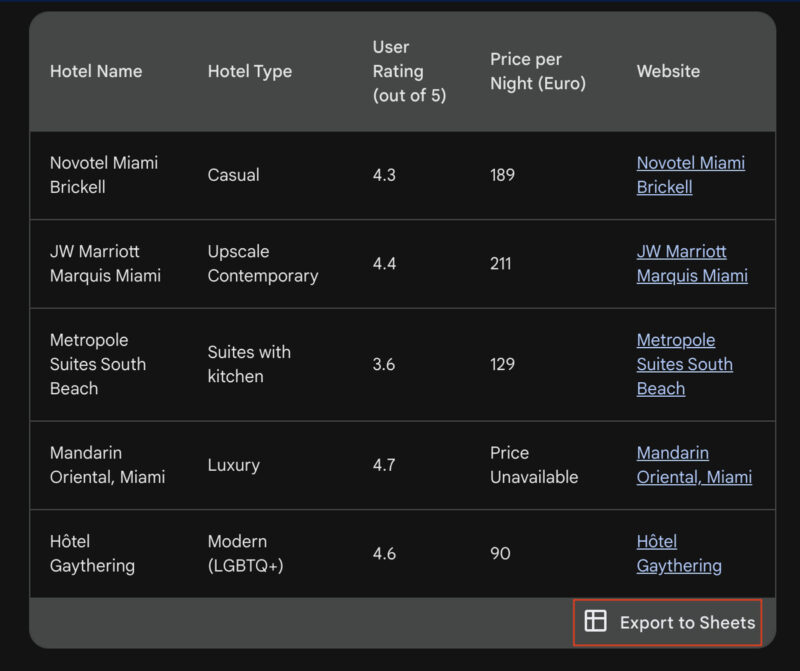
This feature also works for hotels, where Gemini provides a list in an interactive Google Hotels widget.
The best thing about using Gemini to find flights is that it shows accurate live data from Google’s extensive sources in a skimmable format. If the options on the screen don’t suit you, you can ask for alternatives.
Plan Your Day-to-Day Activities
When you ask Gemini to plan a trip, it returns a full agenda with various activities, according to what you specified in your prompt. For example, I mentioned in my prompt that I’m planning a trip for two people who are also partners, and Gemini included activities and places that are romantic to visit together.
When I wanted to find sightseeing tours in Miami, Gemini quickly returned a range of tour packages and programs. These came with links to TripAdvisor and some local companies, like VisitFlorida, so that I could go directly to their platform and book my tour in advance.

Thanks to the integration with Google Sheets, you can ask Gemini to provide you this information in a spreadsheet, which makes it easier to share and print. Gemini can give you a spreadsheet with your whole itinerary, or just a list of hotels.
Using Gemini, I was able to plan a complete two-week trip in under 15 minutes – a task that could have taken me hours of research.
You can also use ChatGPT and ask it to plan a trip using the same prompts, but the results won’t include helpful pictures, and ChatGPT won’t be able to give you live data on flights. It will only recommend the sites where you can search for them, like Expedia and Skyscanner.

Tip: use multiple AI tools to compare recommendations and prices to find the best deals. Each tool could have unique offers to share.
Other Important Travel Info to Ask AI
Using a trip planner AI goes beyond finding flights and hotels. The following list includes essential travel details you can ask AI tools.
Visa and Entry Requirements: when traveling abroad, it’s crucial to know the visa requirements for your destination. Ask your AI assistant about the necessary documents, visa application processes, and any entry restrictions. As noted above, you may want to double-check this information.
Local Transportation Options: finding your way around a new city can be challenging. Ask your AI tool about local transportation options, including public transit systems, ride-sharing services, and car rental recommendations. This will possibly save on transportation costs.
Weather Forecasts: weather can significantly impact your travel plans. Request a weather forecast for your destination during your travel dates. AI can provide you with up-to-date weather information, helping you pack appropriately and plan activities accordingly.
Health and Safety Information: staying safe and healthy while traveling is paramount. Inquire about health advisories, local healthcare facilities, and safety tips for your destination. AI tools can provide information on vaccinations, travel insurance options, and emergency contact numbers.
Currency Exchange Rates and Local Costs: understanding the local currency and cost of living is essential when budgeting your trip. Ask your AI assistant for current exchange rates, typical prices for meals, transportation, and activities. This will help you manage your budget more effectively.
Cultural Tips and Etiquette: knowing the cultural norms and etiquette of your destination can enhance your travel experience. Ask for information on local customs, tipping practices, and important cultural dos and don’ts to ensure respectful and enjoyable interactions with locals.
Artificial intelligence is transforming the way we plan our travels, making it easier to discover new destinations, find the best deals, and ensure a smooth trip. As you prepare for your next adventure, use AI to save you time, money, and stress. This will allow you to focus on enjoying the journey.
All images and screenshots by Anya Zhukova.