

It would seem web publishers have been punished enough, but Google doesn’t seem to think so. Perhaps the government lawsuits are correct that Google has been given too much power. The latest change is “Page Annotation,” which will guide iOS readers using the Google Browser app away from websites they visit.
Page Annotation on Google Browser for iOS
I have to admit that I’m not even altogether sure why the Google Browser for iOS exists. Bear in mind that I don’t mean Google Chrome – I mean the app that is identified in the App Store as just “Google.” Do they want you to use Google Chrome, or do they want you to use Google, if you’re on an iPhone?
While I have the app downloaded to my iPhone and iPad Pro, I don’t use it, and this news lessens my desire to. Google released this feature quietly, with it only showing up in a Google Search Help announcement.

Google said it had “introduced a new way to get additional information about the topics you’re interested in on the Google app when using an iOS device.” It further said that it will “extract interesting information from Google Knowledge Graph entities and highlight them in line … right when curiosity strikes.”
Google does note that “when you’re done, you can easily swipe to close the app tray, and you’re right back on the page where you started.” Gratefully, they allow that. But all of us know how easy it is to get pulled away from something you’re reading or looking up, only to end up in an endless rabbit hole, not able to get back.
Google’s iOS App Changes
It’s rather curious that Google is only adding this feature to the iOS Google app. The Google experience is more home-baked into the Android experience, and maybe that’s why there is no current need to add it there.
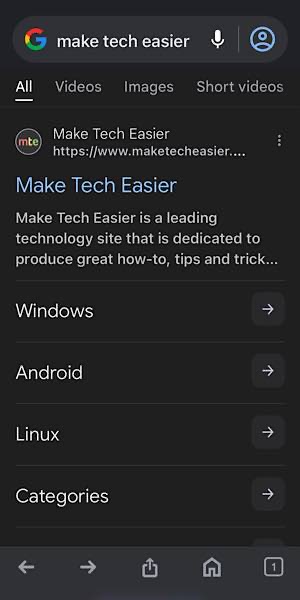
I tested it on both my iPad and iPhone Google Browser apps, which had both notably updated within the past 14 hours. I did a search for “Make Tech Easier,” then opened a handful of my own articles, as I’d be more apt to recognize links that I didn’t add. There were no extra links provided by Google. Has the change not reached every article yet? I’m not sure.
Web publishers have already been hurt by other recent Google Search changes, such as AI Overview. It seems Google is continuing to find more and more reasons to keep readers off websites and on Google Search, which really hurts web publishers.
Thankfully, Google is providing websites with an option to opt out of this new feature. However, it can take up to 30 days for it to go live on websites after a request. Meanwhile, Google has hurt publishers and taken traffic away from their sites for that time.
I must admit, this change is not increasing my desire to use the Google Browser iOS app. I am sticking to Safari and its benefits, and I’m also sticking with DuckDuckGo as a search engine.
Image credit: Unsplash. All screenshots by Laura Tucker.