

Upgrading your laptop’s hard drive to an SSD is a fantastic way to give new life to an old machine (or make a new machine even better), but if your first instinct is to go to the “Tech Specs” tab, you might notice that you can choose from a few different types of flash memory.
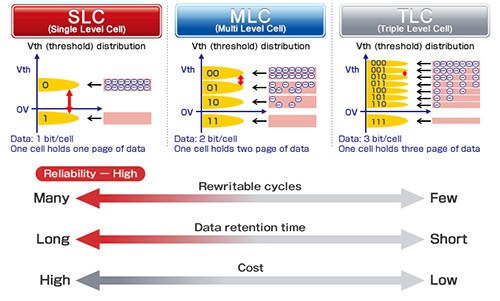
All the acronyms can start to blur together, but all you really need to know is that most memory is NAND; 2D and 3D refers to the way the cells are arranged; and SLC, MLC, TLC, and QLC refer to how many bits (1, 2, 3, or 4) each cell can hold. The more bits per cell, the more gigabytes you can get per dollar – but it also gets slower and more fragile, as the below image from Panasonic shows.
Also read: Buying an SSD: What to Look For
Cheat sheet
- NOR: reads fast, long lifespan, slow writing, expensive. Fairly uncommon.
- NAND: reads more slowly, writes more quickly, longer lifespan, cheap. You probably have this.
- 2D NAND: The original NAND, with the cells arranged next to each other in a single layer (like a single-story warehouse). SLC, MLC, and TLC are all originally 2D.
- 3D NAND: The newer NAND, with the cells vertically stacked (like a multi-story apartment complex). Faster, longer lifespan, higher capacity, and, in general, better than 2D NAND. MLC and TLC are available in 3D.
- SLC: NAND memory with one bit per cell. Fastest, best lifespan, but also less compact and more expensive. Mostly used for enterprise.
- MLC: NAND memory with (usually) two bits per cell. Slower speeds and shorter lifespan than SLC but higher capacities and cheaper. Mid-to-high-end consumer products.
- TLC: NAND memory with three bits per cell. Slower speeds, shorter lifespan, higher capacities, and cheaper. Budget memory but not necessarily bad.
- QLC: NAND memory with four bits per cell. Higher capacities than TLC, comparable on most other fronts. Unreleased (as of June 2018).
The two main types: NAND vs. NOR
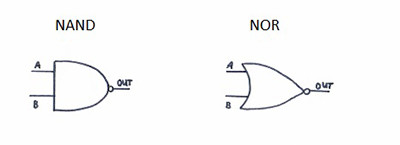
NAND is much more common than NOR, except in some enterprise applications. NOR is better at reading data (thus it runs code faster), and it’s longer-lasting (100,000 – 1,000,000 write cycles), but it’s slower at writing and erasing, it’s not as compact, and it’s more expensive. Most things you use probably have NAND rather than NOR.
3D/Vertical NAND vs. 2D/Planar NAND
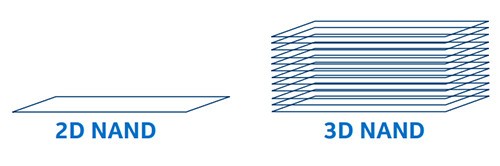
The difference is just what it sounds like — 2D NAND is a single level of memory cells, while 3D NAND is multiple levels. All other things equal, 3D is better than 2D in terms of write endurance speeds and power consumption. It’s taken a few years since its release, but 3D NAND has taken over a lot of the flash memory market.
NAND – SLC (Single Level Cell)
SLC is the simplest type of NAND memory, holding only one bit per cell, which makes it more of a space hog. Nonetheless, it can go through an impressive 90-100,000 write cycles and is significantly faster than the others. It sounds great, but it’s not typically found in consumer devices due to its expense and lower capacity.
NAND – MLC (Multiple Level Cell)
As the name implies, MLC can store multiple (two, actually) bits on one cell, meaning you can pack more memory into the same space. This makes it cheaper to manufacture and buy, so although it’s not as fast or reliable (10,000 write cycles with 2D NAND, up to 35,000 with 3D) as SLC, it’s much more popular.
NAND – TLC (Triple Level Cell)
As the pattern would suggest, TLC NAND can store three bits per cell, which gives it more storage capacity and makes it cheaper at the expense of speed and lifespan (2D TLC: around 300-1000 write cycles, 3D TLC: 3000-15,000). It’s still fast, though – it is flash memory – and many drives have built-in features to mitigate TLC’s speed and reliability issues.
NAND – QLC (Quad Level Cell)
As of early 2018, this isn’t actually available, but Intel and Micron have already announced that they’ve developed it and are coming out with a product. Exact specs aren’t available yet, but it’s projected that QLC will pay for its density upgrade by being a mild downgrade from TLC speeds and reliability.
3D XPoint
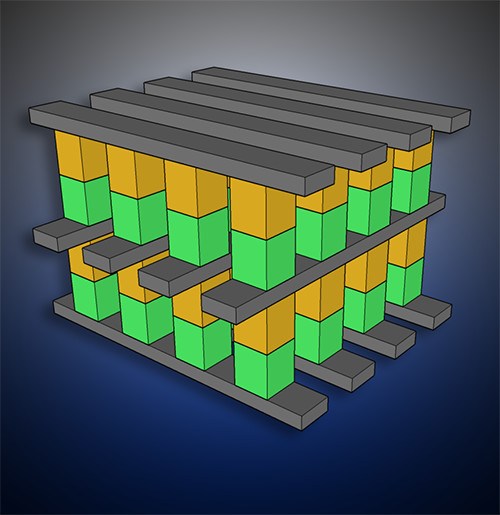
Technically, 3D XPoint isn’t even flash. It’s a totally new kind of memory technology, although exactly how it works is as of yet unspecified. Intel is keeping their R&D under wraps, but so far it seems that XPoint might not be that much better than NAND. The products released so far have been fairly disappointing, but there is still a chance that the bigger gains are still in the pipeline. In the meantime, 3D NAND is still our best bet.
Conclusion: Which is best?
There is no single right answer to “what’s the best type of flash memory?” since everyone has different needs, and the technology is constantly changing. Different drives will have different features, such as memory controllers that can help mitigate wear and tear on cells and increase read-write speeds, so there’s no guarantee that a 3D MLC drive will always be better than a 2D TLC drive.
If all other things are equal, though, 3D > 2D, and MLC > TLC, but make sure to do your research to see what other factors may affect drive performance. Personally, I went for the low-cost 3D TLC option (with an SLC cache to improve write speeds and lifespan), but that’s because my computer is already pushing four years, and I expect that the three to five year lifespan of TLC memory will be more than enough to get me through.
Image credit: Panasonic, Trolomite via Wikicommons