
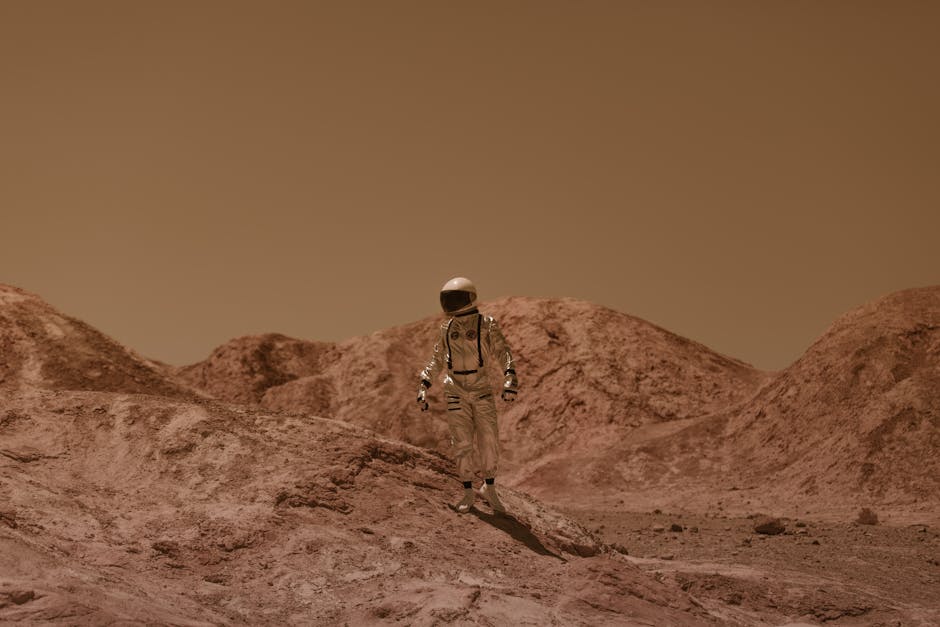

When Doug Wheelock came home from the International Space Station in November 2010, the first thing that startled him was not a meal, a shower, or a bed. It was the smell of Earth.
ABC News later asked Wheelock about returning from orbit, and he described the thing he had missed in the plainest possible terms: “I craved the aroma of leaves and grass and flowers and trees.” He called it “Earthiness.”
That matters because Wheelock’s long station flight had not lasted 178 days, as the common shorthand sometimes implies. NASA’s own mission record says Expedition 24/25 kept him in space for 163 days, 161 of them aboard the station, while his career total across two flights came to more than 178 days.
The number matters because the absence was real
Wheelock launched from Baikonur on Soyuz TMA-19 on June 15, 2010, served as a flight engineer on Expedition 24, then became commander of Expedition 25. NASA’s biography records the mission as his second spaceflight and his long-duration stay aboard the orbiting laboratory.
The same mission ended when Wheelock, NASA astronaut Shannon Walker, and Russian cosmonaut Fyodor Yurchikhin landed northeast of Arkalyk, Kazakhstan, at 10:46 a.m. local time on Nov. 26, 2010. NASA’s landing release describes Russian recovery teams working in frigid temperatures as the crew adjusted again to gravity.
The number is not a technicality. A body can lose the daily smell of rain, cut plants, soil, bark, and wind for five months and still remember them instantly when the hatch opens.
The station gives astronauts a view of the whole planet. It does not give them the smell of a single wet leaf.
Space dulls smell before it dulls memory
Smell and taste change quickly in orbit. In weightlessness, fluid that gravity normally pulls toward the legs shifts toward the head, and NASA describes that headward fluid shift as one of the basic physiological changes of spaceflight.
For many astronauts, the result feels like congestion. A Texas A&M and Houston Methodist study of astronaut medical records found that roughly 85 percent of ISS astronauts in the sample reported at least one sinonasal issue, and 75 percent reported nasal congestion during their missions.
That is one reason strong foods become famous in orbit. Hot sauce, horseradish, shrimp cocktail, and other sharp flavors cut through a sensory world that has become flatter than it is on Earth.
Wheelock’s description fits that physiology. He did not say that the station smelled bad. He said the missing smells were the ones that came from living things.
The station has smells, but not green ones
The International Space Station is not scentless. Astronauts have described interiors that smell of machinery, laboratory equipment, food pouches, people, cleaning supplies, and recycled air.
Spacewalk gear adds its own sharper note. NASA’s Ames Research Center notes that astronauts have described the odor clinging to suits, gloves, and tools after spacewalks as metallic, ozone-like, gunpowder-like, or reminiscent of welding fumes and seared steak.
Those are memorable smells, but they are not ecological smells. They do not come from bruised leaves, wet soil, pollen, bark, moss, asphalt after rain, or a field warming after dawn.
For more than five months, Wheelock’s nose lived inside a machine. The world outside the windows was blue, white, brown, and green, but none of those colors reached him as smell.
Grass and rain are chemistry, not poetry
The smell people call fresh grass comes from green leaf volatiles, compounds released when plants are damaged, cut, or stressed. A key molecule is cis-3-hexenal, which is formed quickly after leaves are wounded and helps create the bright green odor of cut vegetation.
Plant biologists describe these green leaf volatiles as part of a plant’s response to damage, not as a scent made for humans. A review in Molecules notes that Z-3-hexenal forms rapidly in wounded leaves, followed by related alcohols and acetates.
The smell of rain on dry earth is different. It is tied closely to geosmin, a microbial compound with an earthy, musty odor; a 2024 Leibniz Institute report on a Journal of Agricultural and Food Chemistry study notes that even 4 to 10 nanograms per liter can be enough for people to perceive it in water.
The original draft overstated this point by saying humans are more sensitive to geosmin than sharks are to blood. That comparison is too loose to publish cleanly. The safer fact is already strong enough: humans detect geosmin at extremely low concentrations, and a returning astronaut has been away from that signal for months.
A Soyuz hatch does not merely open onto air. It opens onto plant chemistry, soil chemistry, microbial chemistry, and weather.
The brain keeps an Earth model in storage
Spaceflight does not simply erase Earth from the nervous system. In 2026, a Journal of Neuroscience report summarized by the Society for Neuroscience found that astronauts still overcompensated with grip force in microgravity because their brains continued to anticipate gravity’s pull.
That study was about hands, not smell, but it points toward the same larger truth. The body carries models of Earth into orbit, then has to recalibrate when the environment changes again.
Wheelock was not the only astronaut to talk this way. In the same ABC News report, former astronaut Clay Anderson said that after months in the sterile environment of space, “everything has a sharper smell” on return, and he remembered craving fresh cut grass, birds, trees, and animals.
That is why the answer keeps surprising interviewers. Astronauts can talk about science returns, station maintenance, spacewalks, and orbital mechanics, but the landing story often collapses into something smaller and more physical.
Not the view of Earth. The smell of it.
What the hatch gave back
Near Arkalyk, the recovery teams had practical work to do. They had to secure the Soyuz, open the hatch, help the crew out, check their bodies, and begin the slow work of returning three people from orbital motion to standing on ground.
For Wheelock, that ground arrived first through the nose. Leaves, grass, flowers, trees: ordinary things, almost embarrassingly small beside the machinery that had carried him home.
The detail also belongs beside other Make Tech Easier space explainers, including the way long-duration astronauts describe seeing Earth differently after months in orbit and the older engineering stories of spacecraft shaped by tiny physical realities, such as Mariner 1’s missing guidance character.
The lesson is not that astronauts forget home. The cleaner fact is stranger than that. For months, home becomes visible but not breathable.
Then the capsule lands, the hatch opens, cold air enters, and the planet returns as molecules: grass, leaves, soil, rain, and all the living signals a human brain had quietly stored away until Earth was close enough to inhale again.