
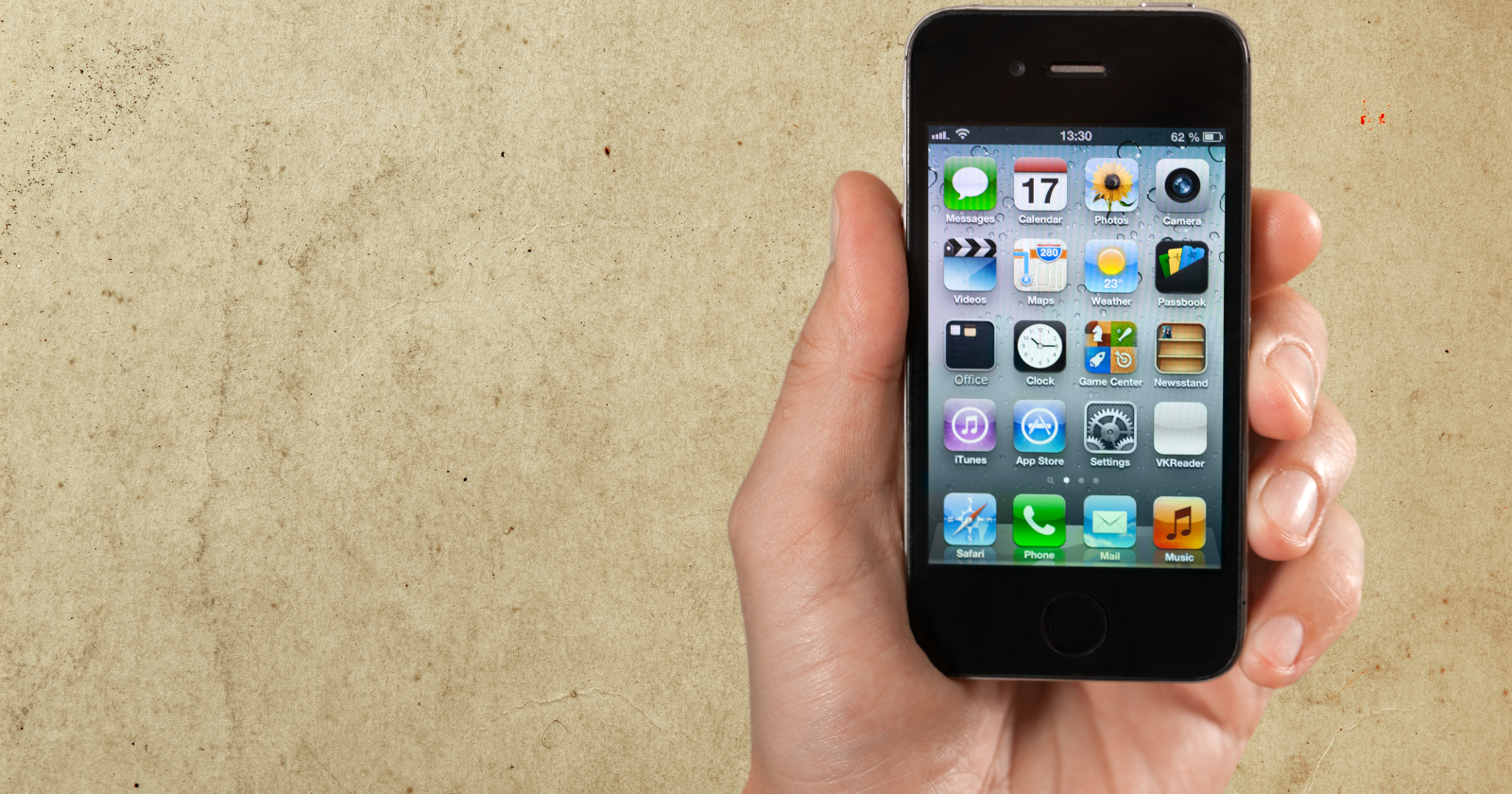
Cingular signed on to sell the original iPhone before its executives had seen a working prototype, then gave Apple the kind of control American wireless carriers had spent years refusing to handset makers.
The agreement made Cingular the exclusive U.S. carrier for a phone Apple had not yet shown to the public. It also kept the carrier’s logo off the device, left Apple in charge of the hardware and software experience, and included a revenue-sharing arrangement that sent part of an iPhone customer’s monthly bill back to Apple.
That was the part that made the deal feel almost unnatural in 2007. The phone Cingular agreed to carry did not have 3G, did not have an App Store, did not copy and paste text, did not record video, and did not let the carrier fill the home screen with its own services.
Steve Jobs unveiled it on January 9, 2007, at Macworld in San Francisco. In Apple’s launch announcement, the company described the iPhone as a mobile phone, a widescreen iPod, and an Internet communications device in one handheld product.
The carrier deal came before the finished phone
In the American phone business of the mid-2000s, carriers had the power. Verizon, Cingular, Sprint, and T-Mobile decided which phones reached their networks, how they were sold, what software appeared on them, and how much control users had once they bought them.
Apple wanted the opposite arrangement. Jobs wanted a phone without a carrier logo on the casing, without carrier software shaping the interface, and without the usual committee process that let network operators demand changes before launch.
Verizon had already rejected Apple’s approach. Wired reported in January 2007 that Verizon walked away from the iPhone deal over Apple’s demands for subscription revenue and control over how the phone would be sold.
Cingular accepted what Verizon would not. In Apple and Cingular’s January 9, 2007 announcement, the companies said Cingular would be Apple’s exclusive U.S. carrier partner for the iPhone.
The strangest detail came after the public reveal. The New York Times reported that Cingular agreed to distribute the device before seeing a prototype, a level of trust almost unheard of in a carrier market built around approval, testing, and control.
What Cingular gave Apple
The public announcement made the partnership sound orderly. Apple said Cingular would provide the network relationship and help deliver features such as Visual Voicemail, which let users see voicemail messages in a list instead of dialing in and listening one by one.
The deeper shift was control. Wired’s 2008 account of the iPhone negotiations described the deal as a break from the old wireless model, with AT&T granting Apple unusual authority over the device and the user experience.
That authority mattered because the iPhone did not look or behave like the phones carriers usually approved. It had one physical button on the front, a 3.5-inch multi-touch display, a 2-megapixel camera, and software Apple presented as closer to a computer interface than a traditional handset menu.
It also arrived with compromises that would have been easy for a carrier to question. There was no 3G radio, even though Cingular had already been building out faster service. The first iPhone used EDGE for cellular data, with Wi-Fi carrying the faster demonstrations whenever it was available.
The first iPhone was missing obvious features
On June 29, 2007, the original iPhone went on sale in the United States. According to Apple’s launch-day retail announcement, customers could buy the phone at Apple retail stores and activate it with a two-year wireless service plan.
The first version had no App Store. Apple’s original developer story was web apps written for Safari, not native third-party applications installed from a store.
That changed in 2008. Apple previewed iPhone 2.0 software and the iPhone SDK in March, then made third-party native apps part of the iPhone platform through the App Store.
The first iPhone also had no copy and paste. Apple added that feature with iPhone OS 3.0, which the company later described as including more than 100 new user features.
It had no video recording either. That arrived with the iPhone 3GS in June 2009, when Apple announced a 3-megapixel autofocus camera, video recording, voice control, MMS, and cut, copy, and paste.
Several other absences lasted beyond the first model. MMS support came with iPhone OS 3.0, though U.S. AT&T users had to wait longer for network support. Apple’s own turn-by-turn navigation did not arrive until iOS 6 in 2012.
Why the keynote made the gaps feel smaller
The January 2007 keynote did not dwell on missing checklist items. Jobs framed the iPhone around touch, motion, and software fluidity.
The physical keyboard, a defining feature of BlackBerry and many Windows Mobile devices, became a liability in Jobs’s telling. A fixed keyboard could not change when an app changed. A screen keyboard could.
The browser was another reframing. Apple said Safari on iPhone delivered desktop-class web browsing, and Jobs demonstrated full web pages rather than the stripped-down mobile pages many phones still served.
Visual Voicemail gave the carrier partnership a concrete consumer feature. Instead of entering a voicemail system and waiting through messages in sequence, users saw a list and tapped the one they wanted.
The phone’s weaknesses were real, but so were the parts that felt new in the hand: pinch to zoom, inertial scrolling, automatic rotation, proximity sensing during calls, and a glass-fronted interface that made many competing phones feel like remote controls.
The missing features arrived one by one
Apple sold the first iPhone as a complete product, then spent the next several years filling in what was absent.
Third-party native apps followed roughly a year later with iPhone 2.0 and the App Store. Copy and paste followed in 2009. Video recording and voice control arrived with the iPhone 3GS. Apple’s own turn-by-turn directions arrived much later, in iOS 6.
The original model still sold 6.1 million units before Apple moved the line to the iPhone 3G. Apple confirmed that number in its October 2008 quarterly results, noting that iPhone 3G sales had already exceeded first-generation iPhone sales from the prior five quarters combined.
The industry noticed the arrangement as much as the phone. Once Apple proved that a carrier could sell millions of devices without stamping its own identity across the product, the old balance of power began to look less permanent.
Carrier logos did not disappear from every phone. Carrier apps did not vanish from Android. But the iPhone created a premium category in which the device maker, not the network, owned the customer experience.
The carrier name was not on the back
Stan Sigman did appear onstage during the iPhone launch, standing inside a presentation built almost entirely around Apple. Cingular’s name mattered because the network made the phone usable in America, but the object itself belonged visually and behaviorally to Apple.
By the time Verizon finally received the iPhone in February 2011, the old assumption had already cracked. The question was no longer whether a carrier could force Apple to build the phone its way. The question was how many subscribers a carrier might lose by not having Apple’s phone at all.
The strange part is still the first bet. A carrier chief from the old wireless world agreed to sell a device he had not seen in finished form, accepted a phone without his company’s mark on its body, and helped put into stores a slab of glass and aluminum that made the carrier feel less visible the moment it lit up.