
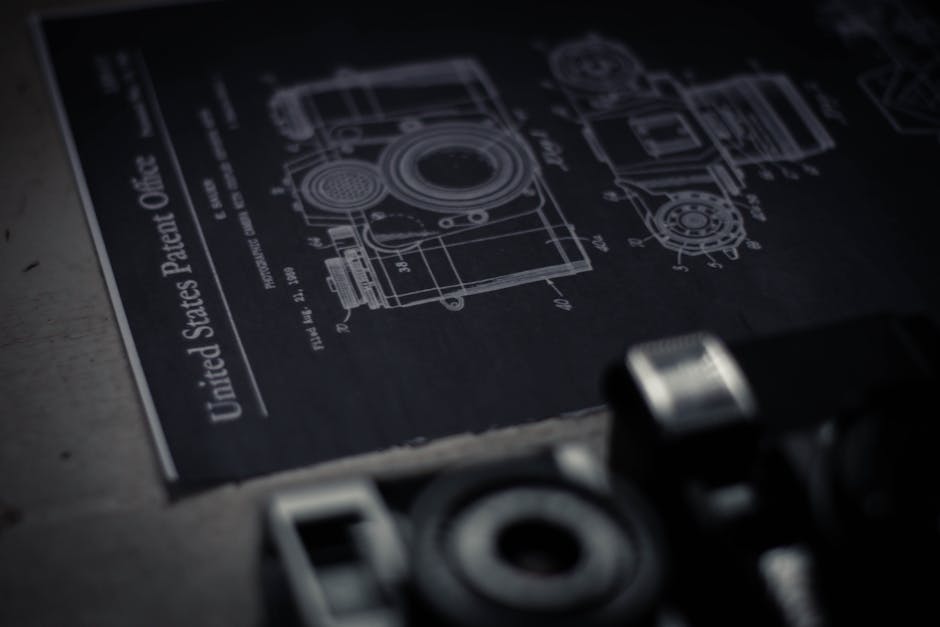

On August 11, 1942, the US Patent Office issued Patent No. 2,292,387 to Hedy Kiesler Markey, the legal name of MGM star Hedy Lamarr, and her co-inventor George Antheil, a composer best known for a 1920s ballet scored for multiple synchronised player pianos, airplane propellers, and a siren. The patent described a “secret communication system” for keeping a radio signal from being jammed or intercepted by switching it rapidly among many carrier frequencies, hopping between them in a pattern set by a perforated paper roll identical to the ones that drove player pianos. The idea was to guide a radio-controlled torpedo without the Germans being able to jam the signal. The Navy looked at the drawings, decided a movie star and a composer could not possibly have invented anything useful, and shelved it.
The patent expired in the late 1950s. Lamarr never earned a cent from it.
The dinner party that started it
Lamarr was born Hedwig Kiesler in Vienna and arrived in Hollywood after fleeing a controlling first husband, Friedrich Mandl, a munitions manufacturer who hosted Nazi officials at dinners she was required to attend. Mandl talked openly about torpedoes, guidance systems, and the problem of jamming radio signals in front of her, assuming, as most people did, that a beautiful woman would not understand or remember any of it. She remembered all of it.
By 1940 she was in Los Angeles, frustrated that her contribution to the war effort was being told to sell kisses for war bonds. At a dinner party, she met George Antheil, who was working as a film composer. They started talking about the war. She told him about the torpedo problem.
Radio-controlled torpedoes existed in theory. The problem was that a single radio frequency could be jammed or hijacked, sending the weapon back at the ship that launched it. Lamarr’s idea was to have the transmitter and receiver leap together between many frequencies at high speed, in a sequence only they knew. A jammer would have to block every frequency at once, which was impossible with 1942 technology.
Why a player piano
The hard part was synchronisation. The torpedo and the destroyer firing it had to hop frequencies in lockstep, with no wires between them and no margin for drift. Antheil’s answer came from his own peculiar background. His ballet Ballet Mécanique had required multiple player pianos to play exactly the same paper roll at exactly the same time, a synchronisation problem he had spent years trying to solve. The paper roll became the key. Two identical perforated rolls, one in the ship and one in the torpedo, started together and fed through their respective mechanisms at the same speed, switching the radio between frequencies in a pseudo-random sequence neither side could predict without the roll.
They filed the application in June 1941 and brought the idea to the National Inventors Council, the wartime body set up to gather proposals from civilians. The player-piano mechanism was, in the engineering of 1941, genuinely unwieldy, and the system was judged unworkable in battle and shelved. The concept was sound. The hardware to carry it was decades early.
Shelved, ignored, forgotten
The patent was never classified; a granted US patent is a public document. The Navy simply ignored it. Lamarr was told the most useful thing she could do was sell war bonds, and she did, raising roughly $25 million in a single 1942 stretch, the equivalent of well over $300 million today. The torpedo guidance system she had patented sat unused for the rest of the war and most of the decade after.
Antheil died in 1959, around the same time the patent expired. Lamarr’s film career had collapsed by then. She had been typecast for her looks, married and divorced multiple times, and was edging toward the long, reclusive final act of her life that ended in a Florida apartment in 2000.
What she did not know, what almost nobody knew, was that the Navy had quietly resurrected the idea. Its engineers rediscovered the patent in the mid-1950s and built a version of frequency hopping using electronics instead of paper rolls, and the jam-resistant technology went on to radios used during the 1962 Cuban missile crisis. That later military work was the part kept secret, not the long-public 1942 patent. By the time the patent expired in 1959 the inventors had never been told their idea was back in service, and the military had no obligation to pay civilian patent holders for concepts absorbed into classified research.
How the idea ended up in a phone
Frequency hopping is one branch of a larger family of techniques called spread-spectrum communication, in which a signal is spread across a much wider band of frequencies than it strictly needs. Spreading the signal makes it harder to jam, harder to intercept, and — the part that matters for daily life — lets many devices share the same airspace without drowning each other out. If every Bluetooth earbud in a crowded café used a single frequency, the room would be unusable. Because they hop, they coexist.
The civilian breakthrough came in the 1980s, when the Federal Communications Commission opened up unlicensed industrial, scientific, and medical bands and specifically allowed spread-spectrum techniques in them. That regulatory door is the one Wi-Fi walked through. Bluetooth uses adaptive frequency hopping across multiple channels in the 2.4 GHz band, leaping rapidly between them. The GPS satellites overhead use a related spread-spectrum technique called code division to let dozens of satellites broadcast on the same frequency without interfering. The lineage runs, through several engineering generations, back to the paper roll.
The patent itself is not the direct ancestor of every modern radio — the engineers at Sylvania, at Qualcomm, at Ericsson did decades of original work. But the 1942 document is the first place the core idea appears in writing, with diagrams, with a working synchronisation mechanism, signed by a Hollywood actress and a composer who had never built a radio in their lives.
Recognition, half a century late
The story began to surface in the 1990s, when a wireless researcher named Dave Hughes began championing the patent. In 1997, the Electronic Frontier Foundation gave Lamarr and Antheil its Pioneer Award. Lamarr, 82 and living alone in Florida, did not attend. Told of the honour, she reportedly answered with three words: “It’s about time.”
She was inducted into the National Inventors Hall of Fame in 2014, fourteen years after her death. Google put her on a Doodle in 2015 for what would have been her 101st birthday, the gesture that prompted the legal press to revisit Patent No. 2,292,387 and the strangeness of its provenance. November 9, her birthday, is now Inventors’ Day in several German-speaking countries.
None of this produced money. Patents only generate royalties while they are in force, and the clock on a 1940s filing ran out before the first commercial frequency-hopping radio was sold. The companies that later built billion-dollar businesses on spread-spectrum technology owed her, in a legal sense, nothing.
The shape of the misjudgement
What makes the Lamarr story stick is not the invention alone but the gap between who was allowed to invent and who actually did. The Navy reviewer who dismissed the patent was looking at the names on the cover sheet, not the diagrams inside. Antheil later wrote that he suspected the rejection had less to do with the engineering than with the fact that the engineering had been signed by a woman best known for a controversial nude scene in an early 1930s film called Ecstasy.
The roll itself was a clever borrowing. Player pianos were everywhere in American homes in the 1920s and 1930s, a familiar piece of mechanical engineering that solved a synchronisation problem at scale every time someone put a roll in a Steinway Pianola. Antheil had spent a decade thinking about how to make multiple rolls keep time. Lamarr had spent years sitting through dinners about radio-guided weapons. They put the two halves together in an afternoon.
For readers curious about how the wireless standards descended from that patent actually behave in a home, it is worth understanding the difference between the 2.4 GHz and 5 GHz Wi-Fi bands, how Bluetooth actually works and why it has survived alongside Wi-Fi rather than being replaced by it, and how GPS receivers in phones pull a location out of the sky. All three protocols are children of the same paper roll.
Coda
Lamarr died on January 19, 2000, in Casselberry, Florida, at the age of 85. The patent had been expired for four decades. By that morning, a rough estimate of the number of devices on Earth using some descendant of frequency-hopping spread-spectrum technology was already in the hundreds of millions, climbing toward the billions it sits at now. Every router humming in a hallway, every pair of earbuds locking to a phone across a kitchen, every car finding itself on a map runs, in some indirect way, on the principle a Viennese actress and an American composer sketched out at a dinner party in 1940 and submitted to the patent office on paper that has since yellowed and curled in a Smithsonian archive. The roll spools on. Nobody had to pay for the ticket.