


Vocal removal from already-mixed music used to be a very tight niche occupied solely by musicians and remix artists. Of course, like everything in this media-saturated world we currently reside in, now everyone can do it.
With AI music software, loops and beats creation all now being accessible to the public, this is the new mainstream, especially as the channels through which people can broadcast their work are cheap or free. Budding singers can strip the original vocalist from a popular tune and record themselves singing the classic, and musicians can have the original artist singing over their original interpretation of the music. Youtubers will fill the airwaves with cover versions.
For fun or for art, like it or not, AI software which processes the art of others and turns it into something new is big business.
This is a sponsored article and was made possible by lalal.ai. The actual contents and opinions are the sole views of the author who maintains editorial independence even when a post is sponsored.
Vocal Extraction
Lalal.ai (which I’m assuming is pronounced “lala-lie”) is an online vocal removal web app which uses AI to delicately separate the vocal track from the music in any piece of music you feed it. It then presents this to you as a pair of tracks which you can download. One file has the vocalist on their own and the other file is the music without the original singer.
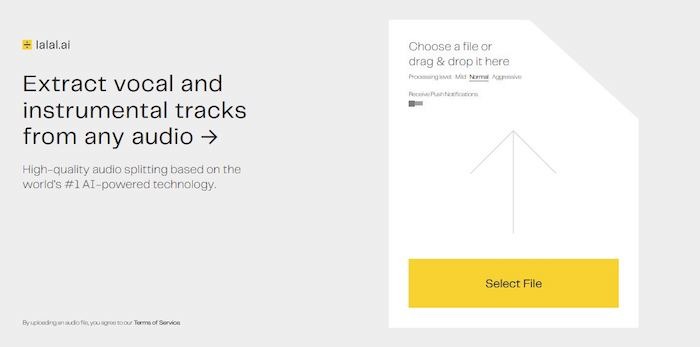
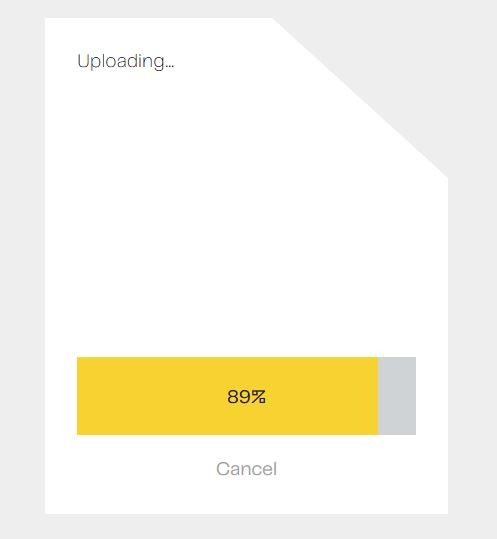
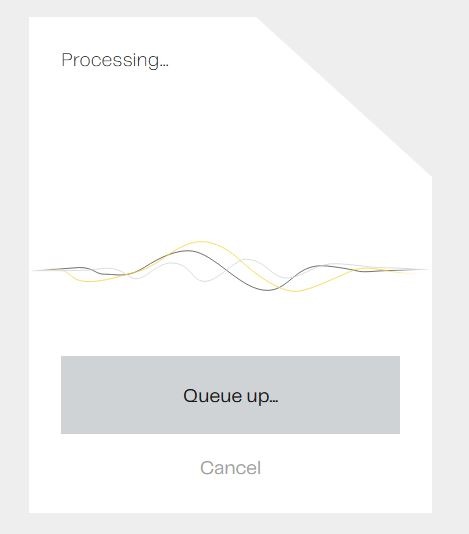
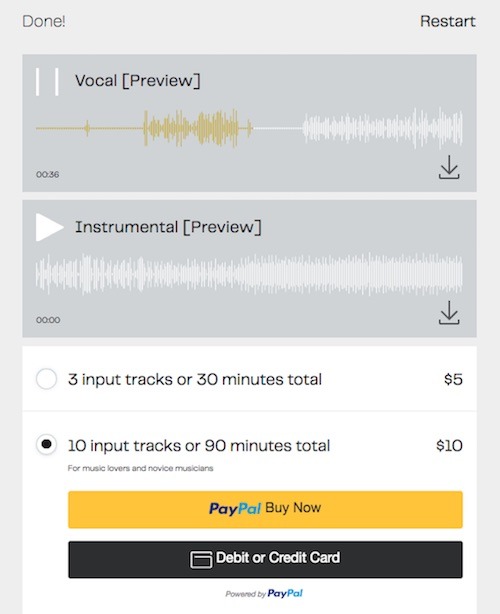
The online interface is very simple: upload a file and then the AI processes the music and extracts the vocal. You get the processed files available as downloads with a notation of the price for the service.
It’s a very simple tool, and although there are some small tweaks you can make to the process, there are no fine-tuning tools for the effect.
Does it work?
Software of this kind has existed for decades, in some form or another. What usually happens is that the software takes out of the middle of the stereo image, which is where the voice usually sits in the mix, and pares it off into another file. This is a fairly mechanical process but was also kind of fiddly and difficult to do.
The difference with this new tool is that it doesn’t just chop the vocal frequencies out of the middle – it listens to the voice and the surrounding music and separates it intelligently. And it does this in an easy and user-friendly way.
Obviously, it’s not perfect, and one size doesn’t fit all. I tried it with lots of tracks, modern and classic, and even some home-brewed tunes of my own, and the results were good but variable. Obviously, some vocals are so intertwined with the music in terms of mix and frequency that it’s impossible to separate them after the fact. However, the results are impressive and at the very least interesting, and they will make for some delightful remixes and fun musical experiments.
When you upload the file, there is a selection for the strength of the processing: either Mild, Normal or Aggressive. If you need to tweak the effect, then this is your only control. You can also turn on or off push notifications, but I’m not sure that this is of much value, as the processing really doesn’t take that long, so I mostly left it off.
I imagine in the future that more controls may be added in some kind of pro version which lets you – under the hood of the AI – target the processing a little bit more directly on the voice. That’s purely speculation on my part, but as nice as this software is, it did leave me wanting a bit more scope for twiddling with the result. But for now, this simple interface makes vocal removal easy and fun for everyone.
Sounds good
Lalal.ai is available online, and the fees are based on the number of tracks and minutes you use, so 3 tracks of up to 30 mins is $5, 10 tracks of up to 90 mins is $10, and 30 tracks of up to 500 minutes is $30. It also has undisclosed rates for more massive amounts of time and tracks, which leads me to believe they have this tech as an API that you can buy for your site or software. Contact them for more details about that.
I liked this very much, and it’s a fun toy and a useful tool for low- to medium-end vocal removal. I look forward with some interest to the kinds of music this will make possible.