
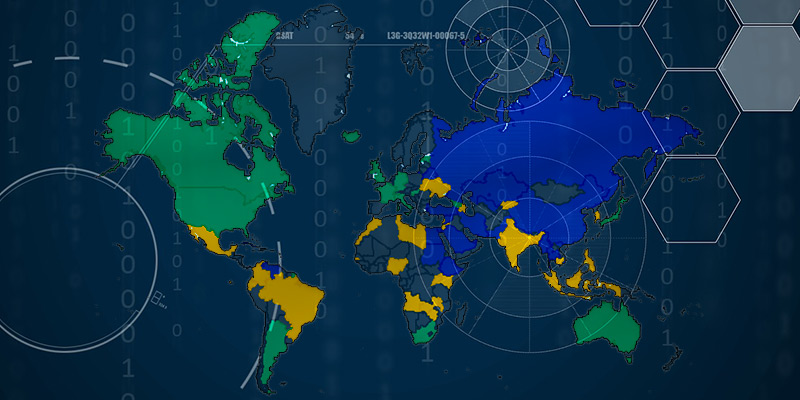

According to civil liberties watchdog Freedom House, Internet freedom has continued its steady eight-year decline in 2018. Though in many countries the Internet remains fairly free and open, certain forces have gotten much more adept at manipulating and monitoring it, and as more of our activity goes online, real-world stakes are getting higher.
Freedom House scores every country on three broad categories: obstacles to access, limits on content, and violations of user rights. While the first criteria, access, is growing worldwide, several major developments, including election-related crackdowns on political media and China’s efforts to expand and export its online authoritarianism, are hindering content freedom and user rights.
Fake news is getting even worse for democracy
The fake news epidemic has gotten a lot of real news attention, and many governments are using this perceived crisis as an excuse to enact laws that restrict online expression. States on the authoritarian side of the political spectrum, such as Iran, Russia, and China, have adopted sweeping censorship powers, such as requiring bloggers to register with the government and shutting down politically dissident news sources, which has led to a severe decline in independent journalism. Even democracies, like Germany, have enacted anti-fake-news laws that leave a bit too much open to interpretation.
For all their talk of fighting fake news, though, governments are also using it to accomplish their own ends. Paid government opinion shapers drown out criticism in online conversations, bots spread pro-government propaganda, and government-sponsored fake news sources wage information wars designed to disrupt other nations’ political systems.
Exporting the China model
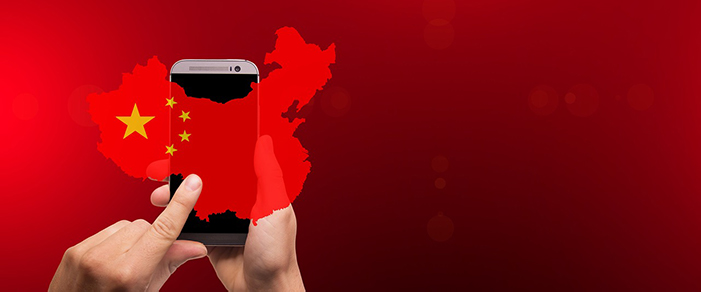
China routinely takes last place on Freedom House’s ranking thanks to its unapologetic implementation of extreme surveillance both on and offline. Unfortunately, for free expression on the web, China is now looking to export its model of Internet control to other countries, especially developing nations in Southeast Asia and Africa that are already somewhat tied into China’s economy.
This means that Chinese smartphones and facial recognition cameras are often bundled with journalism retraining sessions and harsher cybercrime laws. The Great Firewall method of blocking sites you don’t like, constant online surveillance and censorship (including physical detainment of online critics), and the development of a “social credit rating” system are dystopian-sounding enough when they’re confined to the world’s most populous country, especially given China’s recent oppressive treatment of the Uighur population in Xinjiang province. If such systems begin to crop up in other countries, there will certainly be a chilling effect on Internet freedom.
Data privacy issues

While private companies have come under fire frequently over the last several years for their failure to safeguard user data, the biggest data leaks may actually be between companies and governments. Governments are increasingly passing or considering legislation that gives them access to citizens’ personal data. While authoritarian governments, like Russia’s, are especially aggressive about these policies, democratic countries, like the Five Eyes (Australia, Canada, New Zealand, the U.K, and the U.S) have also been taking steps towards requiring companies to build backdoors for governments and law enforcement agencies.
The U.S. decline

The United States saw some major declines due to the repeal of net neutrality and the reauthorization of the FISA Amendments Act which allows the U.S. government to conduct broad surveillance on non-U.S. targets and collect U.S. citizens’ information in the process.
The good news
Fortunately, despite the overall declines weighing out the gains by quite a bit, several countries made some great positive progress in the rankings.
- Armenia: Internet mobilization was a key factor in bringing positive political change in April.
- The Gambia: After a regime change, Internet activity has been a lot more free, though many restrictions still remain.
- Ethiopia: Some imprisoned bloggers were released after a new prime minister took office and promised to reform current Internet restrictions.
- Estonia: Tied with Iceland for first place, this Baltic country has been instituting some groundbreaking new technologies to enhance its citizens’ data protection and privacy with a secure, blockchain-based data-sharing system that informs citizens when their data is accessed and what it is being used for.
- The GDPR regulations, while aimed squarely at companies rather than governments, is at least a first step towards a common understanding that data needs to be stored safely and controlled by individuals.
Internet freedom is a real issue
Online services are increasingly replacing offline services in many spheres, from media to finance to government services, thus ensuring that Internet freedom is essential not only for protecting online activism and maintaining vibrant democracies, but for building secure, private systems that we can trust with our data.
Any central power that controls the flow of information online has the ability to shape public opinion, distribute false information, and physically find and come after problematic individuals. The Internet is a powerful tool for innovation, education, and truth, but it can just as easily be used to systematically abuse human rights.
Image credit: Tart via One Belt One Road, atelier-data-privacy, freedomhouse.org