

The story goes something like this.
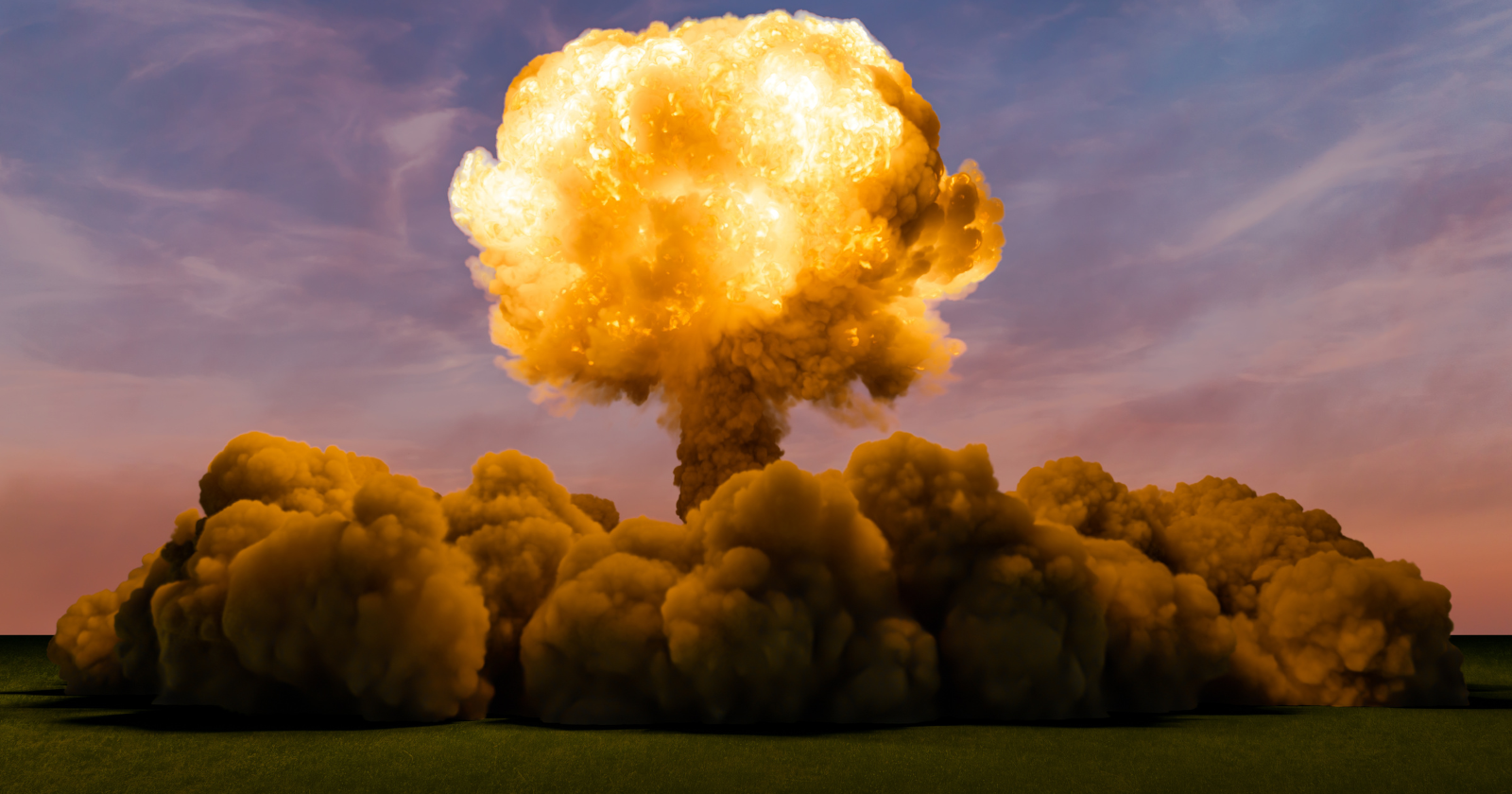
In June 1982, deep in Siberia, a natural gas pipeline operated by the Soviet Union suddenly exploded with a force estimated at three kilotons — comparable to a small tactical nuclear weapon, large enough to be seen by US satellites in orbit. American intelligence officials, watching the fireball bloom across their screens, did not panic. They knew exactly what had happened. They had caused it.
Months earlier, the CIA had allegedly arranged for the Soviet KGB to steal a piece of pipeline-control software from a Canadian supplier. The software had been quietly modified before the theft. Buried inside its code was a hidden routine, a so-called logic bomb, programmed to wait patiently until the pipeline was fully operational and then send the pumps, valves, and turbines into overdrive — driving the pressure inside the pipe past the breaking point. The result, the story says, was the largest non-nuclear explosion ever produced by a piece of software.
It is one of the most famous spy stories of the Cold War. It is repeated in books, podcasts, news articles, and cybersecurity training materials as the world’s first cyberattack — the moment software became a weapon capable of physical destruction.
There’s just one slightly awkward problem with the story.
There is very little independent evidence that any of it actually happened.
Where the story comes from
The Siberian pipeline tale has exactly one substantial source. It comes from a 2004 book called At the Abyss: An Insider’s History of the Cold War, written by Thomas C. Reed, a former Secretary of the Air Force who served on Ronald Reagan’s National Security Council.
In a single passage of his book, Reed described the operation in detail. According to him, the CIA — working from intelligence provided by a French-recruited Soviet defector codenamed “Farewell” — discovered that the KGB had a “shopping list” of Western technology it was actively trying to steal. CIA Director William Casey, with Reagan’s approval, decided that rather than block the thefts, the agency would let them happen — but the goods would be subtly defective, modified to fail in ways that would damage the Soviet economy when deployed.
The pipeline software, Reed wrote, was the most spectacular example of this strategy in action. “The pipeline software that was to run the pumps, turbines, and valves was programmed to go haywire,” he wrote, “after a decent interval, to reset pump speeds and valve settings to produce pressures far beyond those acceptable to pipeline joints and welds. The result was the most monumental non-nuclear explosion and fire ever seen from space.”
Reed said the CIA had reviewed and approved his book before publication. The story was picked up immediately by the Washington Post, NBC News, and dozens of other outlets. Within a few years, it had been absorbed into the canon of Cold War history.
What’s missing
The trouble is that nothing else from the period seems to corroborate it.
A pipeline explosion of the scale Reed described — a three-kiloton blast visible from orbit, large enough to qualify as the most powerful non-nuclear explosion ever observed from space — would be one of the largest industrial disasters of the entire twentieth century. It would normally be expected to leave a trail of evidence: contemporary Soviet records, environmental damage, news reports, eyewitness accounts, satellite data, declassified intelligence assessments, something.
That evidence is, as far as anyone has been able to determine, essentially absent.
The Soviet Union kept extensive internal records on pipeline operations and incidents. A Washington Post analysis published after Reed’s book came out found no Russian or Soviet documentation matching the explosion he described. Vasily Pchelintsev, who was head of the KGB in the relevant region of Siberia at the time, told reporters that the only pipeline incident he could remember from the period was small, unrelated to the Trans-Siberian pipeline, and nothing like the catastrophe Reed described.
A search of the New York Times archive from June through August 1982 — the months in which the explosion supposedly happened — turns up no mention of a major Siberian pipeline disaster. Western news organisations, even in the depths of the Cold War, generally noticed three-kiloton explosions inside the Soviet Union. They did not notice this one.
Other former CIA and KGB officials have, over the years, either denied the story or expressed serious doubts about it. The CIA itself has never officially confirmed the operation, despite its alleged approval of Reed’s book.
What probably did happen
This is not to say that the entire underlying story is invented. The Farewell Dossier — the French intelligence operation that recruited KGB officer Vladimir Vetrov as a defector — is genuinely real and well-documented. The CIA’s broader Deception Program, under which the agency manipulated Soviet technology theft to slip defective goods into the Soviet supply chain, is also accepted history. There were real instances of sabotaged components reaching Soviet industry, real intelligence operations that exploited Soviet espionage to feed it bad information, real economic warfare conducted through technology.
What’s missing is the specific event. The general programme is real. The famous explosion that was supposed to be its crowning achievement may not be.
The most likely truth, by some accounts, is that the sabotage programme produced a range of smaller failures across Soviet industry — failures that hurt the Soviet economy in aggregate but never produced the single cinematic disaster Reed described. The pipeline explosion may have grown in his memory, or in CIA institutional folklore, into something larger and more singular than what really happened. It would not be the first time that intelligence officials, looking back at a decade of small wins, retrofitted them into a single dramatic story.
Why the story endures anyway
The pipeline tale persists because it’s irresistible. It has every element of a great Cold War spy story — clandestine theft, hidden code, patient sabotage, a fireball visible from orbit. It also serves a useful purpose for the cybersecurity industry, which often cites it as the first example of a “logic bomb” attack on physical infrastructure. The story is a kind of origin myth for an entire field, and origin myths are hard to displace even when the evidence weakens.
Whether the 1982 Siberian pipeline explosion happened as Thomas Reed described it remains, more than two decades after he published the claim, genuinely unresolved. The CIA has not confirmed it. The Russian side has denied it. The contemporaneous record does not support it. And yet the story continues to be told, in books and articles and training slides, as if it were a settled matter of historical fact.
It is one of the strangest cases in modern intelligence history. Not because we know what happened, but because we don’t — and because for more than twenty years, that uncertainty has somehow not stopped the story from being repeated as if we did.