

Digital cameras are very interesting devices. They capture light and, though the use of special filters, manage to transform that light into computer-readable electronic signals. These sophisticated devices exist in almost every home, but are largely misunderstood by the general public. In this piece, I will simplify the technology behind digital camera and explain why some cameras perform better than others!
How Digital Cameras Work
Digital cameras are found on many devices in this day and age. Webcams, smartphones, camera phones, wrist watches, and even some pens have such mechanisms attached to them. The digital camera owes its success to its ability to fit in almost anything that people use daily. But what’s behind a digital camera? Is there some magic going on?
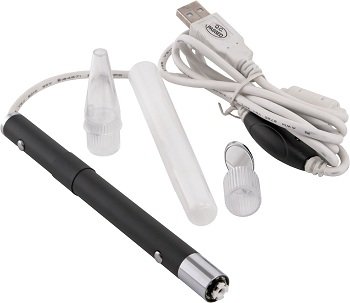
The digital camera is basically a piece of hardware with a light sensor chip, known as a Complementary Metal Semiconductor (CMOS), a couple of filters, a digital or mechanical shutter, and a set of lens. Many of them come with adjustable lens, allowing for zoom. Others use charge-coupled devices (CCDs) as light sensors instead of the CMOS.
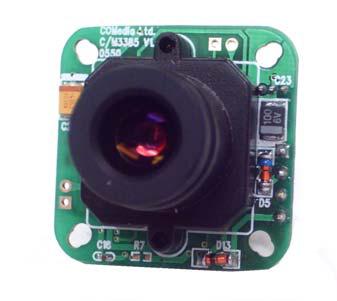
Once the shutter activates, all the light that enters through the lens is captured and the image is rendered into a binary map. This binary map is a computer-readable file (often a JPEG) that can be transferred from device to device. Still, the CMOS on its own can only capture light intensity, but it cannot capture colors. That’s what the filters are for. They each filter the light into a color and render its intensity, adding all necessary information to the binary map.
While this may be a bit of an oversimplification, digital cameras all function by these standards. The quality of the filter and how it interprets the light signals through smart software such as light extrapolation differs largely from camera to camera.
Resolution
Resolution is the width and height of an image. A 1920×1080 (1080p) resolution is 1920 pixels wide and 1080 pixels high. This is a full-high-definition landscape resolution. Images are often measured in megapixels (millions of pixels). The higher the resolution in MP, the more high-definition the image will be. Some typical resolutions include:
- 256×256 – don’t expect any quality picture from this resolution. This resolution is mostly found in those cheap (or ancient) cameras and is almost unacceptable.
- 640×480 (0.3MP) – Some of the lower-end smartphone (or dumb phone) take photo in this resolution. It is good for small screen viewing, but it won’t make the mark for prints.
- 1600×1200 (2MP) – With this resolution, you can print it on 4×5 inch format and still have a clear picture.
- 1920×1080 (2.1MP) – This is probably the highest resolution your monitor can display without resizing it. Good to use it as a wallpaper.
- 2304×1728 (4MP) – This is great if you are looking to print up to 16×20 inches.
- 3262×2448 (8MP) – Commonly found in most digital camera, including the iPhone 5.
- 4064×2704 (11MP) – Any picture at this resolution can be printed to a 13.5×9 inch format without any loss of quality.
As can be seen, for on-screen viewing, you won’t benefit from any photo that is bigger than 2MP, since you will have to resize it to view it properly. In most cases (and depending on what you need to do with the photo), you will be able to get by with a 4 – 5MP photo.
Note: Higher resolution also means larger image size.
Resolution is not equal to the image quality. Why Some Cameras Are “Better” Than Others
While a camera with higher resolution can add more details to the photo, it doesn’t necessary mean the photo is of better quality. In fact, the megapixels don’t really dictate the image quality. That’s because megapixel quantity is solely determined by the CMOS you have installed in the camera. The more transistors the CMOS has, the more megapixels you’ll get out of the image. When it comes to the image quality, other factors are involved.
First of all, the camera’s ability to detect objects at night greatly affects how its hardware will render your image. If the camera has software that detects such things as night conditions and renders the image in a way that tries to amplify light in objects that are dim, then you’ll have a clearer picture when taken in the dark. The flash bulb in the camera can only do so much.
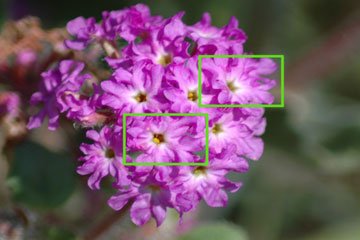
Here’s another piece of camera magic: Large aperture diameters. The aperture is limited by the size of the lens. Cameras attached to phones have overcome the limitations caused by their small apertures with software emulation. However, aperture is still king in the digital photography world. The larger your aperture, the more light enters the camera. You can better adjust how the image will look by making slight adjustments to the aperture, increasing or decreasing its size. It allows for great pictures with faded backgrounds like the image below.
In the case of smartphones, the image sensor, the lens’ focal range, and the software rendering the image all play a part in the image quality. These things are indispensable and by far more important than the resolution of the image.
There is a whole encyclopaedia on perfecting the image quality and we won’t go into details here. All you have to know is that more pixels doesn’t always lead to better photo.
Conclusion
We are not going into great details on how digital camera works as that will take days and nights. Hopefully, this article has given you a big picture of how digital camera works and why you should not be overly obsessed with the pixels in your camera. If you are buying smartphone based on the resolution of the camera, think twice.
Image credit: Digital Camera by BigStockPhoto