


Apple’s new Face ID technology appears only in the flagship iPhone X. This replaces Touch ID on that device, instead unlocking the phone via facial recognition. This has sparked some concern with users who have grown used to the speed and reliability of Touch ID and seen similar face recognition technologies fail. While the technology underlying Face ID isn’t new or revolutionary, Apple claims it’s implemented better than ever before.
How does Face ID work?
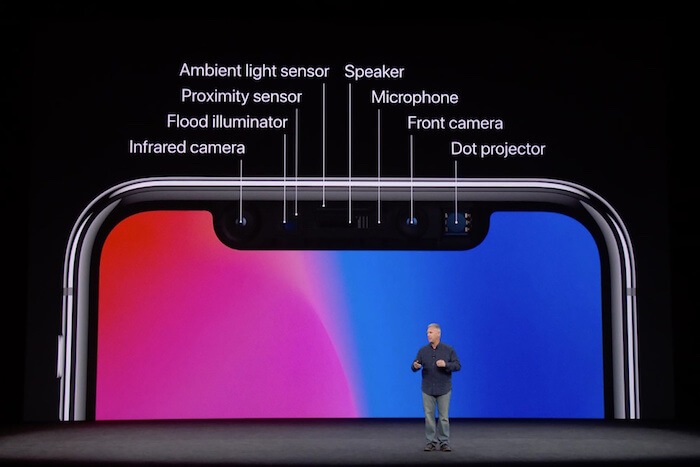
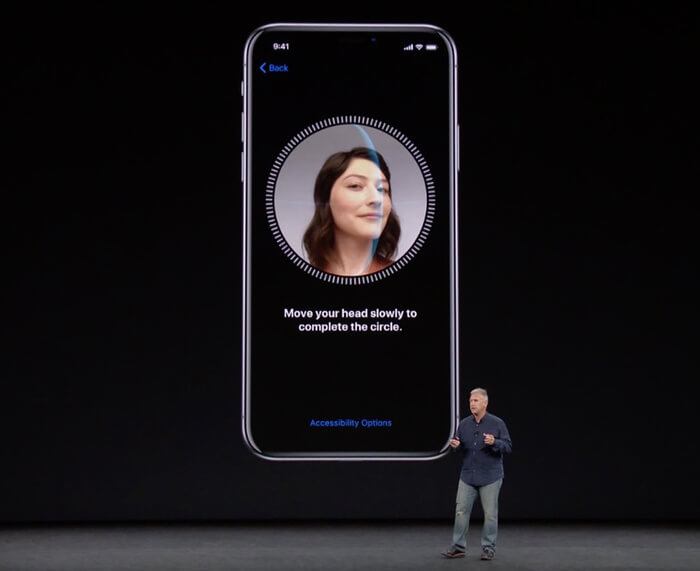
Face ID is powered by Apple’s TrueDepth camera. When the user enrolls in Face ID, this infrared camera scans their face and creates a depth map with more than 30,000 points. The iPhone X uses these points to create a mathematical model of the face and then stores that model securely. On future unlock attempts, the camera re-scans the user’s face and compares the result. If it’s sufficiently similar, the device unlocks.
With gaze detection, Face ID detects when users are looking directly at the phone. When they do, it unlocks. Otherwise, the device will remain locked. This prevents unwanted unlocking when the device is sitting near the user.
What about sunglasses, beards, and darkness?
The infrared light used by Face ID is invisible to humans, but it functions much the way normal light does. However, because its frequency is lower than regular light, it has a slightly easier time passing through some objects. This includes things like sunglasses which are typically balanced to block visible and ultra-violet (UV) light. This light exists at the opposite, high-frequency end of the spectrum of visible light. As a result, most sunglasses allow infrared light to pass. This permits Face ID to catch a glimpse even when sunglasses obscure your face.
The iPhone X’s much-touted A11 Bionic chip supports machine learning, allowing Face ID to adapt to changes in your appearance. If you grow a beard, cut your hair or put on glasses, Face ID should keep up with the changes. We’ll have to see how successful this feature is in practice, but if it works as advertised, that will be a major advancement in face recognition’s utility.
Infrared light also allows Face ID to work in the dark. Because the camera provides its own light source in the form of an infrared beam, the system doesn’t require external sources of light to function. It can also use the flood illuminator (basically an infrared flash) to balance and normalize lighting on your face. And because this infrared light is invisible to humans, there won’t be a bright flash. This means that, even in total darkness or uneven illumination, the iPhone X should be able to correctly identify your face.
Is Face ID secure?

According to Apple, Face ID avoids common spoofing attacks that made other facial unlocking systems insecure. Because it uses a depth-sensitive infrared camera, attackers can’t fool the camera with a photograph. Even three-dimensional masks were apparently unsuccessful in fooling Face ID.
While the methods of avoiding three-dimensional spoofing haven’t been released, infrared light can penetrate the skin, allowing the TrueDepth camera to scan subdermal features that would be difficult (if not impossible) for mask-makers to replicate. We can also assume that the many thousand points of facial recognition make it difficult to create a mask with sufficient fidelity to fool the TrueDepth camera.
Like Touch ID’s fingerprints, the mathematical models of recognized faces stay within the iPhone X’s Secure Enclave. They’re encrypted, inaccessible to other apps and much of the OS, let alone attackers. Recognized faces exist only on the device and are not stored on Apple’s servers or synced to iCloud. And as far as we know, Secure Enclave has yet to be compromised.
Will Face ID replace Touch ID?
According to Apple, Face ID’s error rate is 1 in 1,000,000. This means that Face ID could unlock for the wrong person once in a million attempts. Touch ID had an error rate of 1 in 50,000, making Face ID more accurate by several orders of magnitude. And just like Touch ID, Face ID can also authenticate Apple Pay. Does this mean that Face ID will replace Touch ID eventually? If it turns out to be as easy and reliable as Apple claims, it just might.