

For iPhone Users, messaging comes down to blue vs. green bubbles, showing them who is also on an iPhone and who is on Android or another alternative. Is it marketing? Of course. Should Apple be forced to dump what it’s built so that it can work better with Androids? Google thinks so, as it suggested in a post on the Android website, “It’s time for Apple to fix texting,” to add RCS to iMessage.
Also read: How to Use iMessage on Android and Windows
Th iPhone-Android Texting Struggle
It comes down to more than blue and green bubbles. If you are using an iPhone and texting someone who is also using an iPhone, you’ll see green bubbles. If you’re chatting with an Android user, you’ll see blue bubbles. It’s not calling anyone out – just letting you know that certain iMessage features won’t work cross-platform.
There are a few things Android users won’t benefit from in your chat and some you won’t either. You won’t see read receipts letting you know that they have read your message. For a long time they wouldn’t see your emoji reactions, but that’s changing.
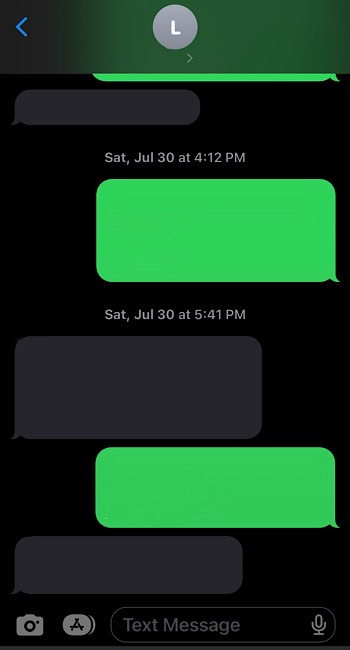
What it all comes down to is that Android users don’t get to take advantage of all the iMessage features, which is understandably frustrating. I can’t say I am that frustrated when texting with Android users. Do I wish I could see when they read it? Sure, but it’s really not that big of an issue.
One difficulty between the two texting systems is that Android messaging is carrier-based, but Apple doesn’t rely on mobile carriers for texting. iMessage works via Wi-Fi, and this means it’s hard for the two to work together. When you get that bubble, you’re actually chatting via the older SMS/MMS platform.
The biggest problem for iPhone users and Android users using the SMS/MMS platform is that it isn’t encrypted. I’ll admit, when I want a private conversation, I’m not doing it with an Android user on iMessage or Facebook Messenger, for that matter, or any other service. I make sure I’m chatting with an iPhone user on iMessages. I want that end-to-end encryption. Apple says it designed iMessage to use end-to-end encryption, and iMessage was first used in iOS 5.
Google just added end-to-end encryption to Android a year ago, some 10 years after iMessage was introduced. Android users now have end-to-end encryption if chatting with another Android user. But if they’re chatting with an iPhone user, they are forced to use the unencrypted SMS.
Android uses RCS (Rich Communication Services) and loses features when it has to go to SMS to work with iOS. iOS uses its own system in iMessages and loses features when it has to turn to SMS to work with Android. It’s the same issue both ways. I view it as parallel, but Google doesn’t seem to see it that way.
Google’s RCS Demand
The difference appears to be that Google is using a standard open to other OS: RCS. Apple is using a standard it developed, iMessage. iMessage has been using it eight years longer than Google has been using RCS. Yet, Google is insisting in the aforementioned blog post: “It’s time for Apple to fix texting.”
Google is blaming Apple for the “blurry videos, broken group chats, missing read receipts and typing indicators, no texting over Wi-Fi, and more” that Android users experience when texting with an iPhone user. iPhone users don’t experience that when chatting with each other.

The blog post goes on to blame Apple for using “out-of-date technologies from the 90s and 00s” for texting between Android and iPhones, but both systems rely on SMS at that point. It also included comments from frustrated iPhone users and articles discussing the situation, which it used to tell Apple that it needs to get on board and use RCS.
What it comes down to, though, is this just isn’t going to happen. There were more than 240 million iPhones sold in 2021 and nearly 200 million sold in 2020. Somehow I don’t see Apple kowtowing to Google: Apple isn’t likely to start using RCS and dumping its exclusive iMessage.
Additionally, much of the difference is that the iPhone is hardware that uses iOS, and they are exclusive. Android is not a device – it’s a mobile open-source OS. It’s hard to even determine how many Android phones were sold, as so many brands use the OS, and this muddies the situation.
Google may have appeased Android users with its blog post, or rather “ad,” but it doesn’t seem like it will do much to fix the situation for users – of iPhones or Android. Read on to learn more about RCS.
Image credit: Unsplash Screenshot by Laura Tucker