


Apple has an affinity for adding health features to non-medical devices: ECG, blood oxygen, optical heart sensor, irregular heartbeat notifications, women’s cycle tracking, etc. While all of them are available on the Apple Watch, now the company is adding a feature to the AirPods Pro 2, and the FDA has just approved the earbuds to work as a “hearing aid software device.”
Apple Announces New AirPods Features
Apple held its yearly September event on the 9th, to introduce the next series of iPhones – the iPhone 16, as well as a new Apple Watch and new AirPods products, colors, and features. One feature being added to the AirPods Pro 2 is that they can act as hearing aids.
While Apple worked on adding a lot of health features related to the heart for the past few years, this year, it’s the ears, or specifically, hearing. You can use your AirPods Pro 2 to take a hearing test. The Apple earbuds will check their fit and assess background noise, then give you a test and provide immediate results. The AirPods will also provide Hearing Protection to ensure you aren’t exposed to loud environmental noise. Check out this guide if you’re wondering if there’s a connection between hearing loss and headphones.
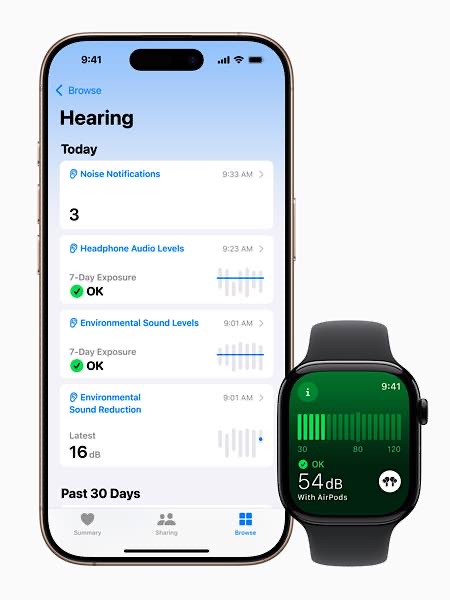
But it’s the hearing aid capabilities that required FDA approval. Apple explains it’s the first software-enabled Hearing Aid feature. If you take the test on your AirPods Pro 2 and discover you have mild to moderate hearing loss, you’ll be sent to the Hearing Aid feature.
Set it up, customize the settings, then start hearing more clearly. Alternatively, have a doctor set them up via an audiogram. The Hearing Aid feature is powered by advanced computational audio and the H2 chip. Frequencies are boosted so that everything is heard more clearly and vibrantly. Machine learning adjusts the process throughout the day.
Good to know: If you aren’t dealing with healing loss and are looking for an alternative to AirPods, check out these options.
FDA Gives Its Approval to the AirPods Pro 2 as a Hearing Aid
A problem entered into this when Apple announced the Hearing Aid feature at the event. They didn’t have regulatory approval yet from the FDA to refer to the AirPods Pro 2 as over-the-counter medical tech, yet they were announcing it as a medical device. Apple can be pretty powerful, and they were able to get the FDA to quickly authorize the AirPods Pro to work as a “hearing aid software device.”
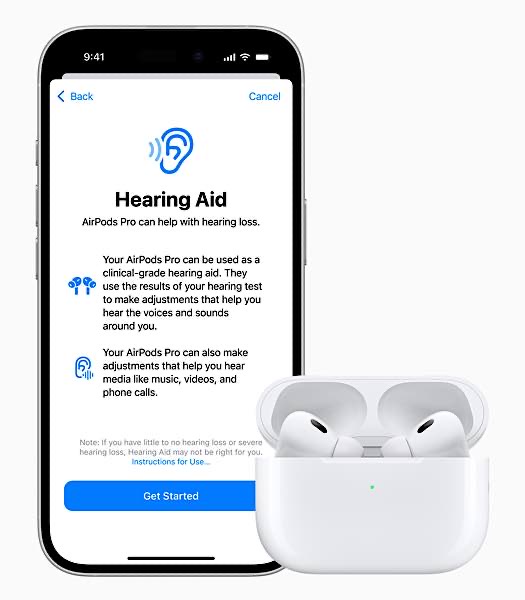
It’s the first time software has been used as a solution with an existing device for the hearing impaired. The FDA explained it conducted a clinical study with 118 people with mild to moderate hearing loss. It did not find any adverse effects for those using the AirPods software for their hearing loss.
The Hearing Aid feature will be delivered to AirPods Pro 2 sometime in the fall. It was an executive order from U.S. President Joe Biden in 2022 that allowed the FDA to consider OTC hearing aids without a prescription. If you’re a student with a disability, or have a child who has a disability, check out these great AI tools.
Image credit: Freepik