

Beware of Fake Windows 11 Installer Loaded with Malware

Fake Windows 11 Installer Featured

While we’re often advised to wait before downloading OS updates until the bugs are worked out, sometimes excitement just gets the best of us. One particular hacker counted on users salivating at the chance to download a new OS and released a fake Windows 11 installer loaded with malware.

HP Discovers Fake Installer

It was HP that noticed the fake Windows 11 installer and not a security firm, for a change.

HP explained in a blog post, “The domain caught our attention because it was newly registered, imitated a legitimate brand, and took advantage of a recent announcement.”
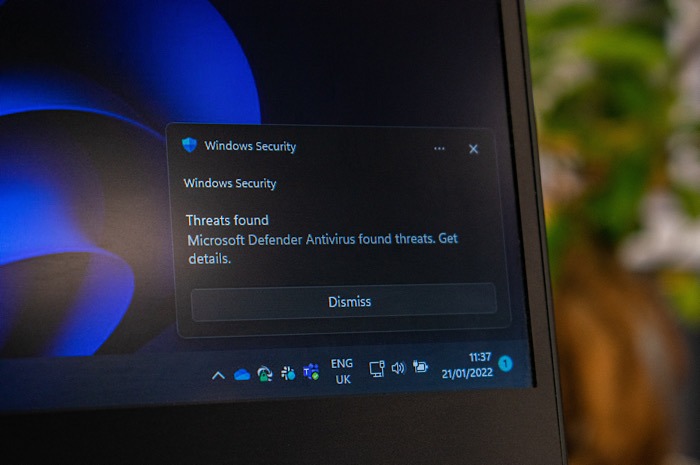
Fake Windows 11 Installer Security

On January 26, 2022, Microsoft announced the last group of PCs to be eligible for Windows 11. One day later, HP found the impostor on a website carrying the domain “windows-upgraded[.]com.”

This domain had all the bells and whistles it needed to look legitimate – and, of course, included a “Download” button. What is downloaded, though, is a Trojan that can steal your passwords or other data.

Malware Instead of WIndows 11 Installer

While you’re feeling pleased after finding this installer, you soon won’t be when your PC is filled with malware.

After punching the Download button, the file you’ll receive is a 1.5MB ZIP file with the name “Windows11InstallationAssistant.” Unzip the file, and it will now be 753MG, as the hacker added “padding” to the code.

“One reason why the attackers might have inserted such a filler area, making the file very large, is that files of this size might not be scanned by an antivirus and other scanning controls, thereby inceasing the chances the file can execute unhindered and install the malware,” further explained HP.
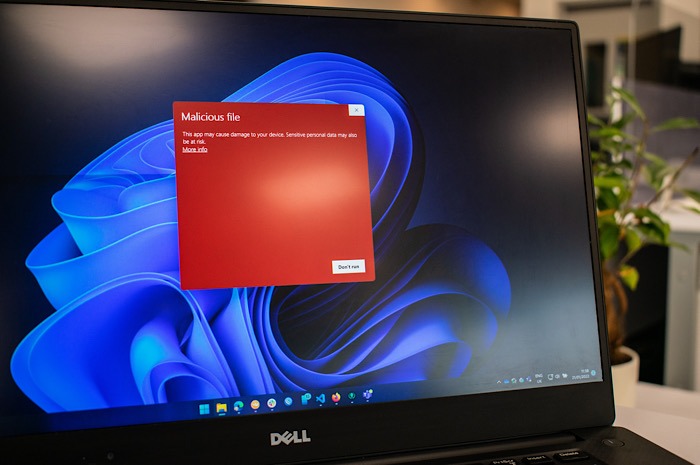
Fake Windows 11 Installer Malicious

If you try to install Windows 11 from this file, the RedLine Stealer malware package will be downloaded to your PC. This is available in underground cybercriminal forums and is capable of stealing passwords and data that auto-completes in your browser.

This operation is similar to one HP analyzed in December 2021. The hacker used the domain “discrodappp[.]com” and was impersonating a Discord installer. Both this domain and the one for the fake Windows 11 installer used the same domain registrar, DNS servers, and type of malware. The more recent domain is no longer online.

To go along with warnings to not download updates right away, if we do rush to download, we should also be aware of hackers trying to take advantage of the situation, which could be much worse than buggy software. There are bound to be more hackers planning similar, yet more stealth, efforts next time.

Subscribe to our newsletter!

Our latest tutorials delivered straight to your inbox

Laura Tucker Avatar

Read next

In 2016, archaeologists dated two rings of snapped stalagmites in France’s Bruniquel Cave to 176,500 years ago, evidence that Neanderthals had walked 336 metres into darkness with fire and built architecture deep underground long before modern humans reached Europe
Otto von Bismarck was 74 when Germany adopted the world’s first national old-age social insurance program in 1889, setting the pension age at 70 after years of fighting socialists with bans, laws, and a promise few workers would live long enough to use
When cosmonaut Valeri Polyakov stepped out of his Soyuz capsule in March 1995 after 437 consecutive days aboard Mir, doctors recorded him at several centimetres above his pre-flight height, and his spine had become so unaccustomed to gravity that the recovery team carried him to a chair rather than risk the compression of letting him walk.
When Bell Labs engineer Karl Jansky pointed a rotating antenna at the sky in 1932 looking for sources of transatlantic radio static, he kept picking up a faint hiss that peaked every 23 hours and 56 minutes, and he eventually realized he had become the first human to hear the center of the Milky Way.
When Harvard astronomer Cecilia Payne submitted her 1925 doctoral thesis arguing that the Sun was made almost entirely of hydrogen, the field’s senior figure Henry Norris Russell talked her into adding a line calling the result ‘almost certainly not real,’ and then published the same conclusion himself four years later to widespread acclaim.
When seismic waves from the Chicxulub impact reached what is now North Dakota roughly ten minutes after the asteroid struck, they appear to have triggered a ten-metre standing wave in an inland river that flung fish onto the bank and buried them under glass beads still falling from the sky.
When survivors near Lake Nyos woke on the morning of 22 August 1986, the cattle were dead in the fields, the birds had fallen out of the trees, and 1,746 of their neighbours were lying where they had stood the night before, with no fire, no flood, and no wound to explain it.
In October 2002, a Russian scientist named Dimitri Malashenkov stood up at a space conference in Houston and quietly explained that the dog Laika, whom the Soviet Union had publicly mourned as a heroic week-long orbiter in 1957, had actually died of heat and panic within about five hours of launch.