


Drone delivery just took a giant leap forward. The U.S. Federal Aviation Administration announced it is issuing rules that will allow small drones to fly out over people as well as at night. These are rules that the delivery industry has long waited for so that they can expand fleets and possibilities.
Also read: How Drones Are Saving Lives
FAA Announcement
Among the FAA rules is a requirement for remote identification for most drones, knowing in the industry as unmanned aerial vehicles. The Remote ID will help erase concerns for security with the small aircraft taking to the sky.
“The new rules make way for the further integration of drones into our airspace by addressing safety and security concerns,” said Steve Dickson, FAA administrator, in a statement. “They get us closer to the day when we will more routinely see drone operations such as the delivery of packages.”
Companies have been competing to be the first to get a delivery drone fleet in the air. The industry has been gearing up for this going back a number of years. But now, with the global health crisis, the increased focus on contactless deliveries, and less time spent in brick-and-mortar stores, it has to be taking on increased importance.
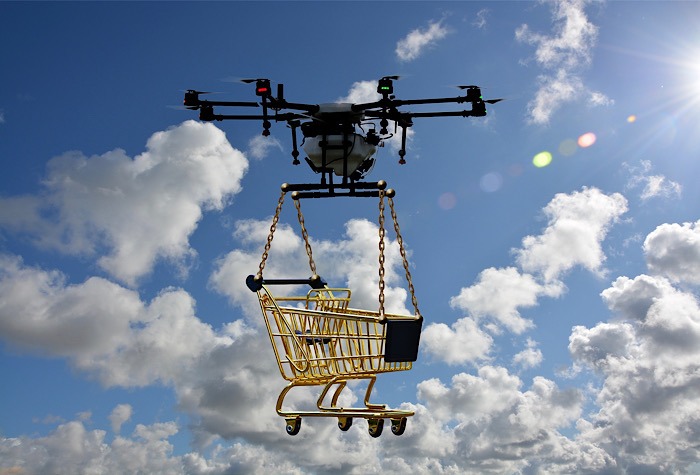
The FAA also issued rules for nighttime operations. It will require drones flying at night to be outfitted with anti-collision lights and will also allow them to fly over moving vehicles.
The Remote ID will be required for all drones that weigh 0.55 pounds or more, and in certain circumstances, smaller drones will be required to have a Remote ID as well. The requirement that they must be connected to the Internet to transmit location data is being eliminated; instead, they will be required to broadcast Remote ID messages via radio frequency broadcast.
Additionally, the smaller drones will not be allowed to have any exposed rotating parts that could possibly lacerate human skin.
The Imminent Future of Drone Delivery
As mentioned above, these FAA rules have been long awaited for multiple companies to press on with drone delivery.
In October 2019, UPS said it had earned the government’s first approval to operate a drone airline. Also last year, Wing, owned by Google’s parent company Alphabet, became the first company to get air carrier certification for a single-pilot drone operation.
Not to be left out, Amazon’s drone service received federal approval in August. This will allow the company to begin testing commercial deliveries with its drone fleet.
The FAA will publish the new rules next month, and 60 days later, they will become effective. Manufacturers will have 18 months to begin producing drones that have Remote ID, and drone operations will have another 12 months to begin using drones outfitted with Remote ID.
Is drone delivery going to become a “thing”? Let us know in the comments what you think.