In Linux, most of the config files come with a dot (.) in front of their filenames, and they are hidden from plain view. These files, also known as dotfiles, are at the core of how your Linux environment looks and behaves. While essential, managing them manually can quickly turn into a mess. This is where a simple tool like GNU Stow comes in, giving you a structured and reliable way to keep everything in one place while your system continues to work exactly as expected.
What Dotfiles Are and Why They Matter
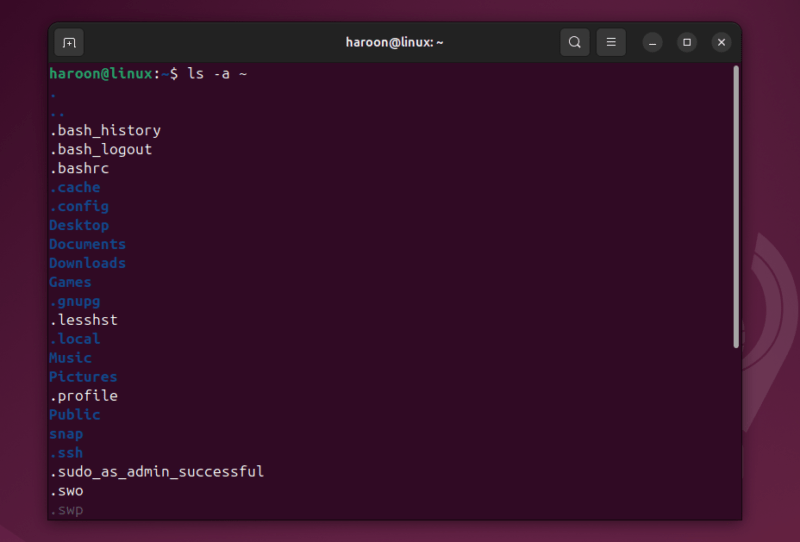
So basically, dotfiles are hidden configuration files that live on your computer. They almost always start with a dot, like “.bashrc” or “.gitconfig”. Your operating system hides them by default to keep your home folder clean and uncluttered. These files control how your terminal looks, how your text editor behaves, and even how your Git commits are formatted.
Every shortcut, theme, and custom setting you create lives inside these files. If you reinstall your system without backing them up, you lost all of that. You would have to start from scratch and rebuild everything from memory, which can take hours. Fortunately, because dotfiles are plain text files, you can save and restore them whenever you need to.
The Problem With Traditional Dotfile Management
The first thing you notice is that there is no real structure. Your dot config files are scattered across your home directory alongside everything else, making it hard to tell which files actually belong to your configuration and which are just regular files.
Also, bringing Git into the mix does not help much either, because your home folder is not a clean project. And trying to version-control it means tracking hundreds of unrelated files just to get to the handful you actually care about.
Things get worse when you start using multiple machines. Copying files manually between systems is tedious, and it is easy to overwrite something important or end up with different versions of the same file on different computers with no clear idea of which one is correct.
What you actually need is something purpose-built for this problem. A tool that understands the structure of config files, keeps them organized in one place, and links them to where your system expects them without any manual copying.
What GNU Stow Is and How It Works
GNU Stow is a symlink manager. It takes files from an organized folder you control and links them to wherever your system expects to find them. Your applications see the files in their usual locations, but the actual files live inside your dotfiles folder where you can version-control and manage them properly.
The way it works is straightforward. You organize your configs into subfolders inside a single dotfiles directory, where each subfolder represents one package. When you run stow zsh from inside “~/dotfiles”, Stow mirrors that folder structure into your home directory using symlinks. This means your shell still reads “.zshrc” from the same place it always has.
The difference is that the real file now lives inside your dotfiles folder, so any changes you make there are picked up immediately. There is no copying involved, and nothing needs to be synced manually.
Installing GNU Stow
Stow is available on all major Linux distributions and macOS, so installation is quick regardless of what system you are on. On Debian or Ubuntu, you can install it with this:
sudo apt install stowArch users can grab it with:
sudo pacman -S stowOn Fedora, use this:
sudo dnf install stowOnce it is installed, run stow --version to confirm everything is working before you move on.
Organizing Your Dotfiles Directory
Before you start using stow, you need to set up a proper folder structure. To begin, let’s first create one main folder called “dotfiles” in your home directory.
mkdir -p ~/dotfiles
cd ~/dotfiles
Inside it, create a separate subfolder for each app you want to manage. The folder name is usually just the app name, like bash, git, or vim.
mkdir -p bash
mkdir -p zsh
mkdir -p git
mkdir -p nvim/.config/nvim
Also, inside each app folder, mirror the exact path where the file normally lives on your system. So if an app stores its config in a “.config” folder in your home directory, you create a “.config” folder inside your app folder too. Here is what a basic structure looks like:
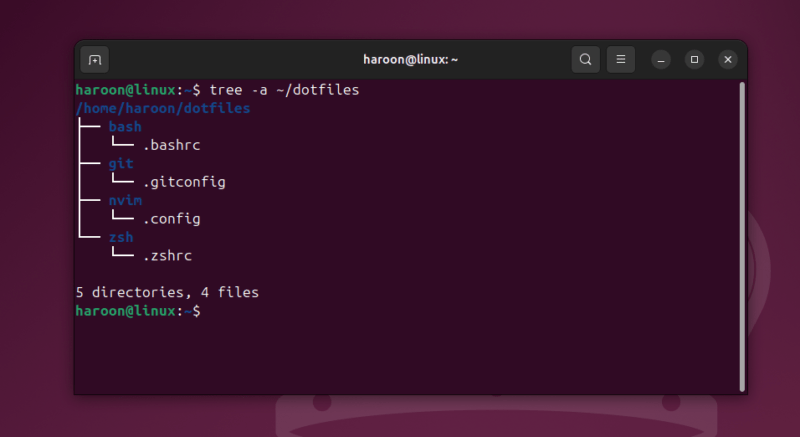
Getting this structure right matters more than anything else. Once it is correct, stow handles the rest. It is also worth initializing a Git repository inside your dotfiles folder from day one so your changes are tracked right from the start.
Migrating Existing Dotfiles Into Stow
If you already have config files in your home directory, you can migrate them easily, but you needs to do it carefully. Stow will not create a symlink if a real file already exists at that location, so you need to move the original file first before running stow.
For each file, first create the correct folder inside your dotfiles directory, then move the file into it using mv, and finally run stow git. For example, let’s see how it looks for “.gitconfig”:
mkdir -p ~/dotfiles/git
mv ~/.gitconfig ~/dotfiles/git/.gitconfig
cd ~/dotfiles
stow git
Go through this one application at a time, as trying to migrate everything at once increases the chance of something breaking mid-session.
Note: Running stow -n shows what stow would do with different flags options.
Managing Multiple Applications With Stow
One thing I really like about GNU Stow is how well it scales. Whether you’re managing one application or twenty, the process stays the same. Each application is kept in its own folder (called a package), so installing or removing one doesn’t affect the others.
Create a new folder inside your dotfiles directory, name it after the app, place your config files inside with the correct structure, and run stow. It will create the required symlinks automatically.
In addition, you can install multiple configurations at once:
stow bash zsh vim gitIf you work across multiple machines with slightly different setups, you can maintain shared packages alongside machine-specific ones and only stow what each system actually needs.
Updating and Removing Dotfiles Safely
The files inside “~/dotfiles” are the real ones, while the files in your home directory are just symlinks. Any changes you make apply instantly. There’s no need to copy or sync anything.
Similarly, to removing a configuration, you can use this:
stow -DThis removes all the symlinks created for that application, while keeping the original files safely inside your dotfiles folder. If you ever want to restore it, simply run stow again.
If something gets out of sync or you want a clean refresh, you can use:
stow -RThis will remove and recreate the symlinks in one step. Overall, stow makes managing your dotfiles safe and predictable. Your actual files stay protected in one place, while your system remains clean and easy to maintain.
Using Git to Version Control Your Dotfiles
Once you organize your dotfiles and get stow working the way you want, the natural next step is to add version control. You initialize Git inside your dotfiles folder, add your files, and push to a remote like GitHub or GitLab:
cd ~/dotfiles
git init
git add .
git commit -m "Initial dotfiles setup"
git push
If you ever make a change that breaks something, you can roll back to an earlier version. And whenever you switch to a new machine or do a fresh install, you are not starting over. You clone the repo and stow what you need, and your whole environment is back exactly as you left it:
git clone https://github.com/yourusername/dotfiles.git ~/dotfiles
cd ~/dotfiles
stow zsh git nvim tmux
In addition, you can add a README that lists your packages and any apps you must install first to save time on fresh setups. You can also add a simple install.sh script that runs stow across all your packages automatically, so restoring a machine really does come down to a single command.
Final Thoughts
GNU Stow and Git together solve the dotfile problem completely. Your configs live in one place, stay backed up automatically, and you can restore them on any machine in minutes.