Are you wondering whether I wrote this text you’re reading right now? Or did an AI, like ChatGPT, generate it? In most cases, it’s easy to tell with a simple visual check. Whether it’s fluffy words, sentences that seem a bit too perfect, or a missing human voice, you can manually detect AI-generated text without using any tools.
Detect AI in Writing Manually
While you will find many software tools to detect AI in writing, none of them are perfect. Rather, we will cover the informed guesses that an editor uses in everyday workflow, such as grammar and punctuation rules, paragraph structure, clarity of ideas, logical flow, and applying human context in writing.
No matter how advanced an AI model you use, it can easily betray you if your writing strays from accepted norms. The thing is, even the least skilled human writer avoids the kind of mistakes that AI chatbots like ChatGPT, Gemini, Copilot or Perplexity make every time you run a writing prompt through them.
What we’ve covered below is a short list of telltale signs to check any writing’s authenticity against AI. If you want a detailed understanding, check this latest field guide on “signs of AI writing” by Wikipedia. Thousands of Wikipedia editors, including me, put together the consensus after discussions.
Formulaic Sentences
You may have come across social media posts or articles that you could tell felt somewhat AI-ish. It’s not just your instincts at play. Large Language Models (LLMs) that generate a write-up often regress to the statistically significant mean approach to describe a topic. This leads to jargon-heavy sentences that lack nuance and sound overly formal or polished, as if obeying a formula.
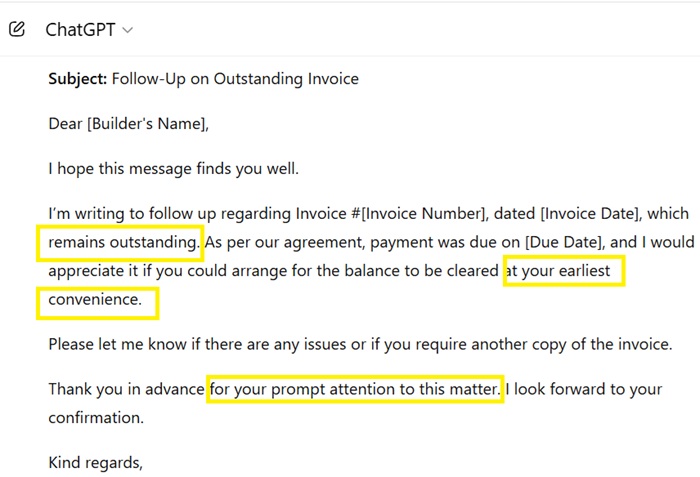
AI bots often go for overkill in formal prose – unlike humans, they don’t know where to stop! Even if you use multiple prompts to remove those formulaic words and phrases, an unrealistic neutral tone could suggest that you may have used AI chatbots. As human writers, we adjust our tones based on emotion and context, while chatbots like Gemini produce programmed, structured responses.
Did you notice that I single out Gemini? It’s something an AI chatbot will never do. As a user, I found that Gemini ranks at the top when it comes to editing entire paragraphs or refusing to provide an answer if it feels it may spark a controversy. Even the other AI chatbots generally sound robotic compared to the varied, sometimes controversial paragraphs humans typically write.
Lack of Human Voice
This is a big one. A writer’s human voice is really the soul of everything that we read. Whether you write a technical article, post a user comment, or review something based on your experiences, your individual voice shines out. If you read the separate columns of a writer, you can easily identify their signature patterns.
Despite consuming vast libraries of information, AI chatbots struggle to produce writing with a unique flair. In a test with Gemini Pro, I gave it a simple prompt: rewrite Aesop’s Fable, “The Tortoise and the Hare,” with the hare winning the race but losing out on a technicality. For this creative writing task, Gemini Pro used mathematical terms, completely failing to understand our human context.
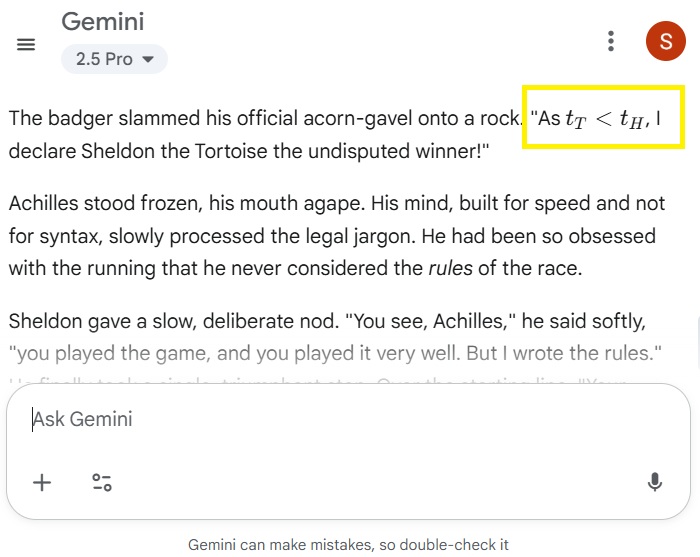
Common traits of a human voice include strong biases, emotional tones, colloquialisms, slang terms, and quirky phrases. With AI bots, you get an impersonal voice that grows more repetitive as the paragraph progresses. The tone is typically positive, promotional, or neutral, creating a cheesy, unnatural feel.
While AI bots can mimic emotions or draw from the experiences of famous personalities, their output lacks a subjective voice, resulting in an averaged-out tone that feels shallow and devoid of actual human experiences.
Grammar and Structure Flaws
An AI chatbot can definitely recreate perfect grammar, which is one of the ethical reasons to prompt your writing. However, there can be overkill within the layers of polished text. Human writers generally won’t make these mistakes.
- Too many gerunds: these are the noun words ending in -ing sounds. Think of words like fostering, promoting, habit-building etc. AI tends to use them excessively because academic texts feature them quite often. It’s never wrong to use gerunds though: just keep an eye for any unnatural density.
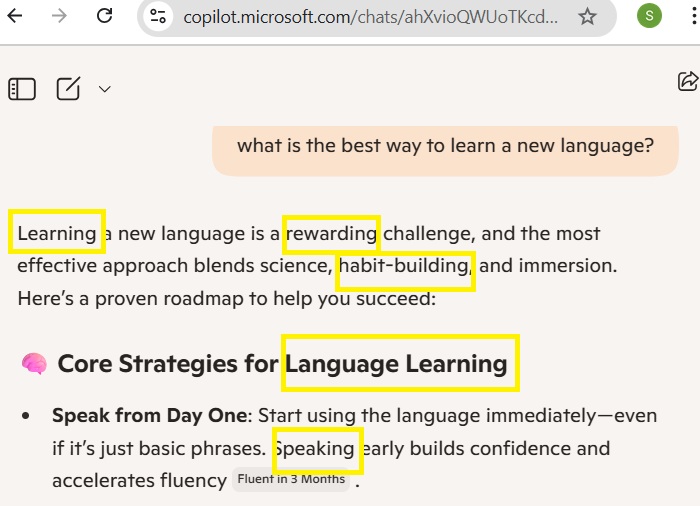
- Random, excessive em dashes: many writers have stopped using -em dashes out of fear of AI chatbots becoming popular. I continue to use them — the thing to look out for is that they should not disrupt the flow.
- Sequence breaking: one thing that separates human writers from AI is that the former maintain a more cohesive narrative between paragraphs with clear transitions. With AI tools, if you want a comprehensive outcome, the sequences can break abruptly causing logical errors.
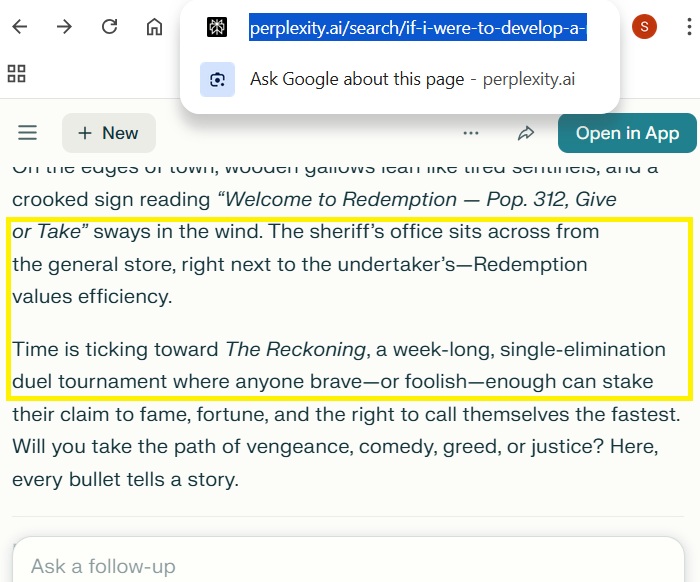
- Excessive use of transitional expressions: AI-written texts tend to use too many transitional expressions without much regard for readability. These include words like “furthermore,” “in addition,” “to that effect,” and “moreover.” While certainly even human writers use them, the key to watch is the excessiveness.
- Excessively balanced paragraphs: AI chatbots tend to produce paragraphs that are too much of a uniform length, sound symmetrical, and lead to a clear introduction-to-conclusion narrative while the body copy lacks a human voice.
Also read: check our guide to where you can and cannot use AI in writing.
Can You Always Tell If AI Wrote It?
The important question is can you always tell with certainty that AI wrote something? Not all AI prompting leads to formulaic results. There are certain ChatGPT hacks that can help produce intelligent responses. So, this is a gray area.
To avoid having your writing misjudged as AI-centric, you should modify it to eliminate the telltale signs of AI usage. Some writers and students in academia are procuring “humanized AI writing services” that fix AI’s blemishes. They may/may not work well for you though, so it is still best to avoid using them as you might get caught in the future.