
Save $93 on a yeedi vac Robot Vacuum

We may earn a commission from links on this page.
Deal pricing and availability subject to change after time of publication.
Yeedi Vac Robot Vacuum Featured

If you’ve never tried a robot vacuum, this could be your chance, as you can save $93. Get a yeedi vac Robot Vacuum that will not only vacuum your home, it will also navigate your home on its own to clean the areas you want to be cleaned. It’s a win-win deal to save money and clean all your floors.

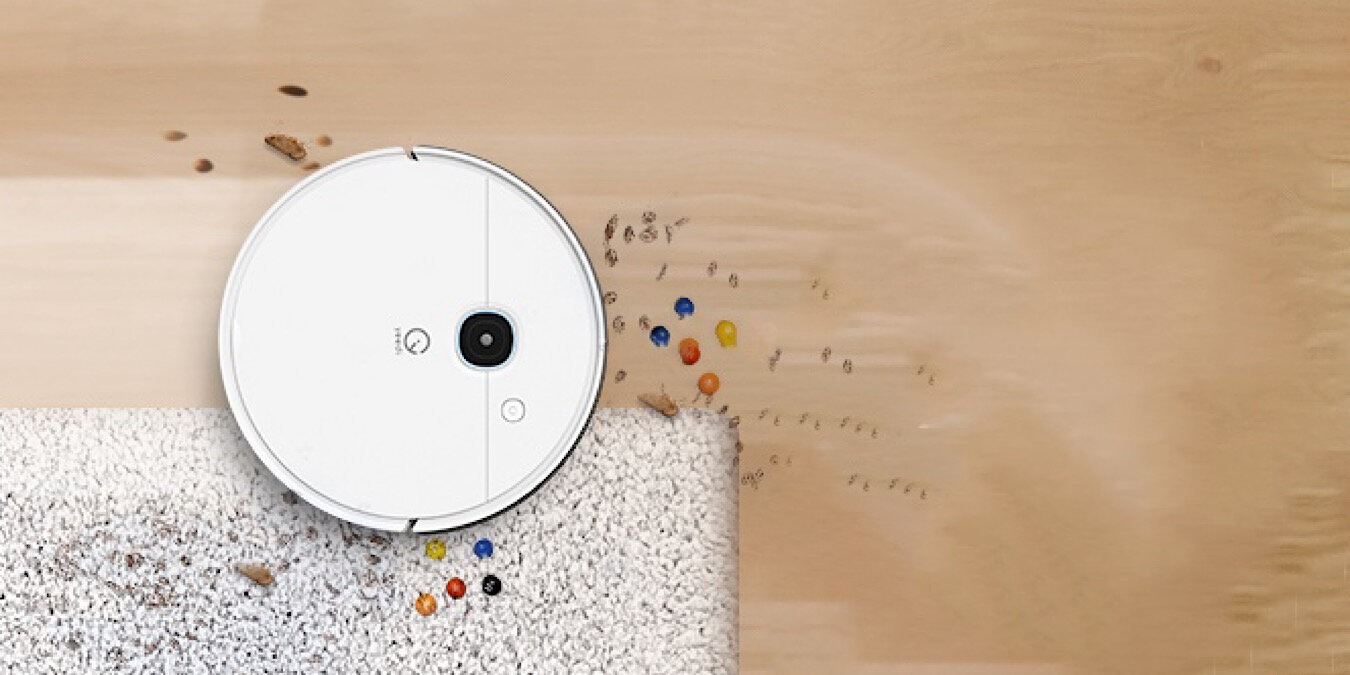
An advanced floor-tracking sensor and visual mapping power this vacuum, allowing it to move across the floors in your home, thoroughly cleaning row by row. The navigation also prevents it from bumping into furniture, walls, your pets, etc. It has up to 3000Pa suction power that works with the side brush and rolling brush to pull in the dirt that’s embedded in your carpet or barely visible on your hard floors.
Yeedi Vac Robot Vacuum Customize

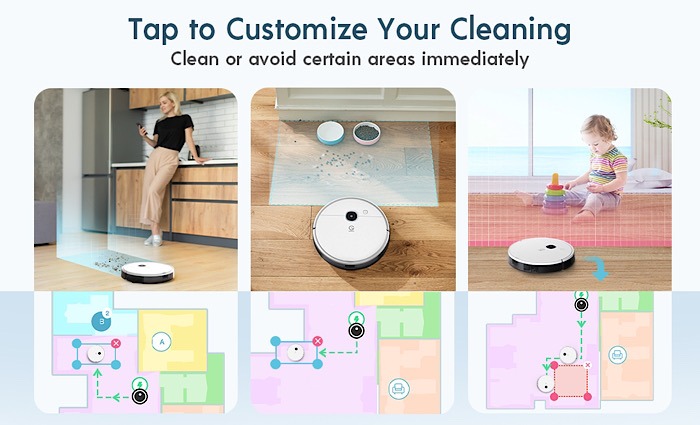
The yeedi vac Robot Vacuum works with an app that allows you to customize your cleaning to only clean the areas you want when you want. The vacuum will draw out a map of your home that you can edit to target certain rooms or even create a specific area you would like it to avoid. Set the boundaries and rooms, and don’t lift a finger as the vacuum does it all. If you’re an Amazon Alexa or Google Assistant user, you can enlist their help as well.

The vacuum’s built-in battery will last for 100 minutes on a single charge. When it runs low, the vacuum will return to the charging dock on its own to recharge. When it’s fully charged again, it will resume its cleaning job where it left off. Once you see how great it cleans, add a self-empty station and/or a mopping function that are sold separately.

Save $62 with a Prime discount, clip the Amazon coupon for an additional $20 off, and take even more off the price with the code YEEDIVAC11 to pay just $206.09 for this robot vacuum. This deal lasts through February 21, 2022.

yeedi vac Robot Vacuum

Make Tech Easier may earn commission on products purchased through our links, which supports the work we do for our readers.

Subscribe to our newsletter!

Our latest tutorials delivered straight to your inbox

Laura Tucker Avatar

Read next

Content and cloud networks now account for three-quarters of used international bandwidth, while Google, Meta, Microsoft and Amazon own, co-own or buy capacity on a growing share of the 600-plus submarine cable systems carrying over 99 per cent of data between countries, a private map hidden below the wireless internet
Wi-Fi doesn’t actually slow down when a café gets crowded — the signal is fine, but every device has to wait its turn to speak on the same frequency, and the polite queuing is what you feel as lag
In 1988, a 23-year-old Cornell graduate student named Robert Morris released a self-replicating program to measure the size of the internet — within hours it had crashed roughly 6,000 of the 60,000 machines then online, and computer security became a field
In July 2026, Psy’s Gangnam Style passed six billion YouTube views, fourteen years after its horse-riding dance became the platform’s first billion-view video and long after engineers had replaced a counter designed to stop at 2,147,483,647
Suzanne Simard sealed paper birch and Douglas fir seedlings inside plastic bags, fed them carbon-14 and carbon-13 dioxide, and nine days later found carbon had crossed between species through fungal threads in the British Columbia soil beneath her boots
A species of jellyfish called Turritopsis dohrnii can revert its adult cells back to a juvenile polyp stage when injured or starving, effectively restarting its life cycle, and biologists have so far failed to identify any natural limit to how many times it can do this.
A Japanese man named Jiroemon Kimura, who lived to 116, was born in 1897 when Queen Victoria still ruled and died in 2013, meaning a single human life personally overlapped with the invention of the airplane, the atomic bomb, the internet, and Instagram
The Hollywood sign originally read HOLLYWOODLAND when it was built in 1923 as a real estate advertisement for a housing development, and it was only meant to stand for 18 months, but nobody ever got around to taking it down and the city eventually adopted it as a landmark