

Netflix has now found a way to ding its most loyal users once again. If you’ve been using the cheapest Netflix plan that allows you to not see ads, you’ll have to either start seeing the ads, or go to one of the more expensive plans.
Netflix Makes Good on Promise
Cable cutters did whatever they could to save money. Password sharing happened frequently. Netflix caught on to this and initiated a strategy that probably doesn’t prevent password sharing outright but does handle it. If your account is being used at an address that isn’t the same as yours, you’ll get dinged by Netflix.
Although monetary figures have not been announced, In the first few months after the plan went into effect last year, Netflix earned themselves nearly 6 million new paid subscribers. However, they didn’t post the type of revenue they were looking for with that plan.
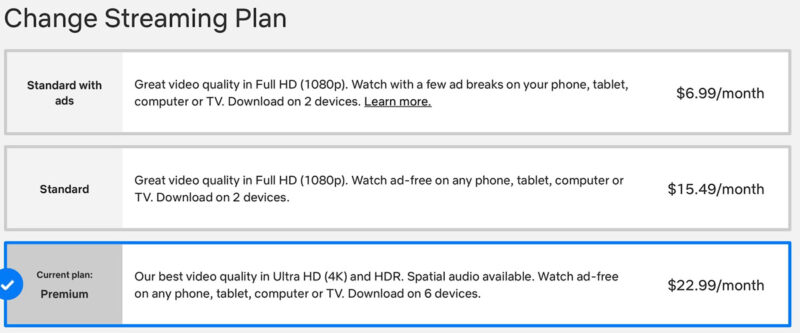
After raising the rates in December of last year, in January, Netflix announced it was removing its cheapest Netflix plan without ads. Users were lulled into believing it was a threat, as it never happened. However, users of that plan are now beginning to get messages stating that their plan is ending, and they need to choose a new one to keep watching.
If they choose to stick with no ads, that means they’ll be paying $15.49. If they want to use Netflix on more than two devices, they’ll be paying the premium, $22.99. If they decide to suffer through the ads, it’s $6.99, which seems like a lot if you have to watch ads.
Good to know: thinking of switching to Amazon Prime? Check out this Netflix vs. Amazon Prime Video comparison.
Check Your Plan and Bill
To tell you the truth, I wasn’t sure which plan I was using, but I would have thought I was on the cheapest Netflix plan without ads. That’s not the case.
I checked my account, as I don’t want to be cut off from Netflix, but I also don’t want them just passing the amount to me without asking. It turns out I’m on the premium plan, which I don’t want to be. I don’t want to pay $22.99, but I have three members of the family living here. Everyone watches on a different device.
Netflix was most likely looking for more revenue when they cut off password sharing. While they found many new customers, strangely, they didn’t pick up as much revenue as they expected. So later in the year, they raised the rates, and the next month, eliminated the cheapest plan that allows you to not see ads.
Is it a gamble? Will Netflix users start turning away from the service, tired of being soaked for more and more money? Or are they too into their bingeing habit, so much so that they’ll pay high rates for it? Admittedly, that’s what I’m doing.
At least you get something for that monthly fee. Take a look at the free mobile games you get along with your Netflix subscription.
Image credit: Unsplash. All screenshots by Laura Tucker.