
California Permits Autonomous Cars to Charge Passengers

Autonomous Passenger Cars Featured

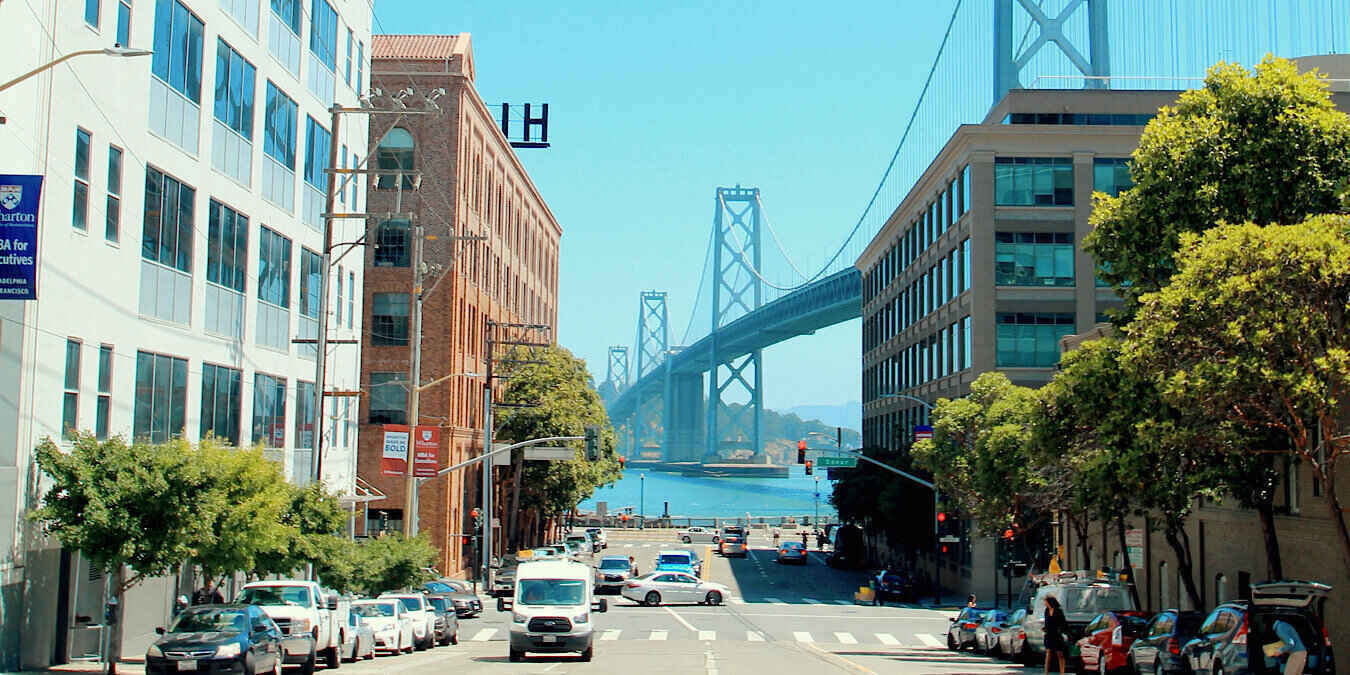
The business of autonomous vehicles is ticking away at a snail’s pace. All the players want to be the first to get their vehicles on the road, but a completely autonomous vehicle hasn’t been cleared for consumers. A small step was taken recently in California when one company was given permission to charge passengers for rides in its autonomous cars.

Cruise Granted Permission

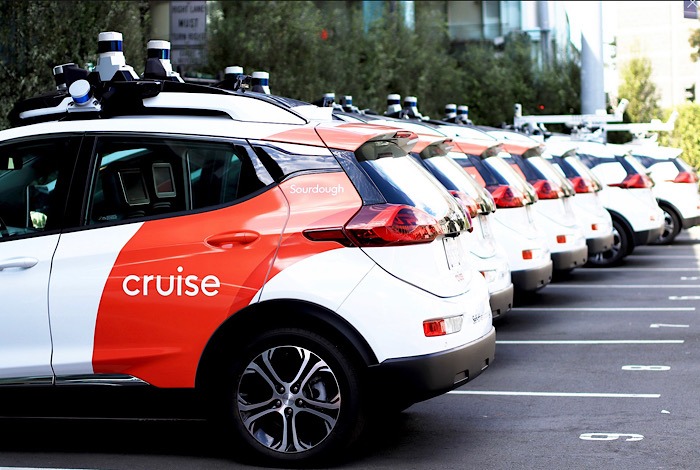
Cruise, the autonomous cars division of General Motors, was cleared by the California Public Utility Commission (CPUC) to charge fares for to passengers for rides in its robotaxis.

For the past month, the CPUC has been allowing Cruise to be the first autonomous car company to provide test rides around San Francisco in driverless vehicles. Cruise applied for a permit to charge a fee to passengers as well as deliveries.
Autonomous Passenger Cars Cruise2

Last year, Cruise introduced its prototype vehicle, the Cruise Origin. It lacks a steering wheel, pedals, or driving controls. In less than two years, it’s due to start production at GM’s DetroitHamtramck plant.

Microsoft announced earlier this year that it had entered into a partnership with Cruise.

Other Autonomous Car Companies

Seven other companies have CPUC permits as well but can’t provide driverless passenger rides. These include Waymo, Zoox, and Aurora. About 55 companies have California DMV permits to test driverless vehicles. The only one of these companies to receive a commercial permit for its autonomous cars is Nuro, yet it’s not allowed to transport passengers.

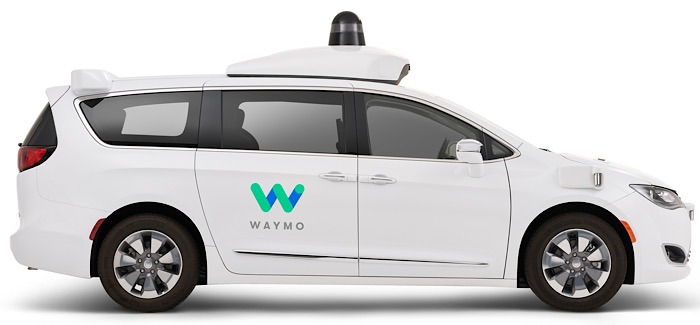
Elsewhere, Google’s autonomous car company, Waymo, announced it is working with Google Maps to request Waymo One driverless taxis direct from the Google Maps app. If you’re in the Phoenix metropolitan area, you can use the app to request your ride instead of taking the extra step of opening a separate app after finding your location in Google Maps.
My Personal Works

This is the next step for Waymo. It’s been operating in the area for a couple of years. Both Cruise and Waymo are taking relatively small steps for the autonomous cars industry, but it’s been clear for some time that the path needs to go through deliveries and ride-sharing.

One roadblock in the way of autonomous cars has been the number of fatalities attached to them. Read on to learn about the first pedestrian death caused by an autonomous car in 2018.

How long do you think it will be until fully autonomous cars are a regular occurrence on our roads? Would you trust a passenger service that operates through an autonomous car fleet? Let us know in the comments below.

Image Credit: Cruise, Waymo, and public domain

Subscribe to our newsletter!

Our latest tutorials delivered straight to your inbox

Laura Tucker Avatar

Read next

When the SS Great Eastern laid the first working transatlantic telegraph cable in 1866, a message that had taken ten days by steamship suddenly crossed the ocean in minutes, and the financial markets of London and New York were forced, within a single trading week, to invent the modern concept of synchronised global price.
The Big Ear telescope was scanning at 1420.4056 megahertz on the night of 15 August 1977, the exact frequency at which hydrogen atoms vibrate across the universe, because Giuseppe Cocconi and Philip Morrison had argued years earlier that any species trying to be found would broadcast on that channel — and then, for 72 seconds, something did.
In 2016, archaeologists dated two rings of snapped stalagmites in France’s Bruniquel Cave to 176,500 years ago, evidence that Neanderthals had walked 336 metres into darkness with fire and built architecture deep underground long before modern humans reached Europe
Otto von Bismarck was 74 when Germany adopted the world’s first national old-age social insurance program in 1889, setting the pension age at 70 after years of fighting socialists with bans, laws, and a promise few workers would live long enough to use
When cosmonaut Valeri Polyakov stepped out of his Soyuz capsule in March 1995 after 437 consecutive days aboard Mir, doctors recorded him at several centimetres above his pre-flight height, and his spine had become so unaccustomed to gravity that the recovery team carried him to a chair rather than risk the compression of letting him walk.
When Bell Labs engineer Karl Jansky pointed a rotating antenna at the sky in 1932 looking for sources of transatlantic radio static, he kept picking up a faint hiss that peaked every 23 hours and 56 minutes, and he eventually realized he had become the first human to hear the center of the Milky Way.
When Harvard astronomer Cecilia Payne submitted her 1925 doctoral thesis arguing that the Sun was made almost entirely of hydrogen, the field’s senior figure Henry Norris Russell talked her into adding a line calling the result ‘almost certainly not real,’ and then published the same conclusion himself four years later to widespread acclaim.
When seismic waves from the Chicxulub impact reached what is now North Dakota roughly ten minutes after the asteroid struck, they appear to have triggered a ten-metre standing wave in an inland river that flung fish onto the bank and buried them under glass beads still falling from the sky.