


If you’re performing work that requires in-depth sources, such as academic studies or a job that requires heavy research, finding quality sources with standard search engines isn’t always easy. Switch up your education search engines for academic research to find exactly what you need.
[mte_toc]1. Best for Citations: Google Scholar
Don’t be mistaken: this isn’t just regular Google! This is a branch off “regular” Google searches, called Google Scholar. Instead of a general search, use it to search books, studies, and even court cases.
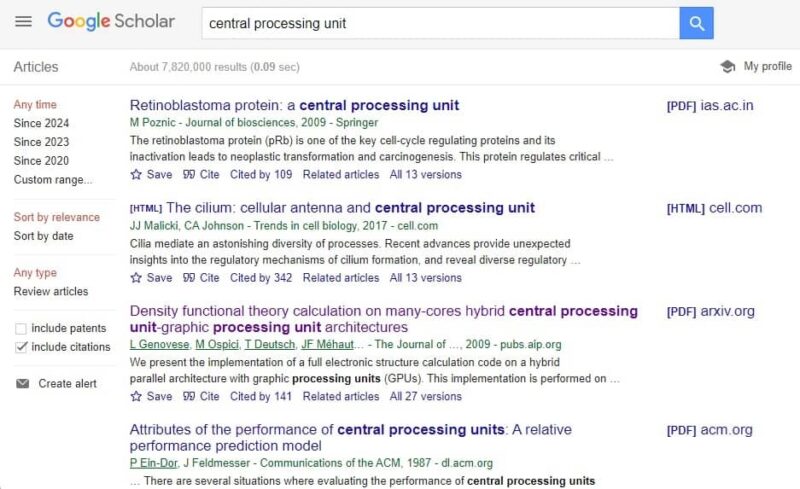
On the main page, simply enter your search terms. Google Scholar searches through its database and picks out relevant examples. If your research is very time-sensitive (such as technology), use the filters on the left to change how recent you want your sources to be, up to and including the current year.
If you’re writing a piece that has a strict sourcing style, Google Scholar gives you templates (just click the cite link under the result) for its sources. Find the template that suits the style standard, then copy it directly into your citations to save time.
2. Best for General Study: RefSeek
RefSeek is one of the best academic search engines for academic research for general studies. It takes a more website-based approach, bringing up relevant but highly dependable websites for whatever you want to research. It’s a great way to pull up multiple articles relating to a specific object.
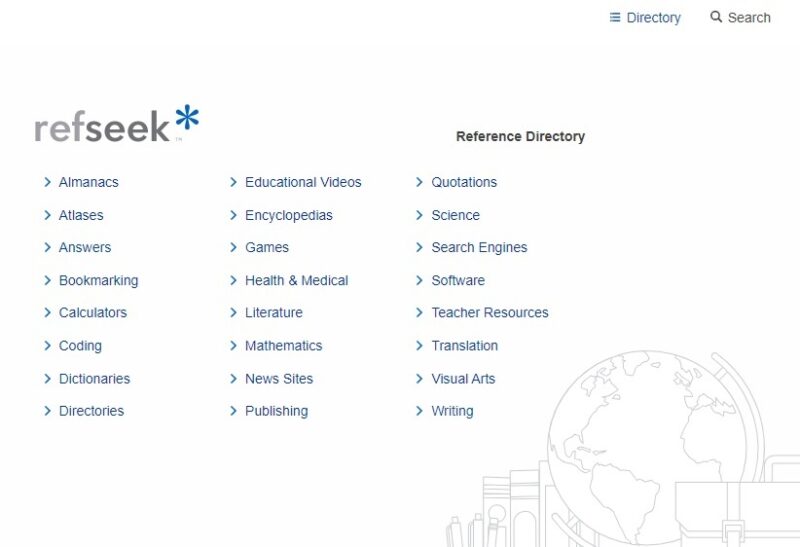
RefSeek does more than just searching, however; if you’re studying in a specific field, RefSeek also has a “directory” page, which acts as a great directory of useful websites related to education. Once you choose the category you’d like to browse, RefSeek brings up a list of productive sites to help you with your studies. It’s ideal for exploring new topics as well.
3. Best Search Filters: Virtual LRC
Virtual LRC operates like most search engines, but its filters are what really sets it apart from the rest. When you search, you get general search results. Or, use a topic filter, such as Videos, Sci/Tech/Math, or News/Opinion to trim down the results. You can even filter by date.
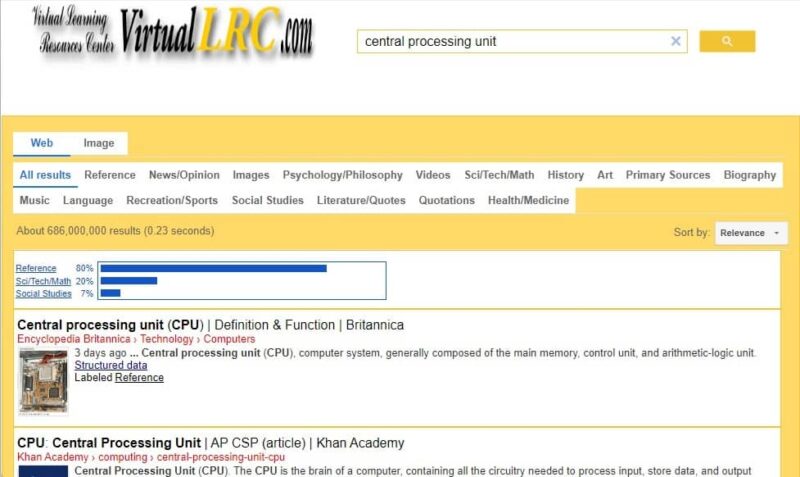
On the main search page, click Directory to view a list of categories. Virtual LRC works much like RefSeek, showing you relevant sites to help you with your academic projects. There’s even a list of sites to find images. Alternatively, use our image search engine list to find images for your research.
It’s kind of an outdated design, but don’t let that fool you. It’s one of the more useful education search engines.
4. Best AI Education Search Engine: Semantic Scholar
Semantic Scholar mixes your typical search engines for academic research with the power of AI to find papers others might miss. While the content itself isn’t AI-generated, the search engine uses AI to find links between resources to help you dive deeper into a topic.
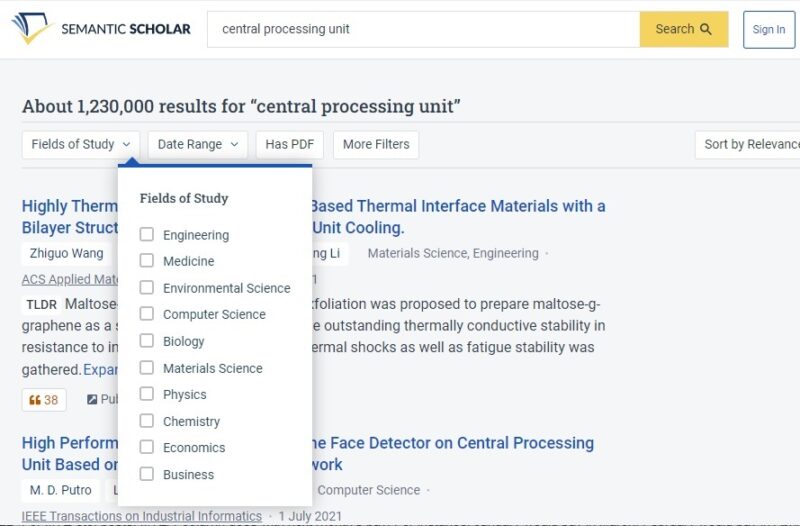
The platform currently searches over 200 million research papers. When you search, there are also handy filters to narrow your results by date, author, field of study, specific journals, and more.
While it doesn’t have as many resources as some others on this list, having it limited to just respectable research papers and journals is a plus.
If you’re interested in more AI search, try these ChatGPT alternatives, or see how to use AI in your browser.
5. Best for Scientific Research: Science.gov
If you’re researching a science-related topic, one of the top education search engines for academic research is easily Science.gov. It’s currently in beta but lets you search through millions of research papers funded by the U.S. government.
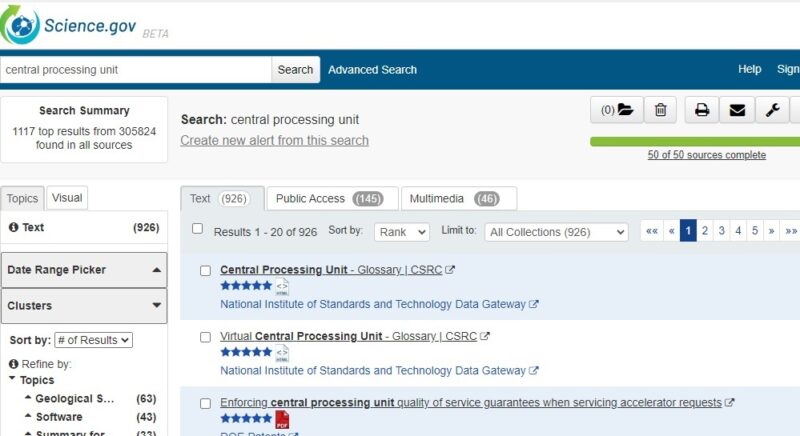
The best part is the results come from multiple different government agencies, but the results are all in one convenient location. If you don’t want to dig through hundreds of results for your query, use the available filters. Filter by text, public access, multimedia, organization, date, and more.
You can even create a free account to save your research. You’ll also get alerts when new research is published in your area of interest.
6. Best for Open Access Research Papers: CORE
CORE, or connecting repositories, was designed to help better connect academic repositories from around the world. It also includes what’s likely the largest open access collection of research papers, with full text available. The whole idea is to make scholarly literature more accessible and easy to find.
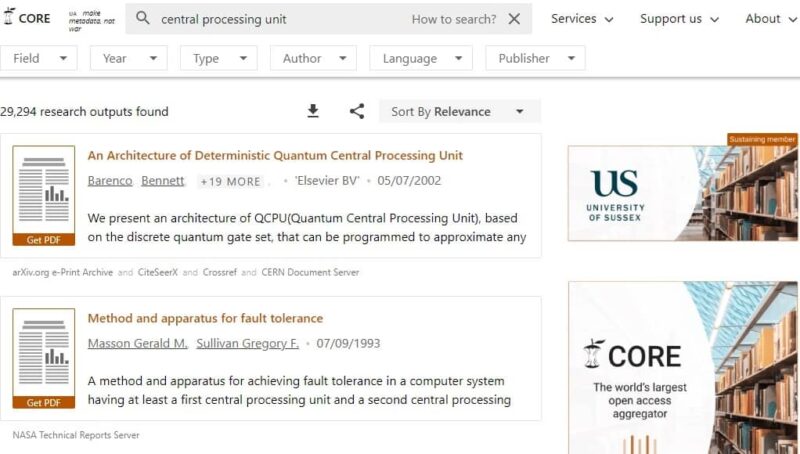
Currently, there are over 300 million resources. Filter results by field, year, type, author, language, and publisher. While not every resource offers full text, many do.
If you’re a research institution, you can partner with CORE to make your datasets available as well.
7. Best for Environmental Research: DataONE
If your field of study deals with the Earth and environment, look no further than DataONE. It’s the single best education search engine to find the latest research on everything related to our environment.
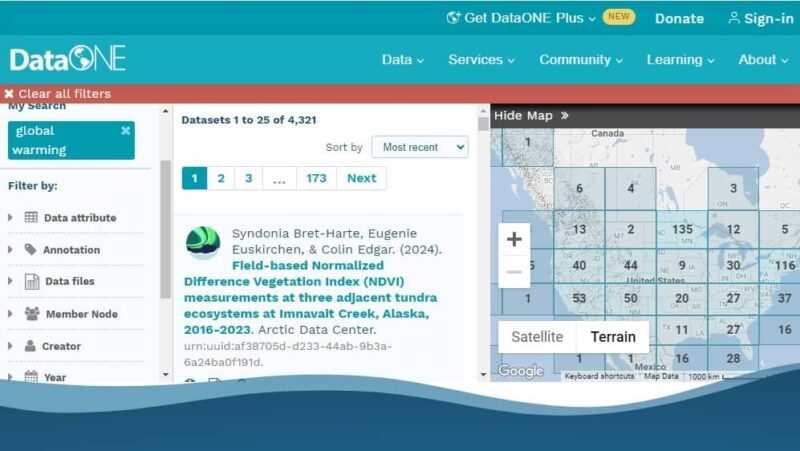
It’s a unique design that not only includes research papers, but a map showing where the research was done or the area it’s about. Plus, it works as an academic social networking site, where researchers share their findings. Easily follow your favorite researchers as they make new discoveries.
While much of DataONE is free to use, some papers are behind a paywall. However, you’ll find plenty of data in the free version.
Remember, if you’re doing research, ensure you cite your sources. Many of the above include help with citing. If you still can’t find what you’re looking for and Google isn’t digging deep enough, try these deep web search engines.
Image credit: Unsplash. All screenshots by Crystal Crowder.