
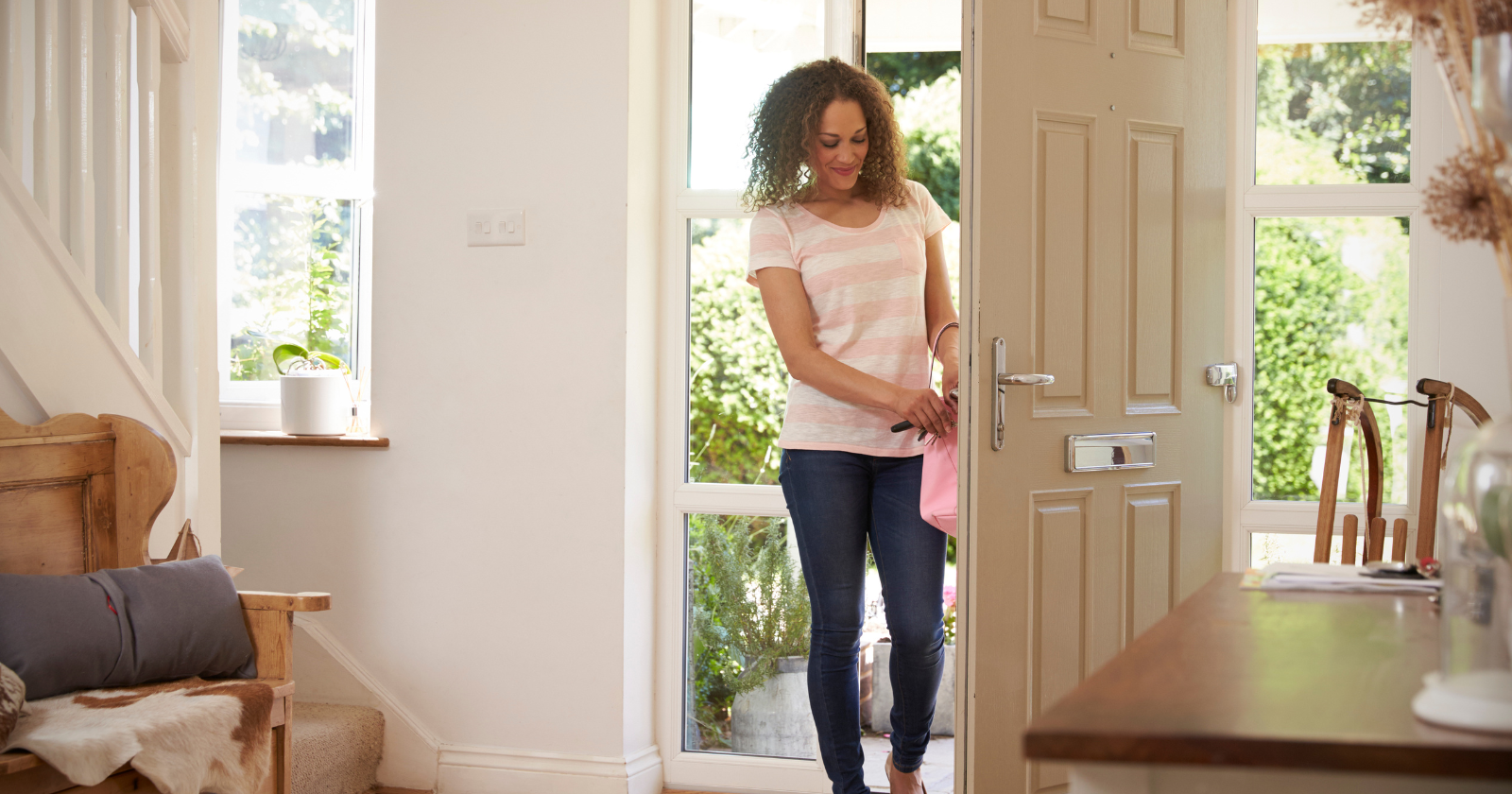

You’re already halfway down the street. You locked the door — you remember locking it, you can picture your hand on the latch — and yet here you are, walking back up the path to check it again.
It’s locked. Of course it’s locked.
If this is you, you’re in extremely good company. Door-double-checking is one of the most universal small behaviours human beings do, and the people who do it consistently tend to share a particular set of traits. Not bad traits. Not weak traits. The kind of traits that, looked at honestly, mean you are probably someone other people quietly rely on more than you realise.
Here are eight of them.
1. Your imagination runs hot
The reason you go back to check the door isn’t because you doubt your memory. It’s because your brain has already played a vivid little movie of what happens if you didn’t lock it.
Front door wide open. The cat outside. A stranger inside. Your laptop gone. Your grandmother’s ring gone. The cat definitely gone.
This is what a fast, detailed, slightly catastrophic imagination does. It rehearses worst cases without being asked. It’s exhausting in some ways — but it also means you’re the person on holiday who actually packs the chargers, the snacks, the headache tablets, and a spare jumper in case it gets cold. Your imagination earns its keep.
2. You take responsibility for things that aren’t strictly your job
Door-double-checkers tend to be the people who, in a group, somehow always end up making sure everyone got home safe. You text to confirm. You count heads. You check.
It’s not because anyone made you the designated worrier. It’s because, somewhere inside, you’ve decided that small acts of care are worth the small effort they cost. You’d rather walk twenty steps back to a door than risk something going wrong on your watch.
This trait quietly accumulates. Over years, it makes you the person other people structure their plans around — not because you’re loud about it, but because you reliably hold the small things together.
3. You can hold uncertainty without acting on it most of the time
Here’s the secret that non-checkers miss. You don’t actually go back to check the door every time the thought crosses your mind. If you did, you’d never leave the house.
You go back maybe one time in five. The other four times, you feel the doubt, recognise it for what it is, and keep walking. That’s a real skill — sitting with uncertainty without immediately resolving it. Most people, when they feel any internal tension, act on it instantly. You don’t. You’ve been practising patience with your own anxious thoughts for years, mostly without realising you were doing it.
4. You’re better at remembering things you actively did than things you did on autopilot
There’s a small piece of neuroscience underneath this one. Routine behaviours — turning off the stove, locking the door, taking your keys — happen on autopilot, and autopilot doesn’t write detailed memory files. So when you try to remember locking the door, what you find is a generic yes I lock the door every day, not a specific I locked the door at 8:14am today.
You go back not because you didn’t lock it, but because your brain can’t find a clean receipt for this specific locking. That’s not a memory flaw. That’s an honest brain refusing to invent confidence it doesn’t have. It’s the same wiring that probably makes you good at noticing when something is slightly off — when the report has a typo, when the lasagne tastes wrong, when someone is pretending to be okay.
5. You’d rather look slightly foolish than be quietly responsible for a disaster
You know — you know — how you look walking back up the path to your own front door for the second time in ninety seconds. The neighbour can see you. The neighbour saw you the last time, too. You don’t care.
Or rather, you care a little. You feel mildly ridiculous. But not enough to override the basic equation in your head: the cost of looking silly is small. The cost of leaving the door open is enormous. You’ll take the silly. You’ve been taking the silly for years.
This is, secretly, one of the most useful instincts a person can have. It’s the same instinct that makes you the person who asks the obvious question in the meeting that turns out to save the project.
6. You over-prepare and almost never get credit for it
Door-double-checkers tend to be over-preparers across the board. You check the email twice before sending. You read the contract closely. You arrive ten minutes early. You bring backup snacks to the picnic.
The result is that almost nothing ever goes catastrophically wrong on your watch — which means nobody ever sees what would have happened without your preparation. Your competence is mostly invisible to the people who benefit from it. Most door-double-checkers have made peace with this. It’s part of the job.
7. You sleep better after the small ritual is complete
There’s a real reason you go back, and it isn’t logical. It’s somatic. Once the door has been physically checked, your nervous system can settle. The thought stops nagging. The little hum of background anxiety quiets down.
Door-double-checkers tend to be people who have a finely tuned relationship with their own nervous system, even if they wouldn’t describe it that way. You’ve learned, over time, which small actions reset which small anxieties. You’re not at war with your worry. You’ve worked out a series of small accommodations with it, and most of them — including the door-check — actually work.
8. You take care of yourself in small ways without making a thing of it
This is the quietest one. Going back to check the door is, at heart, a small act of self-care. You’re not doing it because the door definitely needs checking. You’re doing it because you need the door to have been checked. You’re managing your own peace of mind.
Door-double-checkers do this constantly. You write the to-do list because it calms you, not because you’d forget without it. You wash the dishes before bed because the kitchen makes you anxious in the morning otherwise. You triple-confirm the appointment because the alternative is a low-grade hum of worry all week.
These are not weaknesses. They’re you, taking quiet care of you, in the smallest ways available.
The door is locked. You knew it was locked. But you went back anyway, because that’s how you look after yourself — and almost everyone you love, by extension.
The neighbours have stopped wondering. They’ve come to count on it.