


Much has been said about the life-saving benefits of wearable devices, particularly the Apple Watch. A pediatric cardiologist is speaking out, explaining that she had to have an emergency C-section after her Apple Watch recommended that she seek medical help. While I’m quite a few years past baby-bearing years, my Apple Watch saved me as well.
Apple Watch Saves a Doctor and Her Unborn Baby
Dr. Rachel Manalo was 18 weeks pregnant when she felt her heart racing for the first time. It then started happening more often. She’d feel tired, short of breath, and dizzy. That would be worrisome enough for anyone, but if you’re pregnant, it would be even more so.
Fifteen weeks later, Manalo’s heart was still racing periodically. She checked her heart via the ECG function on her Apple Watch. It’s simple enough to do, requiring that you put your finger on the crown of the watch, and lay your arm on a table.
The Apple Watch showed an inconclusive result and suggested she seek medical help. Testing showed her heart around 150 beats per minute. Her doctor, Tina Nguyen, reports that if not taken care of, that issue could have led to a heart attack.
Manalo was rushed into an emergency c-section, and her daughter was born. Manalo later had a minor surgery to help repair her heart. Both she and her daughter are now healthy.
Tip: learn how to fix your Apple Watch not getting notifications so that you don’t miss a potentially life-saving one.
My Life-Saving EKG Result
I’ve had an Apple Watch for four years. I’d only checked my heart rate when I was exercising. When I was up very early in the morning working, I thought I was having a bout of my usual reflux, which happened twice. Then I could feel my heart beating out of the side of my chest. That definitely wasn’t reflux.
I checked my heart rate, and it was high. I tried sitting down, but the heart rate persisted. I decided to do an EKG. It showed an even higher heart rate of 142 and that I was in AFib (Atrial Fibrillation). A few minutes later, it was up to 173, then back down. It kept going up and down, and I went to the Emergency Room.
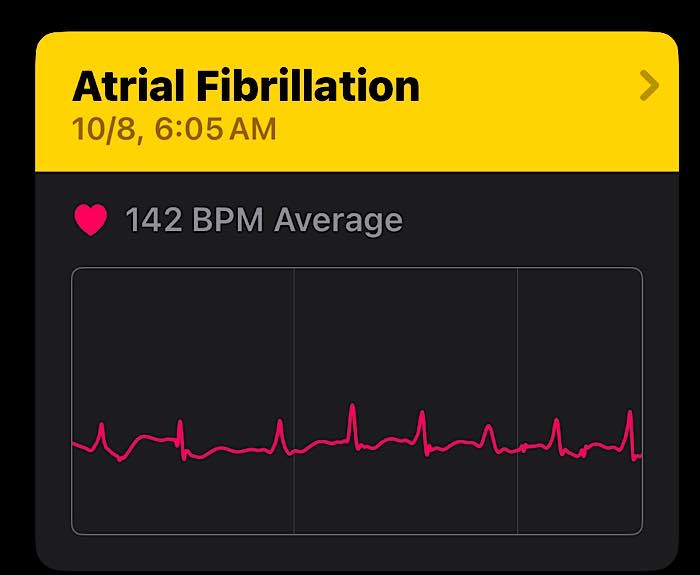
It was confirmed that I was in AFib. I was strapped to a heart monitor and given live-saving IV medication. This earned me a three-night stay as the doctors ran their own EKG, gave me x-rays, and put me through a stress test. I was sent home with three new meds.
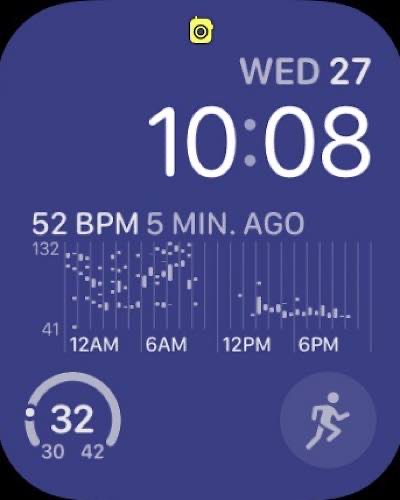
I have a crazy schedule, so I missed my medications more than I should have. Last week, my heart rate was racing a little bit, climbing every so often and not going down. 118 is the highest it was, but the EKG on the Apple Watch said I was not in AFib. It wasn’t going away, so I went to the emergency room again and was told I was in AFlutter. I noted my watch didn’t pick it up this time, and the nurse told me watches don’t pick up AFlutter.
This earned me a two-night stay in the hospital. They scoped my heart for blood clots, then shocked it back into sinus rhythm. I was also given a CT scan of my heart. I will be wearing a heart monitor for a few weeks and getting a sleep study for further data. In my near future is also getting an ablation.
Nguyen wishes everyone had a wearable that could help her diagnose what’s happening. She also warns that people shouldn’t try to self-diagnose.
Would I have gone to the ER if I didn’t have a watch to tell me my heart rate? I hope so. Manalo and I are just two of many others who have been saved by the Apple Watch. Read on to learn about another of our writers’ life-saving experience with his Apple Watch and Samsung Galaxy Watch. If you don’t have a smartwatch, try these mobile apps that will keep you healthy.
Image credit: Unsplash. All screenshots by Laura Tucker.