I love getting great deals, but that unbelievably amazing deal for a new Windows PC on Amazon might not be so good after all. A new Windows PC scam is leaving buyers disappointed and ripped off.
Windows PC Deals Have Tricky Fine Print
Shopping on Amazon for a good deal on a new PC should be fun. You get to compare specs, narrow down your options, and eagerly wait for your shiny new PC to arrive. Usually, my only worry is whether it gets damaged during shipping.
Now, I have a new concern. Windows PC scams that don’t offer anything close to what’s being advertised. The deal is a rip-off, and thanks to some tricky fine print, there’s not much you can do about it.
Amazon leaves the listings up since the details are technically disclosed. But, instead of getting all the storage promised, you actually get a 12-month OneDrive subscription and a tiny SSD. Not exactly a great deal since you have to keep paying for your storage after that initial year is up.
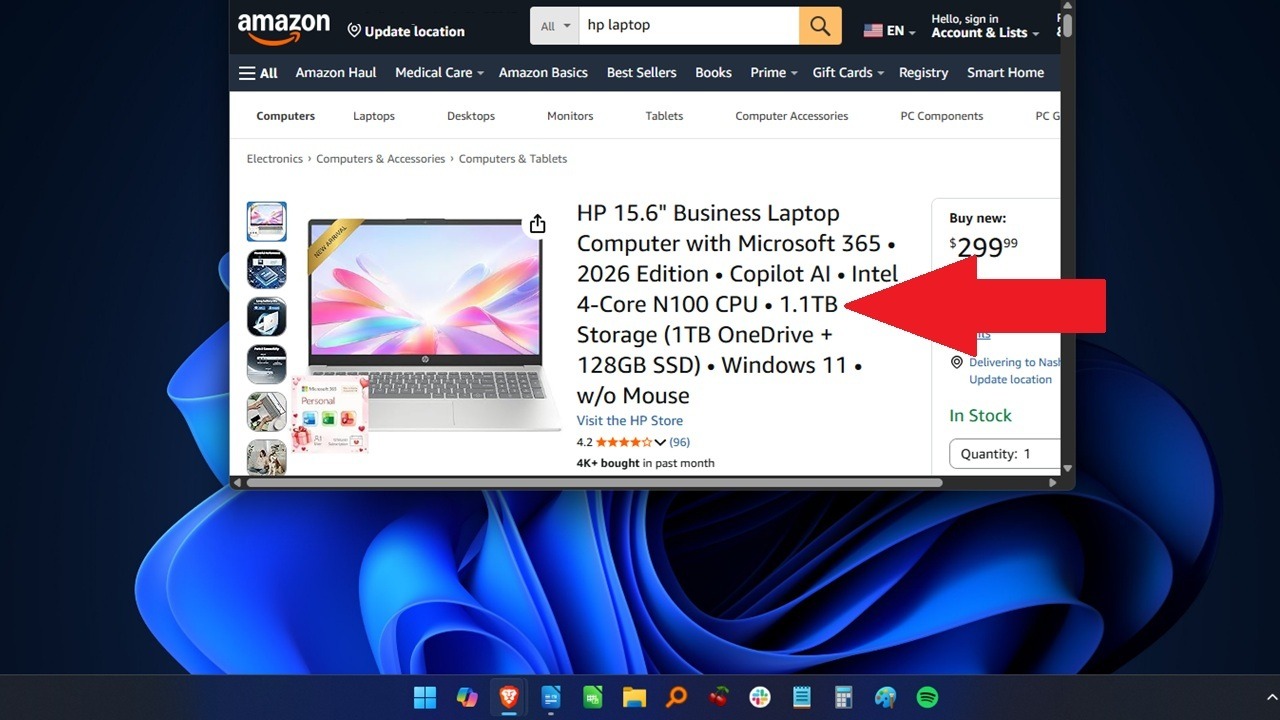
For example, an HP laptop on Amazon is listed as having 1.1 TB of storage. In reality, you only get 128 GB of onboard storage, and a 1 TB of OneDrive subscription.
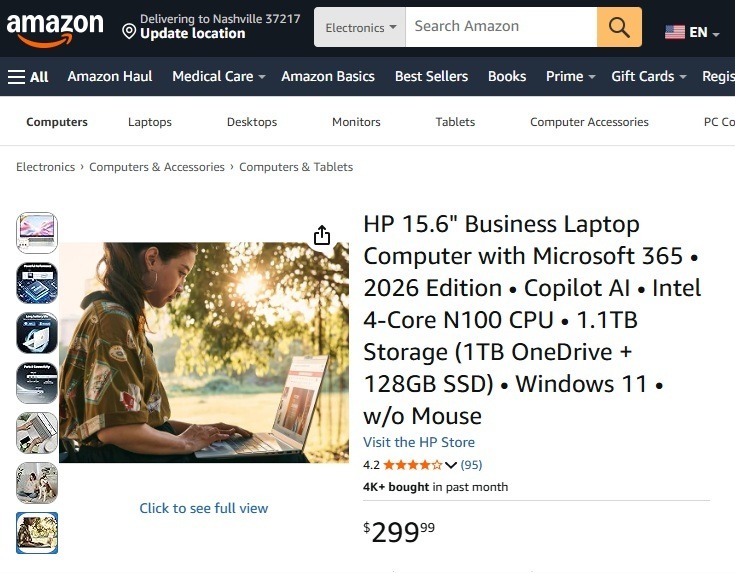
OneDrive storage is bundled with Microsoft 365. The cheapest plan to get the 1 TB of storage promised in the listing each year is $70/year. I usually expect even a budget-friendly laptop to last 2–4 years.
During that period, the storage alone adds $70 to $210 to the overall price of the Windows PC.
Many of these listings don’t mention OneDrive in the main description. It’s only in the fine print specs at the end.
Budget PC Not Worth the Price
In the HP example I mentioned, you’re getting a low-end PC that’s not going to do much beyond basic browsing. It has an Intel N100 CPU, which is okay for general tasks. But with only 4 GB of RAM, you’ll struggle to even have multiple browsing tabs open without lag.
Is that really worth $300? No. Of course, remember the final price goes up by as much as $210 when you factor in paying for OneDrive for 2-3 more years.
Your budget-friendly laptop that seemed liked a good deal is basically a dinosaur that’s costing you as much as $500. For that price, you could get a medium-range laptop that’s perfect for multitasking and light gaming that also has 2–3 times the onboard storage.
Another issue is you’ll need to use it mainly online. There’s not enough storage to do much offline. And, if the majority of your storage is OneDrive, you won’t have access to most of your files unless you’re online.
Numerous Sellers and Brands Are Taking Advantage of This Trick
This scam affects far more than just HP. You’ll find almost every major Windows PC manufacturer for sale with this OneDrive bundle. In my research, I found HP and Lenovo most often, though.
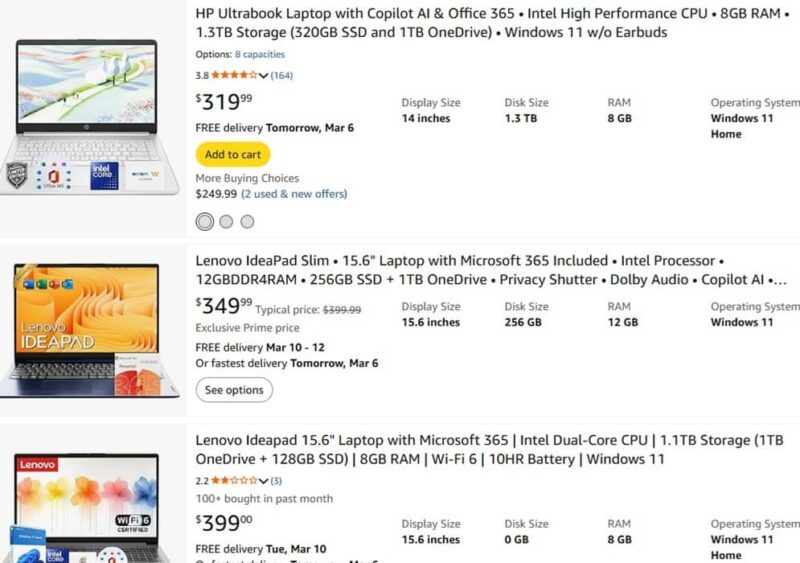
Of course, these shady sellers aren’t restricting themselves to Amazon. They’re on Newegg, Ebay, and anywhere else that allows third-party sellers.
Avoid the Windows PC Scam by Paying Attention to Specs
If you don’t pay close attention, you’ll easily fall for this scam. I know since the details are technically there, calling it a scam might not seem fair. But, it’s easy to overlook the OneDrive detail. Many buyers might also not realize OneDrive is a subscription they have to keep paying for.
I realize many users are just trying to quickly find a cheap replacement for their Windows 10 PC that no longer gets updates. You could try changing the settings to see if it upgrades to Windows 11 or try Flyby11 to upgrade.
My advice is to carefully review all details. Don’t just glance at the overview. Many listings are bundling the OneDrive and SSD storage into one total, such as saying the laptop the has 1.1 TB of storage, but it’s actually 1 TB OneDrive and 128 GB SSD.
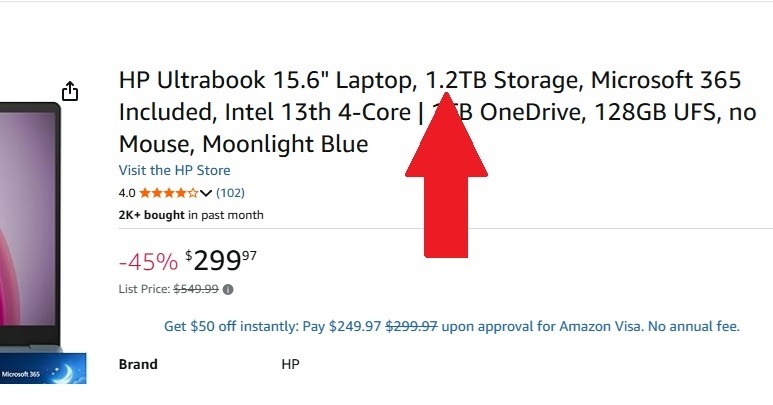
Some key things to look for include:
- Odd storage totals – Sketchy listings don’t use whole numbers for storage. You’ll see things like 1.1, 1.3, 1.4, etc. Anytime you see decimal points, you’re not getting the full storage. Most of it is OneDrive.
- Search the listing for OneDrive – While some sellers do mention OneDrive in the main description, others don’t. Search the page for OneDrive. If you see it, you’re buying into a subscription, not usable onboard storage.
- Check reviews – Look for any reviews pointing the listing out as a scam or shady. User assume they got a great deal, but got dealt a Windows PC scam instead.
- Carefully consider the price – If it seems far too good to be true, it could be because you’re getting low-end specs with inflated storage thanks to OneDrive.
While users do receive the PC they ordered, many aren’t happy. They expected a PC that they pay for once. Instead, you have to keep paying yearly just to have any real storage.
Since Windows alone takes up a large chunk of a small hard drive, you might consider formatting and switching to Linux instead to make the most of your new PC, even if it’s not what you expected when ordering.