Shutting down a Windows PC is something we do all the time, but there’s more than one way to do it. Each method can be helpful in different situations. Knowing multiple shutdown methods can be incredibly useful if your system is frozen, you’re working remotely, or you prefer keyboard shortcuts over mouse clicks. Here we’ll show you all the different ways to shut down your Windows system.
Shutdown Windows Using Start Menu
Using the Start menu to shut down a Windows system is the default method that everyone knows. However, before shutting down, it’s important to close all running applications to prevent data loss.
To shut down your Windows computer, first press the Windows key on your keyboard or click the Start menu icon on the screen. After that, click the Power icon and choose the “Shut down” option from the list:
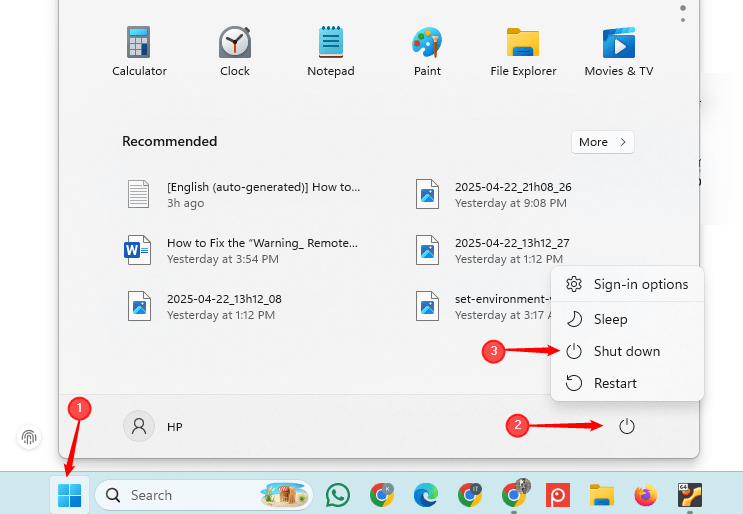
As soon as you click the shutdown option, your system closes all running programs (if any are open) and processes, then powers off safely within a few moments.
Using Alt+F4 on the Desktop
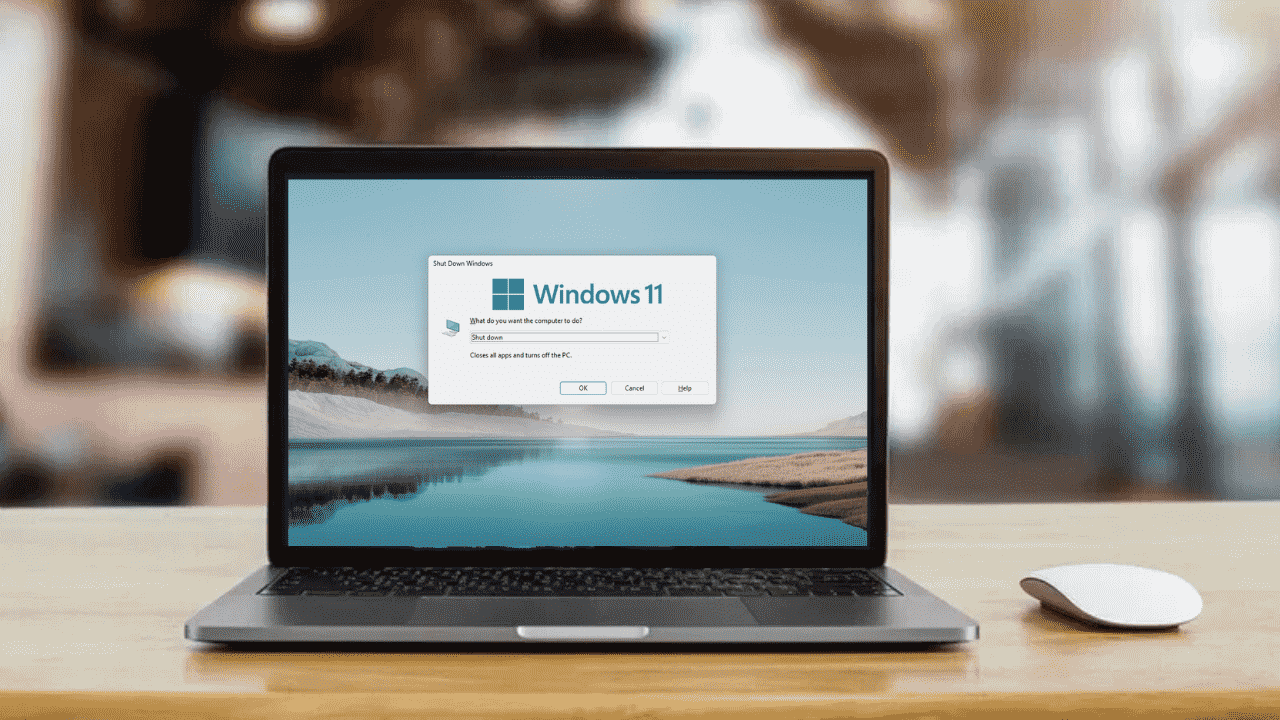
Want a quick way to shut down your PC? Click on your desktop to make sure no window is selected, then hold the Alt key and press F4. This opens the “Shut Down Windows” menu. From there, choose “Shut down” and click OK (or press Enter) to turn off your PC.
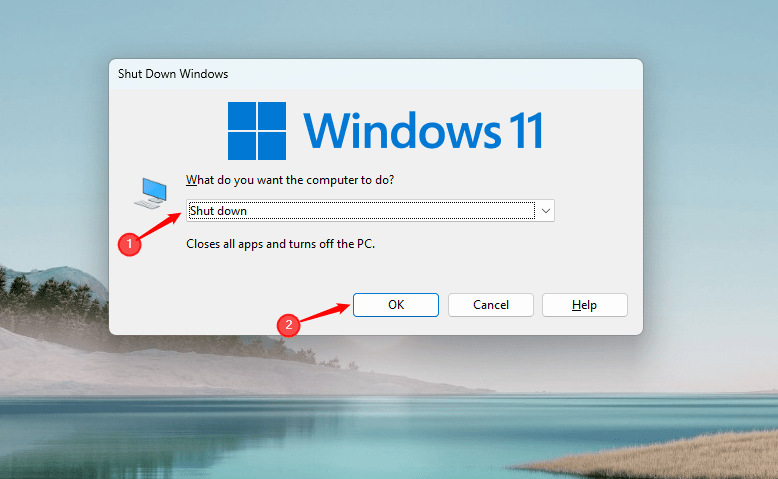
It will close all open apps and shut down your computer.
It’s important to note that if you press Alt + F4 on an active application, it will close that application instead. To bring up the shutdown menu, you must be on the desktop or minimize all running apps first.
Using Ctrl + Alt + Del
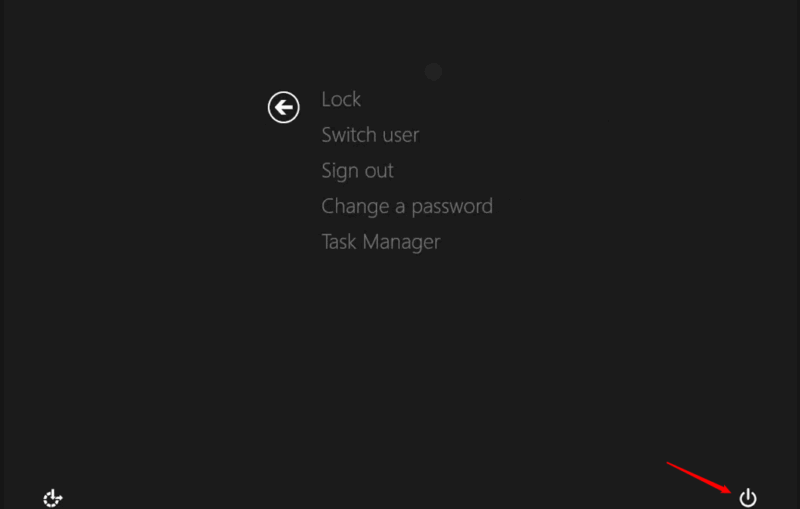
If your Start Menu is not working properly or has become unresponsive, you can press the keyboard key combination Ctrl + Alt + Del. Click on the power icon, and select shutdown to power off your system safely.
Using WinX Menu
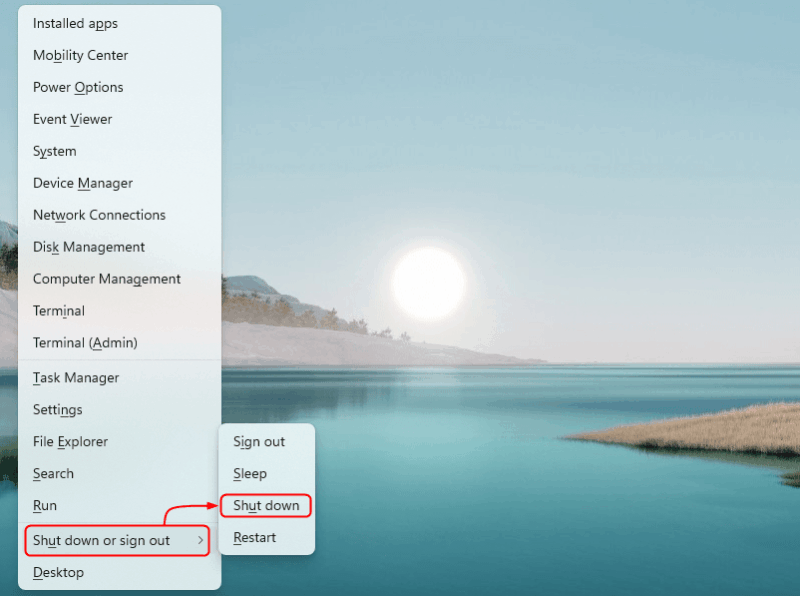
You can use the Power User menu, also known as the WinX menu, to power off your Windows machine. To open WinX, press the Win + X keys on your keyboard. Hover over the “Shut down or sign out” option and click on Shut down to turn off your computer.
Using the Power Button
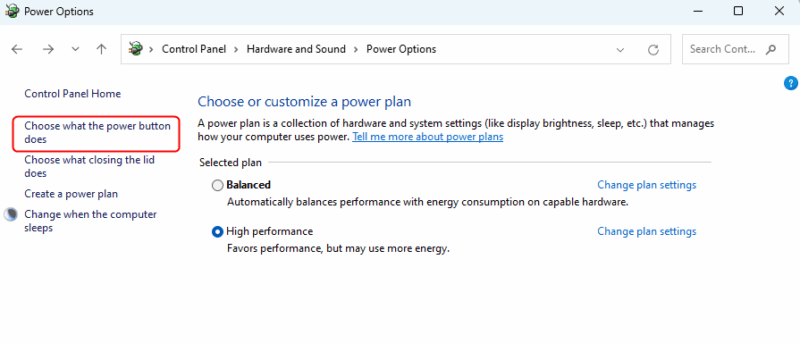
By default, pressing the power button on your laptop will put it to sleep, not shut it down. But you can easily change this setting. Open the Control Panel from the Start menu, navigate to the Hardware and Sound section, and select Power Options:
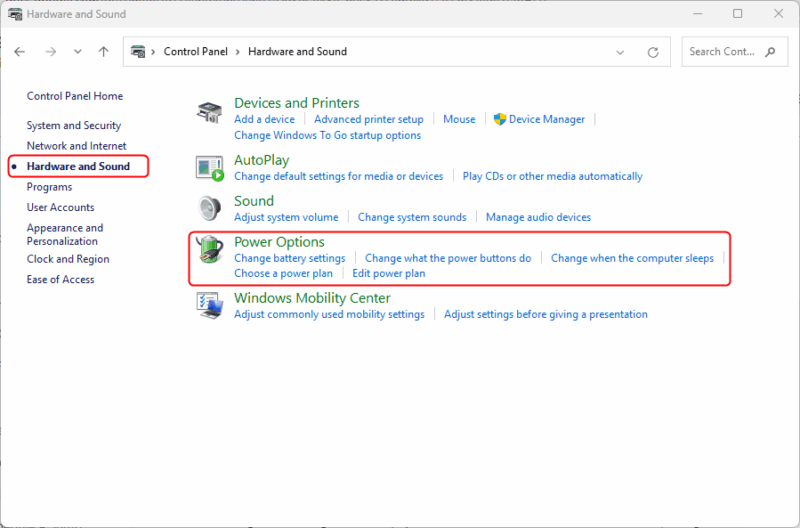
Select the “Choose what the power button does” option from the left panel to change the behavior of the Power button:
After that, set the power button action to “Shut down” for both “On battery” and “Plugged in” options. Click the “Save changes” button to apply the updated settings:
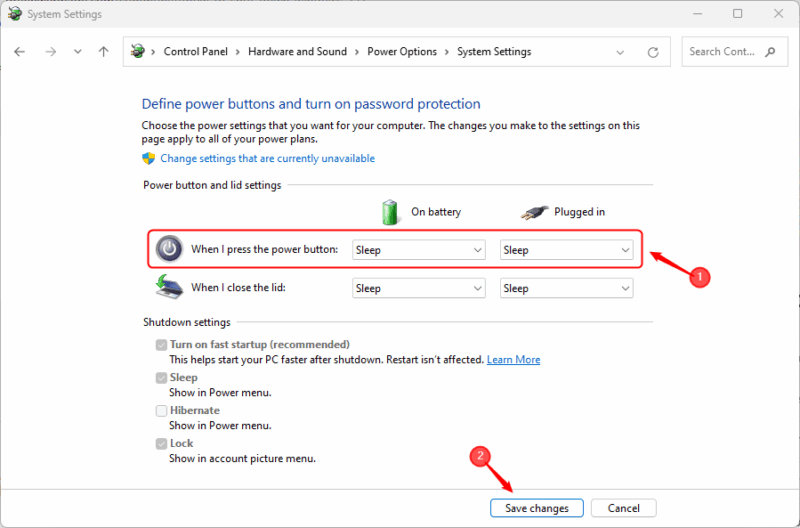
Once you’ve set the power button action to Shut down, simply press the power button, and your system will begin the normal shutdown process.
Using the Run Dialog Box
Another quick way to shut down your Windows PC is by using the “Run” dialog box. This method is helpful if you prefer using keyboard shortcuts or if your Start menu isn’t responding. Press Win + R to open the run dialog box and type the following sequence into the input field:
shutdown /s/f/t 0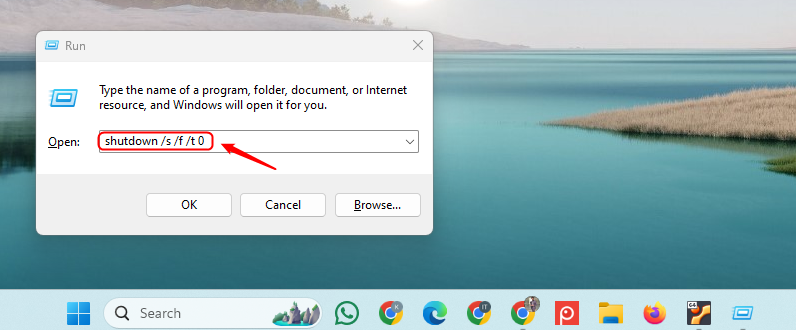
Press the Enter key on your keyboard or click the OK button to turn off your system.
Using Command Prompt
Windows provides several command-line tools to shut down your PC, and the shutdown /s command is one of the simplest:
shutdown /s
This command begins the standard shutdown process after a short delay.
Using PowerShell
You can also shut down your Windows PC using PowerShell, which is a command-line tool built into Windows. This method is useful for users who are comfortable working with commands or when other shutdown options aren’t working. To do this, open Windows PowerShell, type the following command in it, and press the Enter key:
Stop-Computer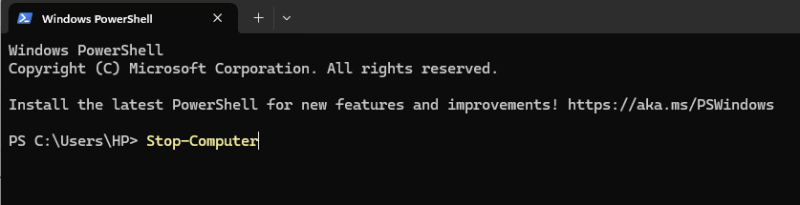
Note: Sometimes, this command might not work if your account has limited permissions.
To avoid issues, it’s best to run PowerShell as an administrator before using the Stop-Computer command.
Set Up a Windows Shortcut for Instant Shutdown
You can easily create a shortcut on your Windows desktop that lets you shut down your computer with just one click. It saves time and gives you quick access to the shutdown function without having to go through the Start menu every time.
Right-click on any empty space on your desktop, hover over New, and then click on Shortcut.
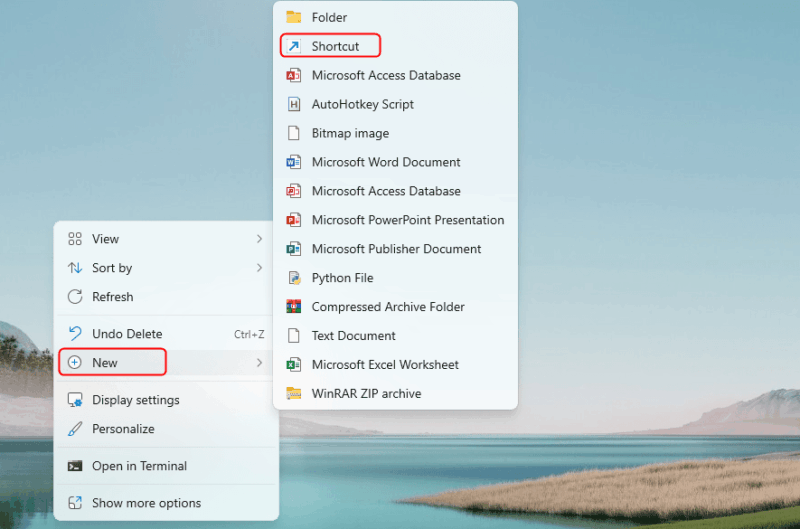
When prompted to type the shortcut’s location, enter the following command to shut down your PC immediately:
shutdown.exe /s /t 00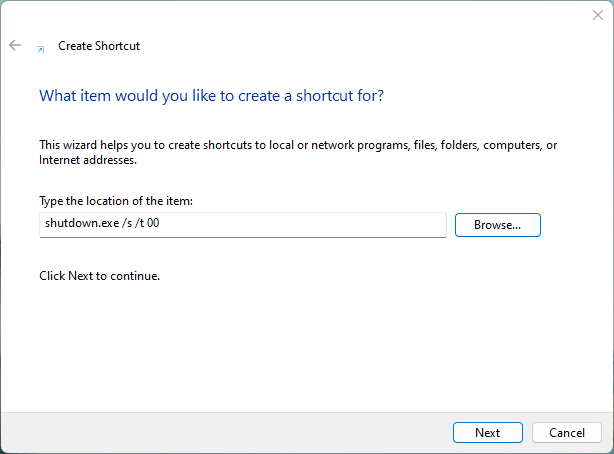
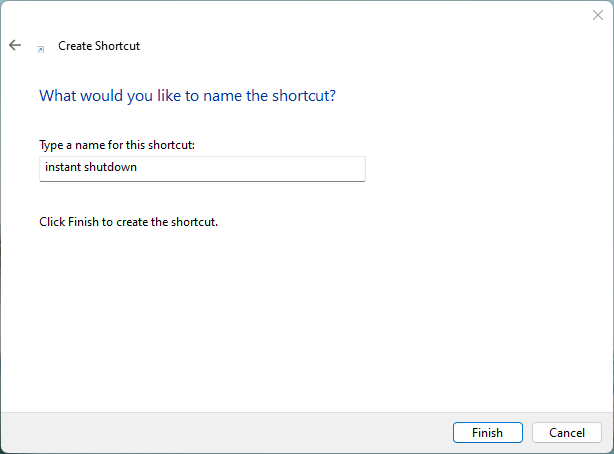
Click Next, give your shortcut a name like “Instant Shutdown” and click Finish:
A shortcut for shutdown has been successfully created. You can double-click on it anytime to power off your system:

Note: If you are working on a remote PC, learn how you can remotely shut down or restart your Windows PC.
Schedule a Shutdown on Windows
You can schedule your Windows computer to shut down automatically at a specific time using built-in commands.
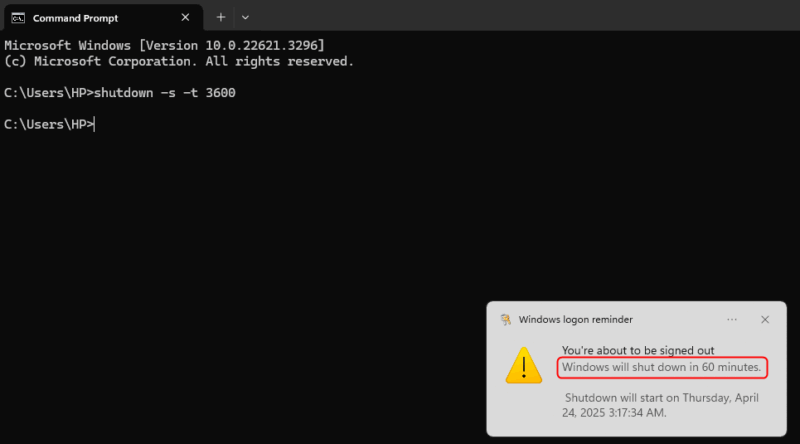
To schedule a shutdown on Windows, first, open the command prompt, and type the following command:
shutdown -s -t 3600Here, 3600 represents the total number of seconds (1 hour) after which the system will shut down automatically. Once you run this command, a message appears on the screen confirming that your PC is scheduled to shut down in 60 minutes:
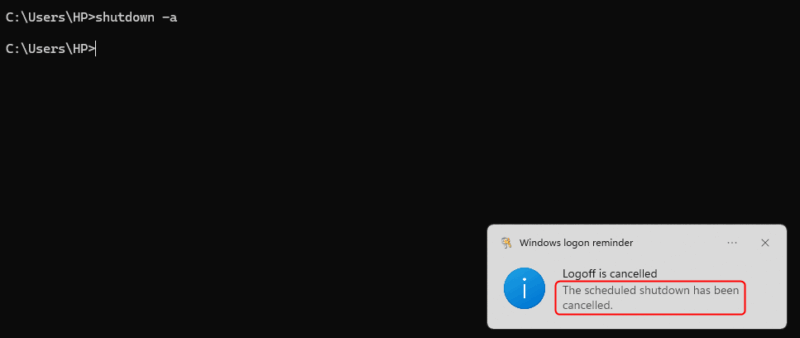
You can cancel the scheduled shutdown at any time. For this purpose, run the following command:
shutdown -aThe output message confirms that the scheduled shutdown has been cancelled successfully:
Note: You can also use the task scheduler tool to schedule Windows shutdown, and many other tasks.
This sums up all the methods you can shut down a Windows system safely. Also, you can view your Windows startup and shutdown history to troubleshoot any issues you might face.