
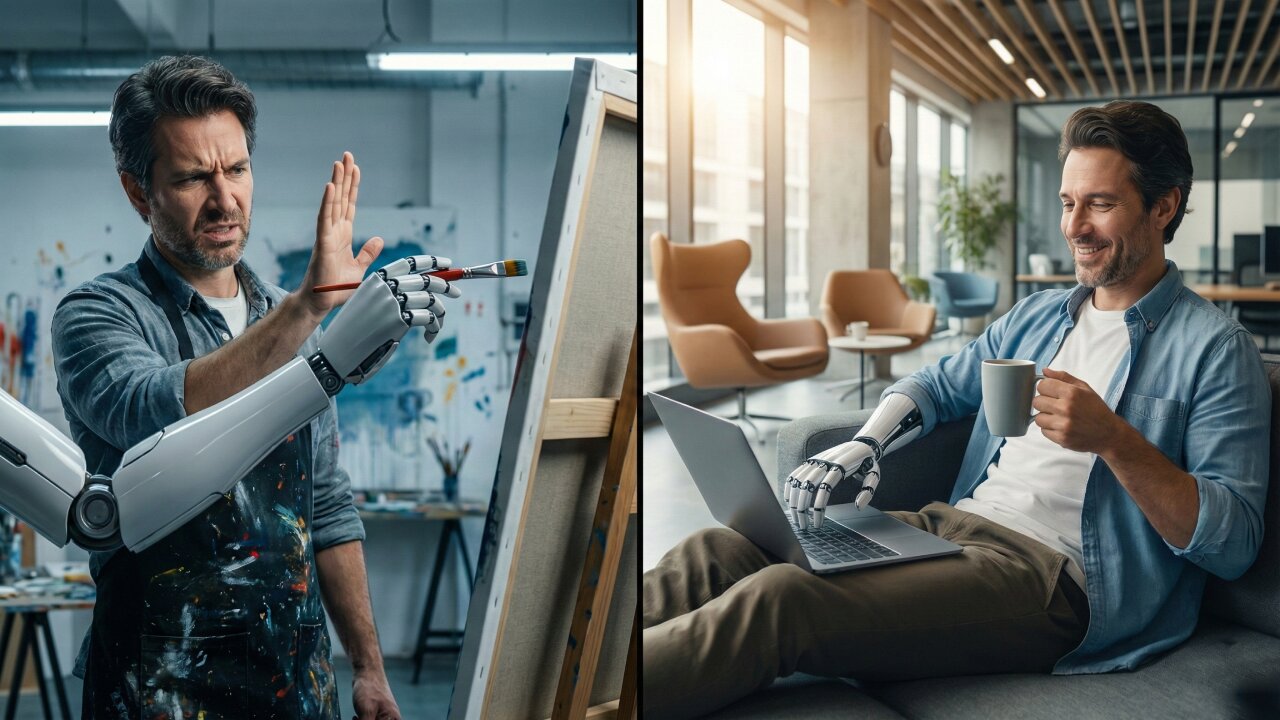

Professionals hating on AI and showing resistance toward AI adaptation is a common scene on the internet these days. On the surface, it sounds logical — people want to preserve human creativity. But look closer and you’ll see a hypocritical paradox, which I admit I was a part of until recently. It’s “AI NIMBYism” (Not In My Back Yard)…
The Psychology of “The Craft”
Look, I know firsthand that it takes time to get called a professional in any field. It usually involves years of education, financial investment, and tons of time to hone your craft. And after all that effort, you’d prefer not to end up fighting for a living opposite a total noob in your line of expertise.
Unfortunately (or fortunately), this is what’s happening since AI has made its super-loud entrance on the scene. Naturally, every professional has, at some point, contemplated if the time they’ve spent perfecting their craft has gone down the drain because people are now generating the solutions by simply typing instructional prompts.
This insecurity, which I must say is valid in a way, has led to professionals resorting to “AI NIMBYism” to preserve their place in the economy. On the whole, it does seem like a bunch of professionals resisting the AI revolution — however, that’s only the case on the surface. The reality is pretty twisted.
The “Siloed” Resistance
The fight those creatives are fighting is not against AI as a whole — they just don’t want people using AI in their line of work. You’ll hear some very specific arguments from the people resisting the use of AI in their respective fields.
The writer
Let me start with my profession because AI affected writers the most in the beginning, as it was text-only initially. Our main argument was that writing needs a soul — it should embody experiences, emotions, and feelings, whereas AI-generated writing has none of those attributes. It’s a pretty strong argument, to be honest.
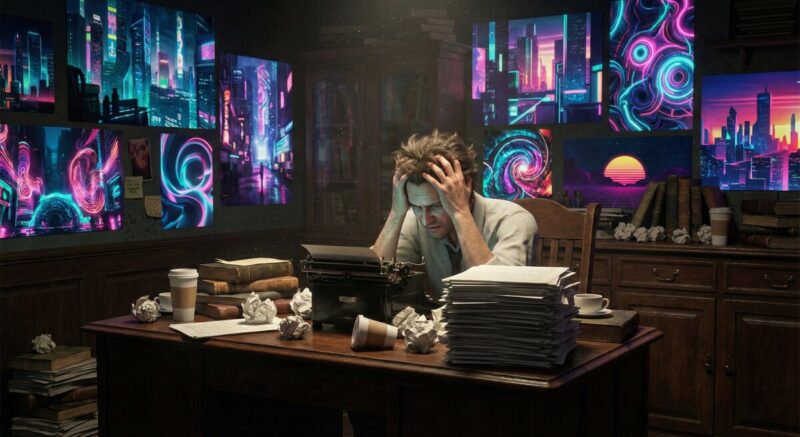
However, there was a weakness in our resistance because we were totally fine when it came to AI writing code or generating images. AI content farm websites were a no-no, but AI-generated images for articles and social media were a total yes-yes. It was okay when AI replaced our graphic designers or web developers, but AI replacing writers and editors was utter injustice!
Since writers faced the AI heat the most in the beginning, that’s probably why we’re now more used to it and have learned to coexist with it. However, there are still tons of posts on LinkedIn and Reddit where authors zealously belittle a poorly written AI-generated copy whenever they get the chance.
The visual artist
Graphic designers, and now photo editors and video editors, make a similar argument. They emphasize that art needs human creativity and a creative expression. However, when it comes to code, they consider it mere math. When they need a caption for a social media post, ChatGPT is their go-to tool because hiring a writer is overkill. Right?
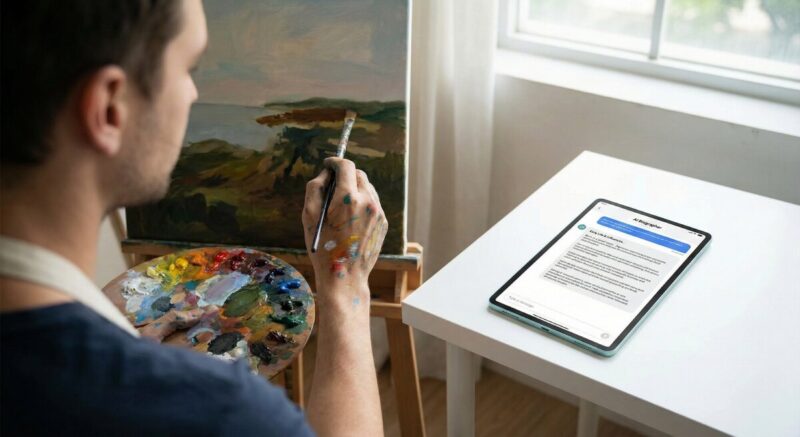
Not all visual artists have this stance toward AI, though. I know many who learned Midjourney and StableDiffusion early on and integrated those tools into their workflows. However, many content creators still call AI-generated content “AI Slop,” and they’re right when it comes to short-form videos, but it’d only be fair if they labeled other AI-generated content the same.
The coder
Coders are probably the best adapters of AI, so I won’t criticize them as much. Most developers use AI as a tool to boost their workflows — however, there are many who consider AI-written code messy or unnecessarily complicated.
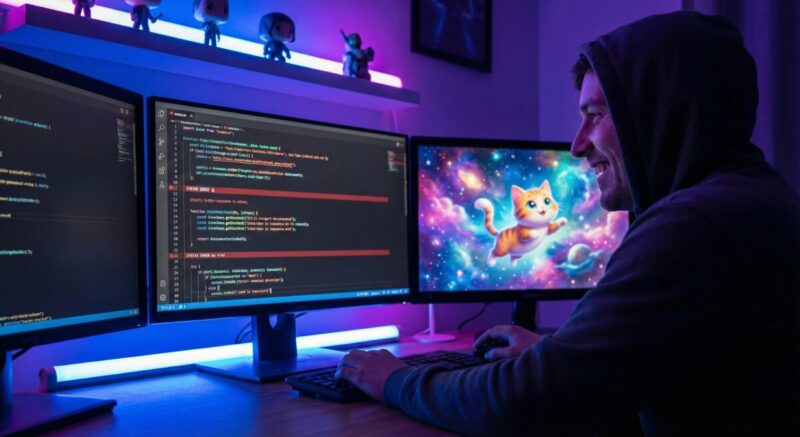
On the other end, you’ll find the same AI code haters using AI to generate images, videos, and technical documentation for their apps. So, the coding world is a mixed bag in terms of being NIMBY, but it’s definitely not immune to it yet.
The musician
The latest in line to suffer from the sudden AI surge is the music world. Tools like Suno have opened the doors for wannabe musicians (like myself) to actually produce and publish music. Seasoned musicians have the same arguments about music production, like it needs a soul, human creativity, and understanding of music theory, etc.

And while many musicians are coming on board the AI music train, seeing it as a tool, others are reacting exactly how other professionals have reacted. And most of them are pretty comfortable using AI for text, images, and videos. So, the pattern is the same.
The “Utility” Trap
Criticizing the professionals for criticizing AI is only one side of the story, though. At the other end of the spectrum, you’ll find plenty of “geniuses” who discover that AI can write endless articles, create websites in bulk, or generate infinite images, music, and videos, and they go berserk with it. That’s where AI becomes a nuisance, becoming more of a vending machine.
But the thing is, this is precisely what happened when the same geniuses first stumbled upon article spinners, Photoshop, WordPress, and whatnot. There will always be people looking for shortcuts to produce content in bulk for quick cash, preferring quantity to quality. It’s happened before, and it’ll definitely happen even more now.
We Need to Admit and End This Bias
The point of sharing all these observations with you is to share what I’ve learned that has given me peace of mind, motivation, and confidence. I’ve come to realize that people using AI to generate content in my line of work is a blessing in disguise, especially in the long run. They might affect me temporarily, but they can’t take my place.
In fact, the more they produce low-quality content, the more my better-quality product shines through all that fluff. This realization has made it easier for me to admit and overcome the AI NIMBYism. Now, instead of belittling AI users, I say, “Bring it on!”
This revelation has also cleared my conscience when I use AI for generating images, writing code, and producing videos or music. Because, you see, I’m cool with people using AI in my field, so others should be fine with me using AI in theirs. AI is here to stay, so it’s best to embrace it. Right?
Frequently Asked Questions
Does supporting AI in other industries eventually hurt my own job security?
Supporting a new technology does close some doors but opens many new ones too. If AI has impacted your job security, maybe it’s time to update your skills and expertise. The quicker you come to terms with this fact, the quicker you become immune to the effects of AI.
How can I ethically use AI tools without undermining my own stance on creative rights?
Avoid criticizing people using AI in your profession, and don’t use AI for unethical activities — then you should have no guilt over using AI.
Will this “turf war” mentality lead to stricter regulations in creative industries?
The AI genie is out of its lamp now. Regulations won’t change just because a professional doesn’t want people to use AI to do what they do. Stricter regulations will appear, but for fighting the unethical uses of the technology, not to clear someone’s turf.
All the images were generated using Gemini. (Sorry, Mr. Graphic Designer!)