

If you’ve been following technology since the mid-90s, you’d probably vaguely remember IBM’s “thinking” computers and how they seemed to be the prelude into what could possibly become a revolution in information gathering and logic processing. After “Deep Blue” beat Gary Kasparov at chess in 1996 and “Watson” aced a game of Jeopardy in 2011, it became clear that computers were destined for something greater than following simple instructions. We are coming closer to creating digital brains, and are possibly going to fare better as a result of this. But what are the implications of these massive supermachines? Can we really speed up cancer research to the point of finding a cure with the help of mega “thinkers” like Watson?
What Is Watson?
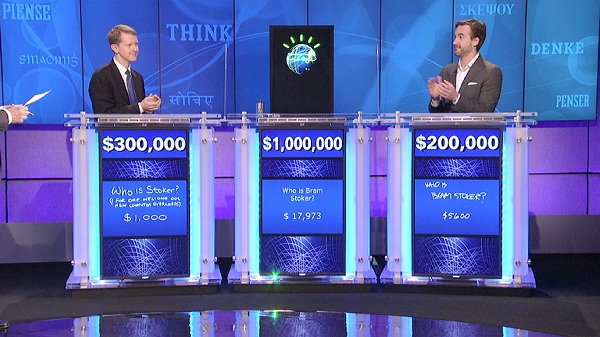
If you’re absolutely confused by what was said above, perhaps it’s time for a little introduction. Watson is a supercomputer developed by IBM with the scope of sifting through enormous troves of data to answer questions that are very complex and difficult for us to answer within a short amount of time. Ultimately, IBM’s goal was to create a computer that could aid researchers by making connections that they would have otherwise not seen in a time frame much shorter than any human could hope to accomplish. This “thinking” computer was featured in a game show called Jeopardy in February 2011, where it won by a landslide and claimed its $1 million grand prize.
This was a prelude for what would later become the ultimate destiny of Watson, which came to the surface on August 28th, 2014, when IBM started offering computer time with Watson commercially. Researchers can now ask Watson questions and attempt to find connections to things like the effects of certain proteins on the body in a very short amount of time. Research that would have taken several months, or even years, can be shortened to just days.
What Makes Watson Special?
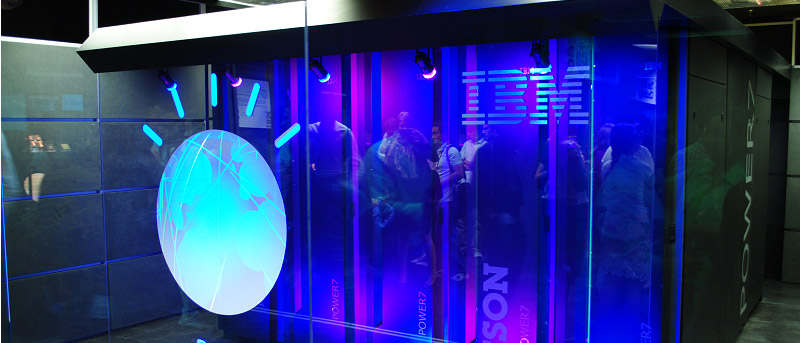
Watson is a computer that wields an uncommon amount of power for a computer. While it’s not one of the biggest supercomputers, it still packs a punch in its hardware: 2,880 POWER7 processor cores and 16 terabytes of RAM. Each core has four threads, allowing it to perform at impressive speed.
Its database includes information from encyclopedias, dictionaries, thesauri, news reports, and literature from several languages. It also understands colloquialisms and taxonomies. This is, ultimately, a machine whose purpose is to be communicated with in a human manner. What it doesn’t have in processing power compared to the top supercomputers it makes up for with an impressive ability to understand “human language.” Couple this with the ability to form hypotheses, and you can see now why healthcare researchers are very excited!
Can Supercomputers Cure Cancer?
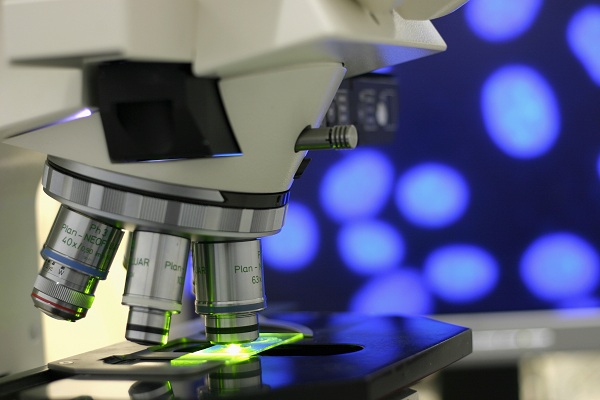
At this moment, a supercomputer isn’t autonomous enough to perform research on its own. Despite this, computers like Watson are becoming ideal research assistants. The ability to sift through 500 GB per second or more is unheard of in humans. We ultimately benefit from the ability to rely on machines to do much of our thinking for us. We will still play a major role in the research field for years to come, but the grunt work of searching through medical and scientific literature will transform into a computer’s job in a short amount of time.
The hardware used to build Watson cost roughly $3 million, which is rather cheap in terms of what a major industrial research organization can afford. It’s highly likely that large researchers will simply shell out the dough to have their own Watsons under their thumbs.
Other Uses for Watson
Watson isn’t just a favorite cancer-curing hero. It can be used for several different purposes, such as criminal investigations, recipes, and many other things we have yet to apply the use of supercomputers in. Here’s a video advertisement for IBM’s “Watson Discovery Advisor” commercial offer:
https://www.youtube.com/watch?v=qry_zGZFjOc
Can you think of a new way in which we could use Watson? Comment below with your ideas!