
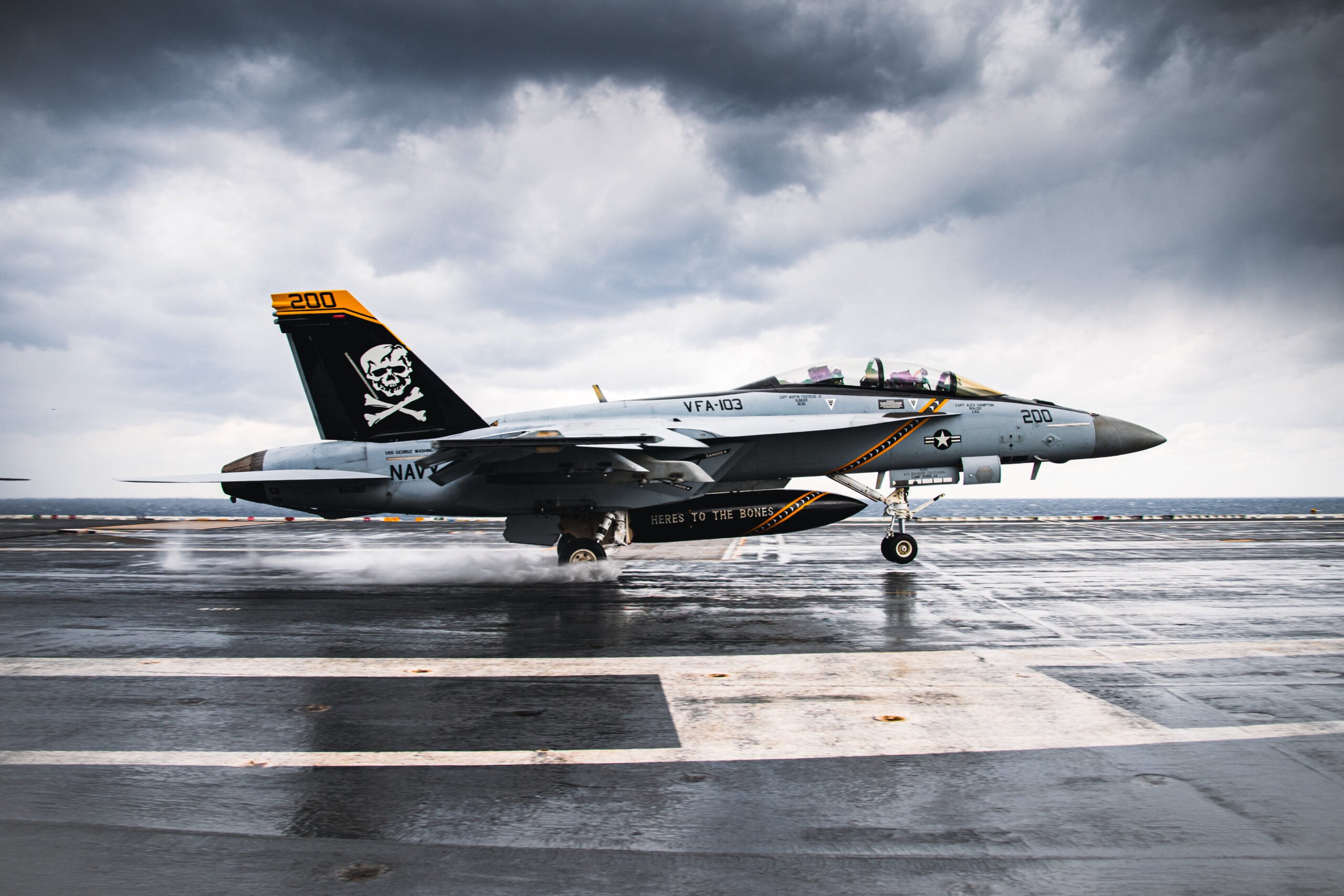


Worn tabs on the braking torque tube assembly of an F/A-18 Super Hornet could mean replacing the whole assembly at approximately $46,000. Fleet Readiness Center Southwest has developed a repair that uses robotic laser-based additive manufacturing to restore those tabs instead, and the recurring repair is expected to cost approximately $4,000, NAVAIR said in a release published on 3 November 2026.
The tabs sit on the aircraft’s main landing gear wheel braking assembly and help hold the brake discs in position. They take heat and mechanical load every time an aircraft lands and brakes. Until the new process was developed, wear beyond the limits of conventional repair could send the entire torque tube assembly for replacement.
The repair is aimed at the tabs alone.
FRCSW describes the work as “a first of its kind repair capability for the F/A-18 Super Hornet”, and the command said the result is “a process designed to restore worn tabs while preserving the larger assembly, reducing waste, improving maintenance efficiency and saving taxpayers money”.
How the repair works
The method is Directed Energy Deposition, which FRCSW describes as robotic laser based additive manufacturing. In general terms, material is deposited onto the worn feature under robotic control, restoring the tab so that the rest of the torque tube assembly can stay in service rather than being replaced. The release does not publish the deposition parameters.
Engineers and technicians at the command explored multiple repair methods before settling on it. Cold spray, a process that accelerates powder onto a surface without melting it, was among the methods explored. DED was identified as the most promising, according to the release.
The command said DED “provides precise process control and sensor generated data, allowing engineers to monitor manufacturing conditions, refine parameters and improve repeatability”. That data trail matters for a repair that has to be reproduced the same way on part after part, on hardware that has to hold brake discs in place under load.
Developing it took years of collaboration, experimentation and testing, the release said. FRCSW’s Materials Laboratory worked with the Air Vehicle Engineering, landing gear, mechanical testing, manufacturing and production teams, with support from Commander, Fleet Readiness Centers and Naval Air Systems Command engineering leadership.
What the testing covered
Tabs repaired with the process went through a 1,500-pound shear test and a 7,500-pound compression test.
They were also put through thermal cycling at temperatures reaching 1,200 degrees Fahrenheit. Metallurgical analyses and mechanical evaluations were used alongside the load tests, which the release said helped the team assess the repaired components “under demanding conditions representative of the aircraft’s braking environment”.
Brake hardware is a demanding place to apply an additive repair, because the parts are structural and they run hot. The tabs endure “extreme heat and mechanical stress during repeated landings and braking”, FRCSW said, which is also why they wear.
The work was funded in part by initial seed money from the Additive Manufacturing Integrated Product Team. Commander, Fleet Readiness Centers put in what the release calls a much heavier investment in the design of the DED system itself.
The cost figures and the volume estimate
The comparison the Navy is drawing is between two outcomes for the same worn part. Replacing the entire torque tube costs approximately $46,000. The recurring DED repair is expected to cost approximately $4,000, which the release describes as a potentially significant savings per repair.
The $4,000 is a forecast for the recurring repair of worn tabs, not a logged production cost and not the price of rebuilding a whole tube. The process keeps the existing assembly, which is where the saving comes from.
FRCSW also put a number on how often the problem turns up. It estimates 12 to 18 torque tubes require this type of repair each quarter, and said the capability “offers an opportunity to reduce maintenance costs while preserving serviceable hardware and supporting fleet readiness”. The figure is an estimate of demand rather than a count of repairs being performed.
Multiplied across that estimate, the gap between the two figures is the argument the command is making for the technology. The release does not give a fleet-wide savings total.
FRCSW said it is looking at other places the same approach could be used. Named candidates are the F/A-18 launch bar, environmental control system ducting and LM2500 gas turbine engine repairs. The LM2500 is a marine gas turbine, which would put the technique outside aviation hardware if it is adopted there.
The pattern is familiar from other depot-level maintenance work. A part that had to be replaced once wear went past the limits of the approved conventional repairs becomes repairable again when a new process is qualified and tested, and the cost of dealing with that wear drops toward the cost of the repair rather than the cost of a new assembly.
FRCSW entered into a Cooperative Research and Development Agreement with FormAlloy, a growing San Diego based advanced manufacturing company. The release presents the partnership as an example of collaboration between military organisations and American businesses, and does not break out which parts of the development it covered.
Sources: