
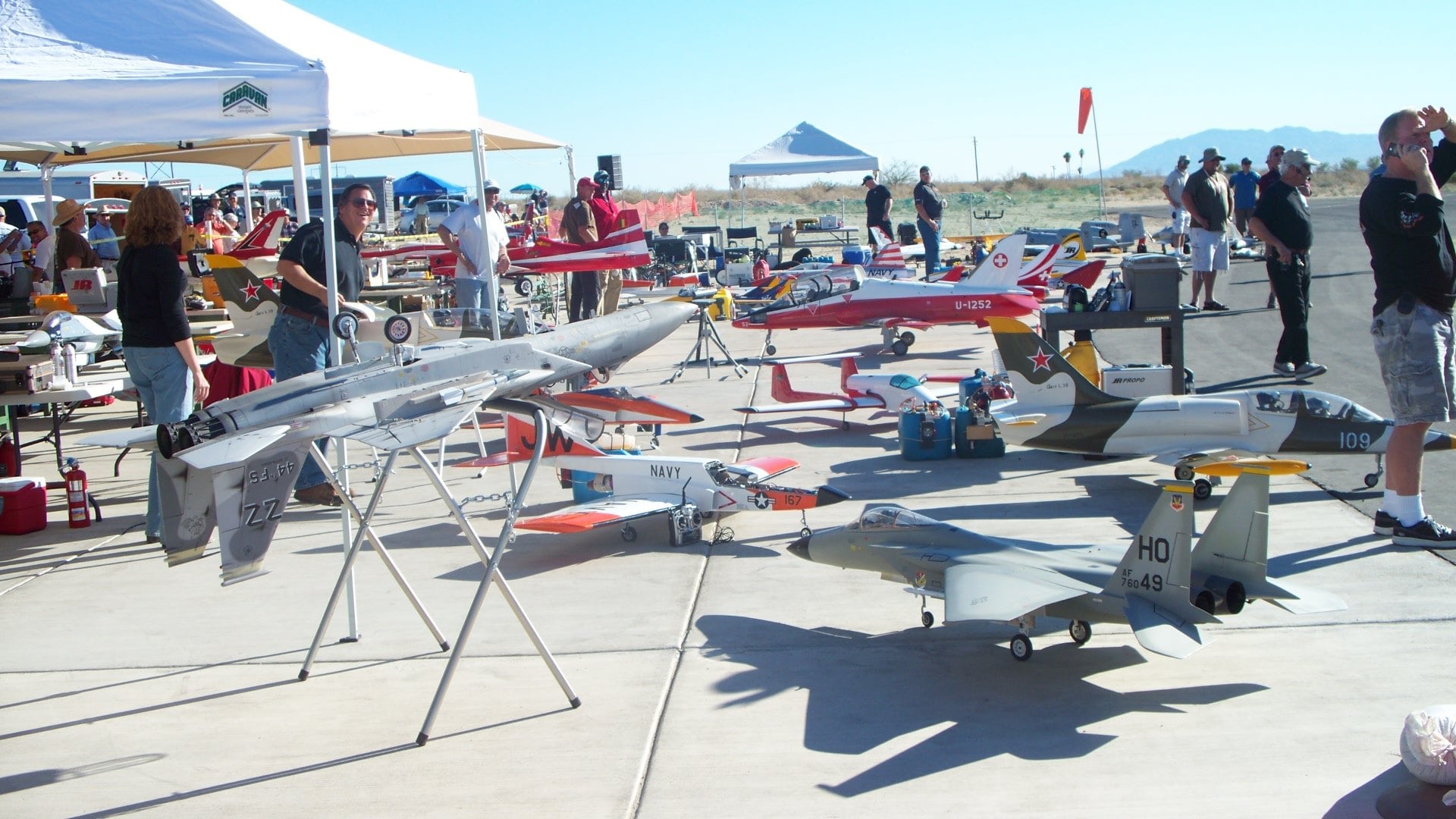


A jet-powered model aircraft built in a university dorm room reached a claimed 491 mph, above the 465 mph drone speed record, Tom’s Hardware reported on 1 November 2026. The speed is self-reported by the builder and was not officially recorded by Guinness World Records.
The builder is Tomas Salvo, an aerospace engineering student at Georgia Tech. He posted the figure on LinkedIn on 30 October 2026, saying the aircraft, called Reaper, hit 790 km/h while carrying a 1.2 kg payload.
“This is now a reliable and repeatable system,” Salvo said in the post.
He also said three Reapers exist, that each can hold that speed for four minutes on a full tank, and that the aircraft can be rail or truck launched, climb to 2,000 m in under 20 seconds and then fly 50 km at full speed.
What a 250 N jet engine gives you
The engine is a JetCat rated at 250 newtons of thrust, which Salvo obtained through sponsorships before the Boom Prize was announced, according to Tom’s Hardware. The whole aircraft weighs 11 pounds, the same report said.
A rival project, Mach Initiative’s Kingchaser, uses a larger 300 N engine and managed 273 mph on a test flight, because it did not have enough space to accelerate. Mach Initiative estimates a top speed of 550 mph with the room to build it up.
Tom’s Hardware put the Kingchaser’s lower number down to that lack of space to accelerate, noting that its engine is the larger of the two.
Carbon fibre, laser cut parts and a $13,000 build
Reaper’s outer shell is custom moulded carbon fibre over a laser-cut internal structure, all designed by Salvo and assembled in his dorm, Tom’s Hardware reported. The build cost $13,000.
The Kingchaser is printed in PETG. Reaper also uses some 3D printing, in what Tom’s Hardware called a much more expensive fashion: its stock engine nozzle is replaced with a titanium 3D-printed nozzle.
The replacement nozzle lets the engine sit further forward, which improves the centre of gravity without adding ballast on the front, the same report said.
Mach 1 is still the target
Salvo is aiming at the $800,000 Boom Prize posted by Boom Supersonic chief executive Blake Scholl, made up of $750,000 in cash and $50,000 in Boom stock.
The rules are specific. The aircraft must pass Mach 1 for at least five seconds while climbing or in level flight, not descending. It must be air-breathing, with no on-board oxidisers or rockets. It must land intact. And the same aircraft, meaning wings, fuselage, engine and flight computer, must fly twice in one day.
Entrants must be individuals or teams rather than corporations or people backed by venture capital or government funding.
Tom’s Hardware said it is not clear how Salvo’s earlier sponsorships fit the rule barring corporate backing. Since the prize was announced, he has turned to crowdfunding, asking for $50,000 in August after raising $20,000 from a source he did not disclose.
Mach Initiative replied to Scholl’s post about the prize with “challenge accepted”, though the eligibility rules may rule the team out, as its members are not US citizens. They are still pursuing an officially recorded Guinness World Record.
Both projects were chasing Niels Herbrich’s existing record for the fastest jet-powered RC aircraft. Salvo said future testing and small optimisations should push Reaper’s top speed past 800 km/h.
Mach 1 is 1,234.8 km/h, or 767.3 mph.
Sources:
- Tom’s Hardware: https://www.tomshardware.com/tech-industry/drones/college-student-unofficially-breaks-world-record-for-fastest-jet-powered-drone-with-491-mph-aircraft-built-in-his-dorm-reaper-aims-to-grab-the-usd800-000-boom-prize
- Tomas Salvo on LinkedIn: https://www.linkedin.com/posts/tomas-salvo-501608142_my-college-dorm-project-just-broke-the-world-activity-7522048166612004865-ebkh