
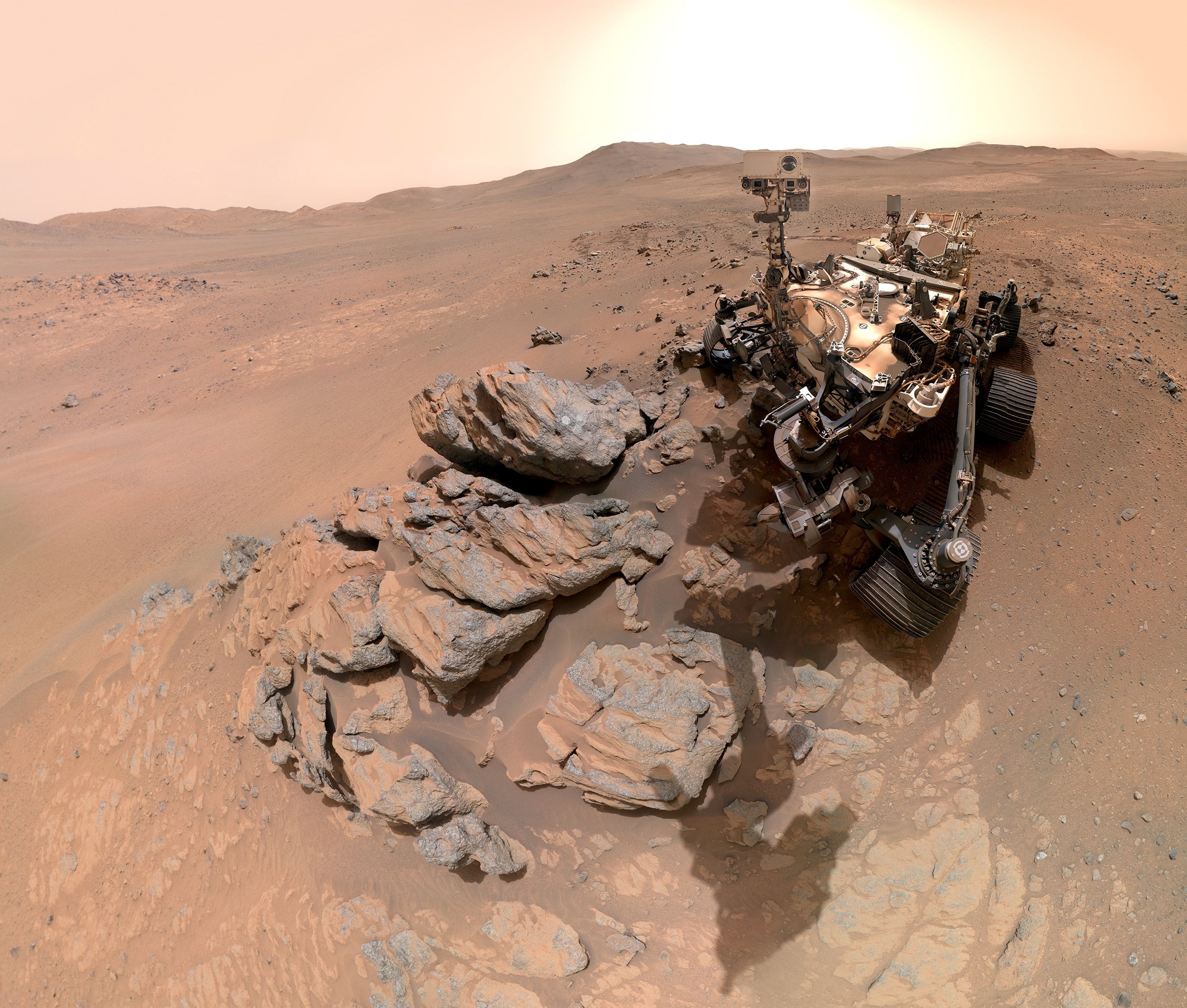


NASA’s Perseverance rover drove 299.6 feet (91.31 metres) across Mars on 11 October 2026 and pushed its total distance to 28.10 miles (45.22 kilometres), beating the 28.06 miles (45.16 kilometres) that the Opportunity rover covered between 2004 and 2018, NASA’s Jet Propulsion Laboratory said on 12 October 2026.
Perseverance reached the mark on sol 2,006, its 2,006th Martian day since landing in 2021.
Opportunity needed almost 15 years to set the old record. That rover arrived on Mars in 2004 with a prime mission planned at 90 sols and kept working for 5,111 of them before its mission ended in 2018. Perseverance passed its total in five and a half years.
One drive of 299.6 feet
The 11 October drive itself measured 91.31 metres, or 299.6 feet. One of the rover’s navigation cameras captured an image that sol, and JPL published the image alongside its release the next day.
The drive took place as Perseverance moved toward an area called Idubi, in a region off the western rim of Jezero Crater nicknamed Lac de Charmes. JPL said the rover is examining what may be some of the oldest terrain ever explored in the solar system.
“The original mission called for no more than 12.4 miles of driving,” said Steven Lee, project manager for the Curiosity and Perseverance rovers at JPL. “We’ve blown well past that, and with all mobility systems fully operational and favorable extended-ground-life test results, we expect Perseverance to keep adding to this record for many years to come.”
The mission’s first extension, approved by NASA, began in October 2026 and runs through roughly the end of 2028.
After Lac de Charmes the rover is due to head south along the crater rim toward Rainbow Falls, a 328-foot-wide (100-metre-wide) block of ancient crust uplifted by the impact that formed Jezero.
Where the other rovers stand
Sojourner, NASA’s first Mars rover and about the size of a microwave oven, covered about 330 feet (100 metres) during its 83-sol mission in 1997. Spirit, Opportunity’s golf-cart-size twin, logged 4.8 miles (7.7 kilometres) before the Martian winter ended its mission in 2010.
Curiosity, which landed in Gale Crater in 2012 and is still working, has driven more than 23.65 miles (38.07 kilometres).
Perseverance passed the lunar marks earlier in its journey. Apollo 17 astronauts Gene Cernan and Harrison Schmitt drove 22.2 miles (35.7 kilometres) across the Moon in 1972, and the Soviet Union’s Lunokhod 2 rover covered 24.2 miles (39 kilometres) in 1973.
JPL credits much of the distance to AutoNav, the rover’s self-driving system. The lab said Perseverance has driven more than 90 per cent of its total using AutoNav to assess the terrain, compared with about 5 per cent for the first Martian version of the system on Spirit and Opportunity.
At or near its top speed, Perseverance can cover as much as 1,351 feet (412 metres) in a single sol.
Sources:
- NASA Jet Propulsion Laboratory: https://www.jpl.nasa.gov/news/nasas-perseverance-sets-off-world-record-for-total-distance-driven/