
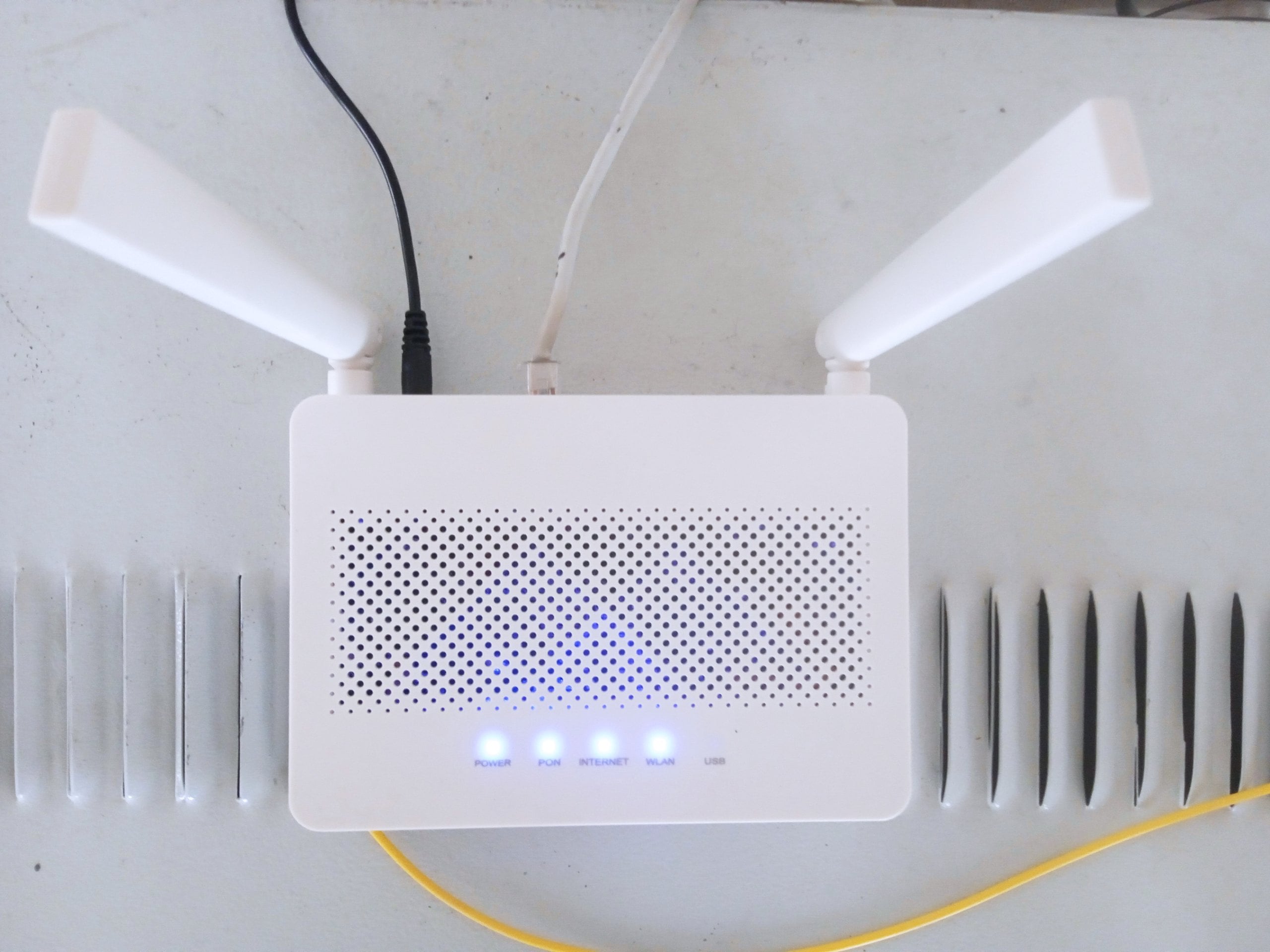


Indoors, radio waves bounce around the surrounding environment, and the result is an echo that distorts the signal. CSIRO calls this reverberation and says it made fast, reliable wireless communication indoors extremely difficult before the 1990s.
Many companies around the world were trying to develop wireless networking systems that could transmit large amounts of data indoors. CSIRO says progress was slow and performance was limited.
The echo problem
A team in CSIRO’s Radiophysics Division approached the problem from another field. According to CSIRO, the researchers solved reverberation using complex mathematics known as Fast Fourier transforms, together with detailed knowledge of radio waves they had gained from radio astronomy and engineering.
CSIRO says this gave the team a novel way to enable clear, high-speed wireless communications indoors at a time when others had been unable to solve the problem effectively. The work was led by Dr John O’Sullivan, Terry Percival, Diet Ostry, Graham Daniels and John Deane.
Before the 1990s there were no smartphones, tablets or reliable wireless networks, and connecting to the internet meant fixed cables. CSIRO says the breakthrough “led to the invention and patenting of wireless local area network (WLAN) technology and laid the technical foundation for what would become modern WiFi.”
That is CSIRO’s own framing, and it stops short of claiming the team invented WiFi.
The patent and the money
The invention was first filed in Australia on 27 November 1992. A US application followed on 23 November 1993, and US patent 5,487,069, titled “Wireless LAN”, was issued on 23 January 1996. The assignee is the Commonwealth Scientific and Industrial Research Organisation, and all five researchers are listed as inventors.
The abstract describes a wireless LAN, a peer-to-peer wireless LAN, a transceiver and a method of transmitting data, all able to operate at frequencies above 10 GHz and “in multipath transmission environments”. It refers to the time delay differences between those transmission paths.
The record lists 72 claims. In the LANs described, the mobile transceivers are each connected to, and powered by, a portable electronic device with computational ability.
The patent earned the money through licensing.
CSIRO licensed the WLAN technology to other companies, and it says those deals add up to more than 20 international licence agreements and around A$430 million in licensing revenue. The revenue came from licensing the technology and the patents behind it.
CSIRO says the technology is embedded in more than 15 billion devices worldwide, including phones, televisions, cameras, laptops, printers, routers and games consoles, and that it powers connectivity in homes, offices, public buildings and cafes.
CSIRO describes the discovery as one of its most successful inventions to date. O’Sullivan received the Australian Prime Minister’s Prize for Science in 2009. The European Patent Office gave the work its Non-European Inventor Award in 2012.
Sources:
- CSIRO, Wireless LAN: https://www.csiro.au/en/research/technology-space/it/Wireless-LAN
- Google Patents, US5487069A Wireless LAN: https://patents.google.com/patent/US5487069