
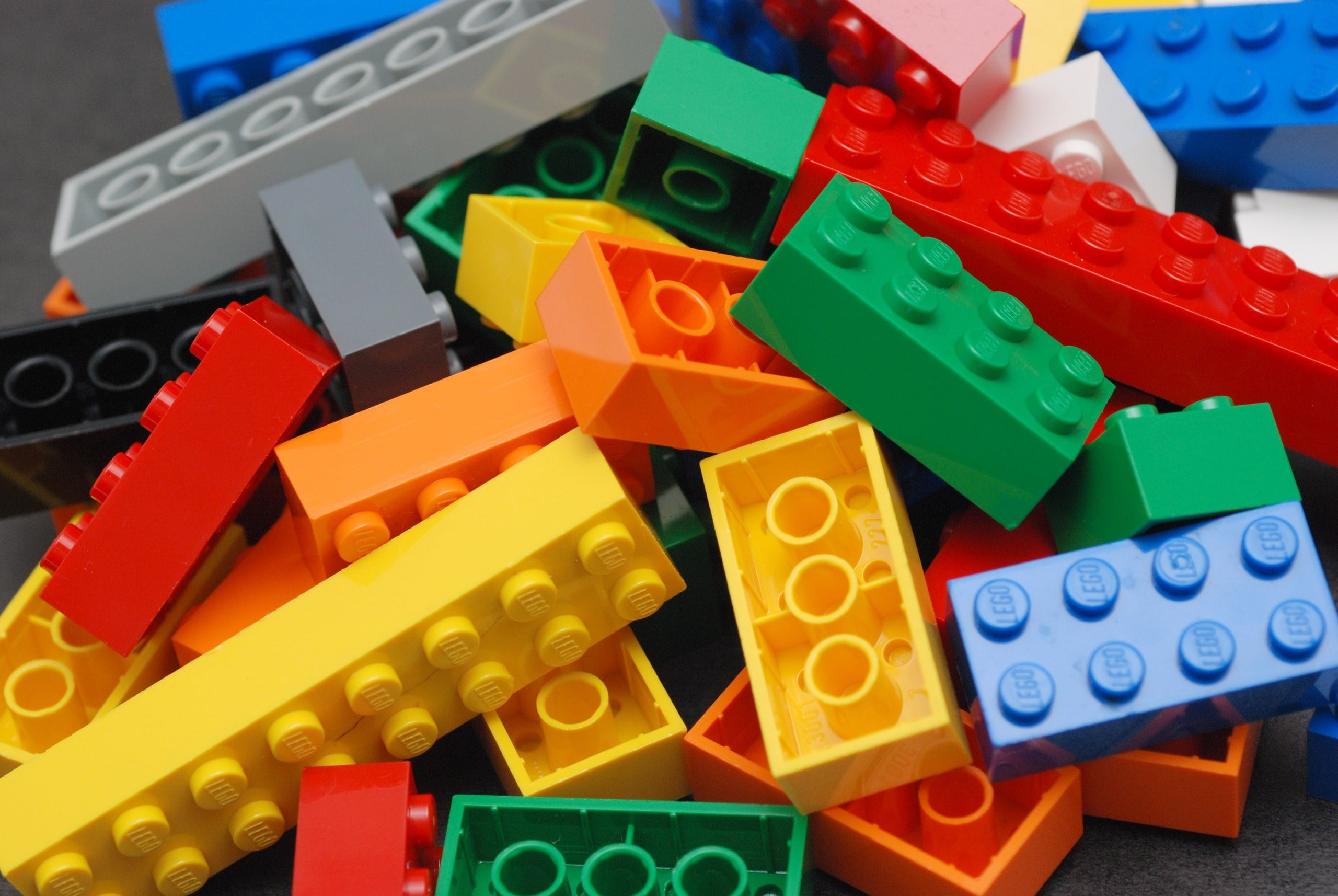


At 1:58 pm on 28 January 1958 the LEGO Group submitted a patent application for the stud and tube brick to the patent office in Copenhagen. The filing described “a toy building element”, according to LEGO’s history page, and the time is recorded to the minute in the company’s own account.
Five days earlier, the tubes had been a sketch on a piece of paper.
Five days from sketch to patent
Up to that point all LEGO bricks were hollow, which reduced the stability of anything built with them. The history page says the weakness brought complaints from the markets while competitors moved in. Godtfred Kirk Christiansen, who took over the company from his father, wanted the brick to live up to the company’s quality standard.
On 23 January 1958 he met Axel Thomsen, head of the German sales office, to discuss the stability problem raised in market feedback. Godtfred drew several possible solutions on a piece of paper. One of them was the tube. Combined with the studs, the tubes create what LEGO calls clutch power, the grip that holds bricks together.
Clutch power gives a model its stability and, in LEGO’s words, endless possibilities for combining bricks.
LEGO’s history page puts the figure at 915,103,765 ways to combine six 2×4 bricks. The company’s May 2022 article marking 90 years of the brand puts it at more than 915 million and adds a condition: the six bricks must be the same colour.
Godtfred wanted the principle protected, and the application went in on 28 January, five days after the meeting. Shortly after it was filed, LEGO began showing the stud and tube principle on the outside of all new sets.
Bricks that still fit
LEGO says the design has not changed since 1958. In the 2022 article the company said that because the brick’s blueprint has stayed the same, bricks produced more than 60 years earlier fit with new ones. Its company profile makes the same point about the first modern bricks from 1958.
Each brick is moulded to an accuracy of 0.005mm, according to the 2022 article.
The brick was voted Toy of the Century in 1999, more than 40 years after it was first designed.
The company had been making plastic toys for just over a decade by 1958. Ole Kirk Christiansen, the company’s founder, bought a plastic injection moulding machine from England in 1947 for 30,000 Danish kroner, a fifth of the company’s annual earnings, according to the profile. Four years later, half of the toys it produced were made of plastic.
A factory fire in 1960 led the company to drop wooden toys and make only plastic ones. LEGO says the only difference between a 1958 brick and a later one is the plastic, which it describes as a new and better material. That new plastic came into use in 1963.
Sources:
- LEGO Group, The stud and tube principle: https://www.lego.com/en-us/history/articles/d-the-stud-and-tube-principle
- LEGO Group company profile PDF: https://www.lego.com/cdn/product-assets/product.bi.core.pdf/4591606.pdf
- LEGO Group news, May 2022: https://www.lego.com/en-us/aboutus/news/2022/may/brick-by-brick-building-lego-love-for-90-years