


While many of us have envisioned how 5G could help with our phone use, another industry has been eyeing the cellular band as well. The auto industry has a great interest in 5G – in how it could help cars and the people who drive them.
Also read: What Is 5G Network and How Will It Benefit You?
Increasing Need for 5G in Cars
Having connected cars isn’t a new thing. Before many people had a smartphone or even a flip phone, they had a car phone. Cars have also had navigation services and onboard help for a number of years.
But the auto industry has been working in overdrive to add more. They can now be outfitted with special auto operating systems that align with iOS and Android. Car keys have even gone digital.
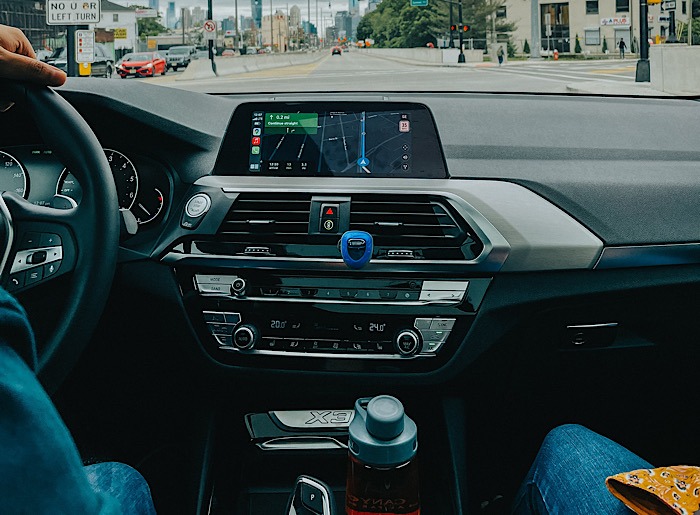
Adding all this tech to cars is known as Vehicle to Everything (V2X). It has to do with vehicles connecting to many different things within three different categories: Vehicle to Vehicle (V2V), Vehicle to Infrastructure (V2I), Vehicle to Cloud (V2C), and Vehicle to Pedestrians (V2P).
These tech systems handle communication with other vehicles; sending info to and from road infrastructure, cloud services, and nearby people; and the interactions between drivers and passengers.
Adding 5G to cars could lead to a different way to handle maintenance. As it is, car repair shops use computers to diagnose your car. If cars are added to digital payment systems, there are many chains of events you could initialize in your car that could end with a service or product being purchased.
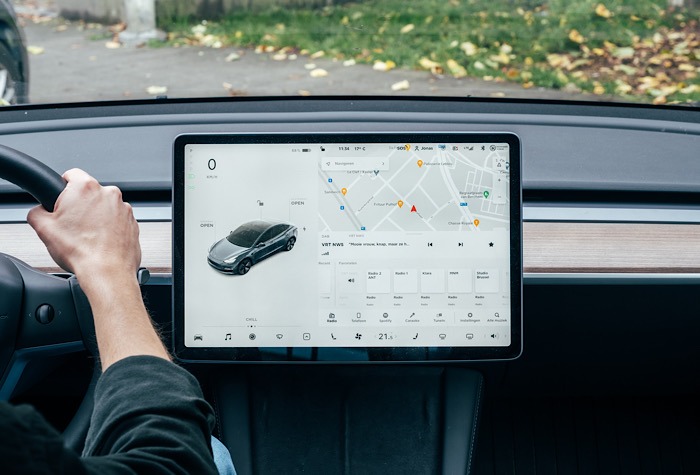
Perhaps 5G could also help with autonomous cars. But if it is put to use in these cars, it probably wouldn’t be advisable for it to be connected to a crucial function, as we all know how unreliable cell service can be.
And of course, 5G could increase the streaming capabilities in cars, which could specifically help on long car trips. And this would be a good direction for autonomous cars to take – except for the person who is supposed to remain in the driving seat, keeping their eyes on the road.
Car Companies Incorporating 5G
T-Mobile is promising to provide 5G coverage to 92 percent of U.S. interstate highway miles. The International Data Corporation said that by 2024, more than half the vehicles produced will have some autonomous features.
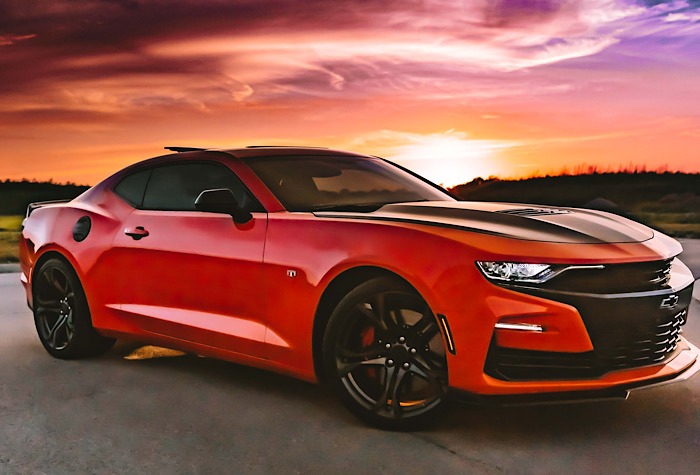
GM is now working with AT&T, and they have said they expect to have 5G in “millions of GM vehicles coming off the assembly line.”
The two companies are promising that the 5G band support they will have “will be diverse and is fully aligned with AT&T’s spectrum strategy. Select GM models will see 5G support by 2024.
“By connecting millions of GM vehicles to our nationwide 5G network, we will improve the customer experience for existing services while laying the groundwork for the next wave of innovation, including autonomous driving,” said SVP Global Business, Industry Solutions, Gregory Wieboldt, at AT&T, in a statement.
“We now connect more vehicles than any other carrier, and GM has played a critical role in our success. We’re honored to work alongside GM to usher the next chapter of connected driving.
Connected cars aren’t new to AT&T. They have supplied the OnStar services for nearly 10 years and worked with GM on in-vehicle hotspots since 2014. Last year, AT&T added WarnerMedia streamed content to select cars. 4G LTE is already in some GM cars, and some of them will easily upgrade to 5G.

Porsche is another auto manufacturer jumping into 5G. It’s been testing its Taycan electric sports cars to see how they would exchange data with 5G. Oliver Blume, Porsche CEO, said this data would help with the chip design for autonomous vehicles and advanced driver-assistance programs.
The company is working with Vodafone Group PLC. One of the two local 5G networks they built tests technology in cars. Yet, Porsche has not said when it will be selling its first 5G car.

Stellantis NV owns Chrysler, Peugeot, Jeep, Fiat, Alfa Romeo, and Maserati. The parent company is partnering with Foxconn on “Mobile Drive.” This new conglomeration will develop digital dashboards and displays to take advantage of 5G.
Toyota is working with the Japanese telecom service Nippon Telegraph and Telephone Corporation. They will build high-capacity data networks and technology and create 5G networks to issue updates and remote monitoring of autonomous vehicles.

A Mercedes-Benz executive in charge of developing a core operating system, Michael Hafner, explained that the company already offers cloud-based warning services with cellular networks. He doesn’t believe 5G will make a difference there, but V2V would be possible.
“With 5G availability, you could even warn from a vehicle in a crossing scenario,” he said. “And it’s not limited to cars. If you equip children’s backpacks with chips, you could also warn of such a scenario.”
But we aren’t waiting for the first 5G-equipped car next year. BMW launched the first one last week: the 2022 BMW iX xDrive50. It’s powered by the new Magenta Drive service by T-Mobile and costs $20/month. It also powers an internal Wi-Fi hotspot that can support up to 10 devices.
It’s obvious that this is our future with multiple car companies working with or envisioning 5G. But there are still some things that need to be worked out with it: AT&T and Verizon put 5G on hold recently to work on the conflict with airplanes in flight.