

Bitcoin has become quite a popular means of exchange on the Internet. If you don’t know anything about Bitcoin, you can read our article about what it is and how it works. All you really need to know is that it’s a digital currency, has been growing in popularity significantly, and even has its own ATMs. A lot of the people who have been exposed to Bitcoin already know a lot about the currency, but haven’t really done a whole lot of research on certain questions regarding the online currency and its fate. Today, I’m here to ask those questions for you and then answer them.
1. Is Bitcoin a safe currency?
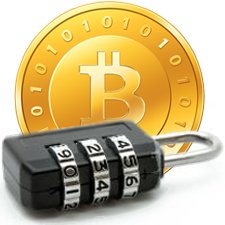
This question is kind of tough to answer, considering the complex algorithms it uses to generate new units of the currency and the significant decentralization of the currency itself. There’s one universal law in digital cryptography which applies to Bitcoin: Nothing is 100 percent safe. But you probably didn’t want to know whether it’s absolutely safe. Rather, you are curious about how safe Bitcoin is.
Its method is tried and true. Bitcoin cannot be hacked on a catastrophic/holistic level. Your wallet’s safety, however, depends on how you take care of it. If you attach weak passwords to your wallet, expect mayhem at some point in the future. Bitcoin itself may be impermeable to attacks because of its decentralized nature, but your wallet falls entirely in your hands.
But just because Bitcoin is cryptically safe doesn’t mean that it can’t be exploited. I came across an article about a Trojan Horse that forces computers to mine Bitcoins for the hacker that infects them. So, it’s not a perfect system, but even those hackers aren’t going to hoard their Bitcoins forever. Eventually, that money will fall into someone else’s hands, and so on, and so forth. The economic cycle continues whether or not the system was exploited. So, there’s no real harm.
As a recap: Yes, Bitcoin can’t be hacked conventionally as a whole. Your wallet is an entirely different story.
2. Is Bitcoin impermeable to government intervention?
The short answer: No.
The long answer: It depends on what you mean by government intervention. If you’re talking about some pieces of paper passed by Congress, it can totally happen. If you’re talking about government action against Bitcoin, it’s… complicated.
The Internal Revenue Service (IRS) is the U.S. tax collection agency. They are working on ways to tax the flow of Bitcoins between individuals. How would they manage this? The Financial Crimes Enforcement Network (FinCEN) gets notifications when U.S. bank account holders make transactions. They can forward this notification to the IRS at any time. If you make a transaction for Bitcoins, they’ll know that you converted that money. What they have a little difficulty tracking, however, is the Bitcoin-to-Bitcoin exchanges themselves (since they happen on decentralized peer-to-peer networks). Although the Internet is very difficult for governments to regulate, you still should be concerned.
This brings us to another question: Exactly how concerned should you be? Read this. At the exchange level, it’s easy to regulate and seize assets. In the linked article, the author describes how the Department of Homeland Security (another U.S.-based government doohickey) got a hold of Mt. Gox’s accounts. Here’s the surprising thing: Mt. Gox is a company in Japan. However, a U.S. authority managed to seize accounts. Of course, the situation is more complex than that. Mt. Gox violated U.S. banking law by lying on its application to register Mutum Sigilum LLC and open a bank account for the company. The bank it was opening the account with asked if the business was engaged in monetary services. In short, Mt. Gox answered “no.” While this was deceptive on behalf of the company, it’s clear that government can entangle itself with Bitcoin in significant ways that we have yet to see.
3. Is Bitcoin a worthy investment?

This is a tough one. On the one hand, you have a currency that’s practically inflation proof. On the other hand, you have a currency whose value rises and falls sharply at some points when compared to the U.S. dollar and Euro.
Some people mistakenly consider a currency that’s less susceptible to inflation as an asset with a stable value. This is completely wrong on many levels. The aggregate demand of the currency is subject to change, which also changes its value. What “inflation-proof” means, in this case, is that Bitcoin is limited only to a certain number of units (there’s a hard limit of 21 million). While the number of Bitcoins in circulation grows, it will never pass 21 million. If you’re looking for a currency that doesn’t lose its internal value, this currency will be worth the investment.
However, if you’re looking for a currency that has a very stable U.S. dollar, EU, Rupee, Ruble, Leu, or Cordoba value, you”ll be very disappointed. Bitcoin has a large number of booms and busts that make it a less-than-ideal get-rich-quick currency. Don’t buy Bitcoins expecting to make a fortune out of them later on. It’s a relatively volatile market for the moment.
Also, competitors to Bitcoin are popping up, making the market more diverse. You have many other currencies to invest in now, such as Litecoin, Namecoin, and PPCoin. Here’s a little secret: Litecoin has the strongest encryption algorithm out of all of them (scrypt).
Conclusion
I hope this answers any potential questions you may have had about Bitcoin. I have attempted to make it as factually accurate as possible. If you’d like to add something to the discussion, leave a comment below and we can talk!